



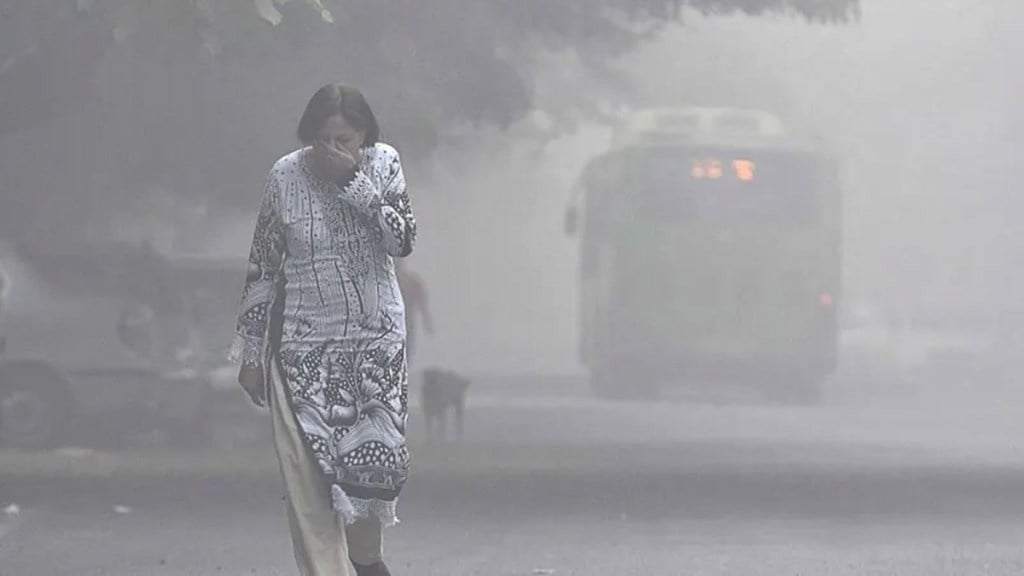
In the latest World Air Quality Report 2023 by the Swiss organisation IQAir, Bihar’s Begusarai has emerged as the most polluted metropolitan area globally, while Delhi has been identified as the capital city with the worst air quality.
Among 134 surveyed countries, India ranked third on the list of worst air quality, with only Bangladesh and Pakistan recording higher average annual PM2.5 concentrations of 79.9 and 73.7 micrograms per cubic meter, respectively, compared to India’s 54.4 micrograms per cubic meter.
Also Read:Despite a 5.9% decrease, Delhi remains most polluted city in India in 2023: NCAP Report
Delhi, the national capital with the poorest air quality, saw a deterioration from 89.1 to 92.7 micrograms per cubic meter in PM2.5 levels from 2022 to 2023. Additionally, Begusarai, a city in Bihar, emerged as the world’s most polluted metropolitan area, with an alarming average PM2.5 concentration of 118.9 micrograms per cubic meter. Notably, this city was not even ranked in 2022.
In the year 2022, India held the eighth position as the most polluted country, with an average PM2.5 concentration of 53.3 micrograms per cubic meter. Delhi has consistently been ranked as the most polluted capital city globally since 2018.
The report mentioned that around 1.36 billion people in India are breathing air with PM2.5 levels higher than the recommended limit set by the World Health Organization, which is 5 micrograms per cubic meter. Additionally, about 1.33 billion people, which is 96 per cent of the Indian population, are facing PM2.5 levels that are more than seven times higher than what the WHO recommends in their guidelines.
Also Read:Delhi breathes easy as air quality improves further, AQI in ‘poor’ category
This trend is mirrored in city-level data, with over 66 per cent of the country’s cities reporting annual averages greater than 35 micrograms per cubic meter.
IQAir stated that the information used to generate this report was compiled from a vast network, including over 30,000 regulatory air quality monitoring stations and low-cost air quality sensors. These stations and sensors are operated by various entities such as research institutions, governmental bodies, universities, non-profit organisations, private companies, and citizen scientists.
The 2022 World Air Quality Report incorporated data from 7,323 locations spanning 131 countries, regions, and territories. By 2023, these figures expanded, encompassing 7,812 locations across 134 countries, regions, and territories.
Also Read:Stage-III of GRAP anti-pollution measures revoked in Delhi-NCR amid improvement in air quality
Air pollution stands as the foremost environmental threat to human health, contributing to an estimated one in every nine deaths globally. According to the World Health Organization (WHO), approximately seven million premature deaths occur worldwide each year due to air pollution.
Exposure to PM2.5 air pollution has been associated with the initiation and exacerbation of diverse health ailments such as asthma, cancer, stroke, and lung disease. Increased concentrations of fine particles can hinder cognitive development in children, induce mental health disorders, and exacerbate pre-existing conditions such as diabetes.