



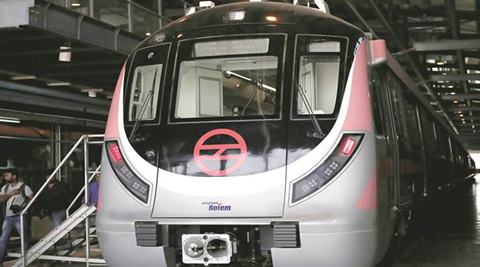
In December 2002 the then Prime Minister A B Vajpayee inaugurated the first 8.5-km section of Delhi Metro. For the first time people in any metro in India were offered an elevated view of the city in air-conditioned coaches. Since then Delhi Metro Rail Corporation (DMRC) has seen an exponential growth as its network currently spans around 213 km. Another significant milestone of Delhi Metro Phase III was achieved with work completed on all new tunnels in one of the “largest-ever tunneling projects taken up in any urban area across the world”, with 30 machines used to bore close to 80 km underground. With over 28 lakh passengers have been funneling into 160 stations every day, Delhi metro has surely emerged as the national capital’s lifeline and the much needed robust public transport system in the national capital that it lacked. But Delhi Metro is not stopping here as it is set to introduce the most advanced technology yet with the rollout of Phase III next year including the big shift — operator-less trains on two lines.
Here are the key things that you want to know about Delhi Metro Phase III.
1. “Be it in the construction process, rolling stock or communication-based train control system, we have the best technology in the world in this upcoming phase. The tunnel-boring machines that we started out with in 1997 have changed and we have far more sophisticated TBMs and monitoring equipment today. The signalling system is far more sophisticated, enabling high frequency trains. This would mean not only increased carrying capacity but also higher level of safety. There will be no possibility of collisions. Trains will run automatically without any human intervention, thereby eliminating human error,” said Mangu Singh, managing director, Delhi Metro Rail Corporation (DMRC), according to an Indian Express report.
2. The new communication system will have sensors and cameras on the sides and in front of train coaches to signal the closure of doors or the need for emergency braking. If an obstruction comes up on the tracks, the train will halt immediately. As the train operators will be eased out, the driver’s cabin will make space for more commuters. Each coach can accommodate a maximum of 380 passengers, which translates to 2,280 passengers in each train set of six coaches and the cabin-less trains will be able to accommodate 40 more commuters. Around 120 such coaches are being manufactured in South Korea while the remaining 366 coaches will come from a BEML plant in Bengaluru as the Delhi Metro focuses on indigenisation in its procurement process.
3. “Every coach on the new lines will have CCTV cameras installed and be connected to the central control room. If passengers raise an alert for a medical emergency, they can directly speak to the control room and, with help of the centralised system, be traced easily. Each coach will have a different coloured seat, instead of the metal ones, that will additionally help station staff identify the coach from which the distress call was made,” Singh said.
4. With Phase III moving from a largely broad-gauge network to standard gauge, the new coaches will be broader — from 2.9 metres to 3.2 metres. Platforms that were roughly 2.5-3 metres wide will be extended to 3.5 metres and, with the installation of platform screen doors on Line 7 and 8, passengers can queue up closer to the edge of the platform without worrying about falling onto the tracks. The screens will also bring down instances of suicides on tracks and rule out the possibility of passengers getting caught between the closing doors.
5. “But it is time we point out a very pertinent fact. The incidence of sure shot death in case of suicides on Metro tracks is very low. More victims are maimed than killed. This year, from January to August, of the 27 passengers who fell or jumped on Metro tracks, 11 died while the remaining 16 were grievously injured but saved due to timely application of emergency brakes,” Singh said. So what will all this — the technology, the enhancements — add up to in numbers? By 2017-end, when the 380-km network branches out into 253 stations across the capital, the current ridership is expected to touch 40-45 lakh passengers per day.