



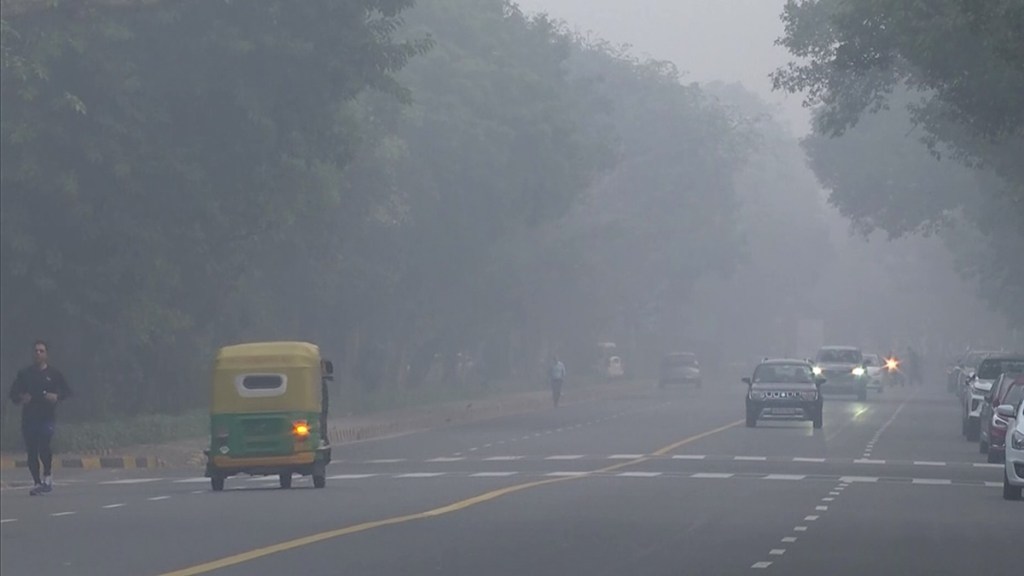
Delhi residents woke up to ‘severe’ air quality in the national capital on Saturday, as the overall air quality index (AQI) reached 404 at 7.46 AM, according to the System of Air Quality and Weather Forecasting and Research (SAFAR-India).
Toxic air was recorded in several locations in Delhi at 7 AM. ITO area recorded an AQI of 388 (very poor), while RK Puram’s AQI stood at 433 (severe).
Furthermore, as per the Central Pollution Control Board, at 7 AM, Lodhi Road recorded AQI at 375, Dwarka and the Airport (Terminal-3) area lodged AQIs at 439 and 423, respectively, as per the data shared by the Central Pollution Control Board, as ANI reported.
Delhi’s Anand Vihar AQI was recorded at 456, falling into ‘severe’ category.
Yesterday, Delhi’s AQI was recorded in the ‘very poor’ category, with AQI standing at 350 at 7.55 am in many areas as per SAFAR-India.
Earlier on Tuesday, the Supreme Court reprimanded the Punjab and federal governments for politicizing the problem of stubble burning during a hearing on increasing air pollution in Delhi-NCR. The Court proposed measures to stop this conduct, including considering withholding monetary incentives such as MSP on paddy from people who ignite farm fires.
What is the Air Quality Index (AQI)?
The Air Quality Index (AQI) is a vital tool for effectively communicating air quality status to the public in an easily understandable manner. It consists of six AQI categories: Good, Satisfactory, Moderately Polluted, Poor, Very Poor, and Severe.
Each category is determined based on the levels of ambient concentrations of air pollutants and their potential health impacts, known as health breakpoints. According to the AQI scale, air quality falls into the following ranges: 0 to 50 is ‘good,’ 51 to 100 is ‘satisfactory,’ 101 to 200 is ‘moderate,’ 201 to 300 is ‘poor,’ 301 to 400 is ‘very poor,’ and 401 to 450 is ‘severe’.