



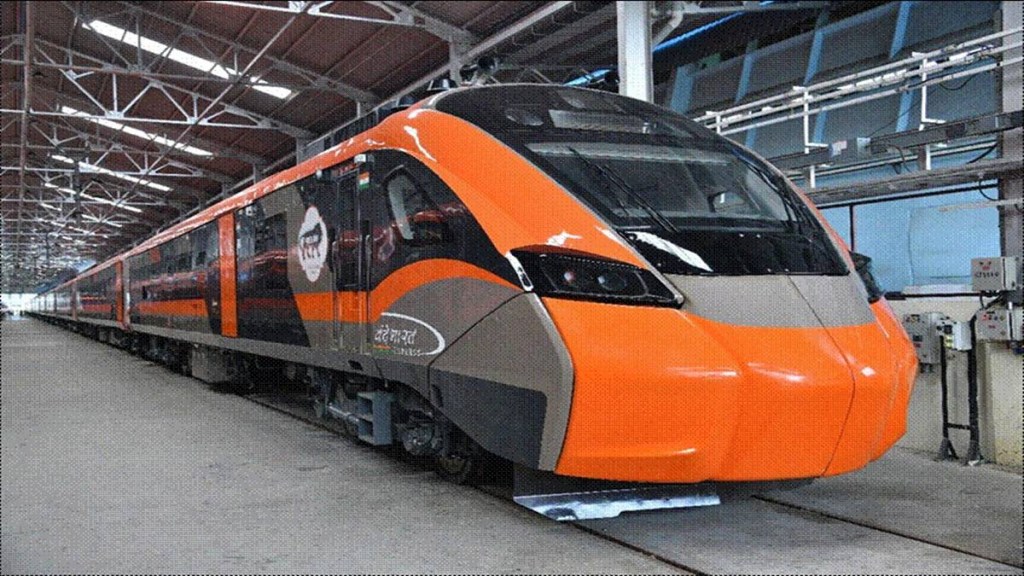
A new chapter in India’s premium train services is about to begin this year, with the first Vande Bharat sleeper train set to operate between Delhi and Kolkata as early as the end of this month. The services are expected to benefit passengers across four states, namely Delhi, Bihar, Uttar Pradesh, and West Bengal.
As per a report by Live Hindustan, the first Vande Bharat sleeper rake will be launched on the Delhi-Kolkata route, with operations likely to begin towards the end of January. Earlier, there had been talks on launching the train in December 2025, but the start appears to have been pushed back slightly.
Delhi-Kolkata overnight route to get first Vande Bharat sleeper
With this new route, passengers from Delhi, West Bengal, Uttar Pradesh, and Bihar stand to gain. The report highlights that stoppages in UP and Bihar have not been officially confirmed, but Kanpur, Deen Dayal Upadhyaya Junction, Paryagraj (Allahabad), and Patna are likely being considered as major halts. This corridor is known for its heavy traffic and long waiting lists, so a fast, fully air-conditioned sleeper service is expected to draw strong demand.
Vande Bharat trains are already known for their speed and comfortable seating arrangements, but the new sleeper version is designed especially for long and overnight journeys. Passengers will have an option of berths instead of only chair car seats. Thus, long-distance travel on this busy route will be more comfortable and will also reduce journey time.
180 km high speed trial clears key safety and comfort checks
Meanwhile, Indian Railways has also carried out the final high-speed trial of the indigenously designed and built Vande Bharat sleeper on the Kota-Nagda section, where the train touched 180 kmph under the supervision of the Commissioner of Railway Safety (CSR).
During this trial, engineers checked a long list of technical parameters—
1. How stable does the train feel when it is running at high speed
2. How quickly and safely can the train apply the brakes, including the emergency brake?
3. Are all safety systems working as intended?
4. How much it oscillates or vibrates
The train cleared these checks, and the CRS declared the trial successful. The Railway Ministry called it an essential step in India’s move towards more advanced and self-reliant rail technology.
A video of the trial run was also shared by Railway Minister Ashwini Vaishnaw on social media, showing the now-famous “water-glass test”. Glasses full of water were placed inside the coach, and they remained steady without spilling even when the train was running at its high speed. This simple demonstration is meant to depict how good the suspension and ride quality are on the new train.