



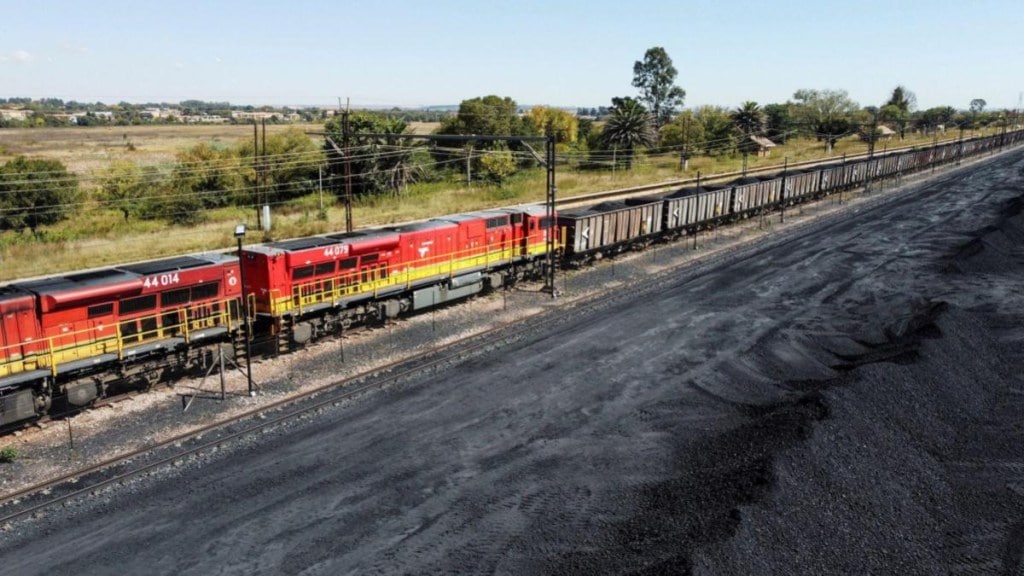
The two recently commissioned dedicated freight corridors are already handling over 10% of freight on the Railways network, officials at Dedicated Freight Corridor Corporation of India Limited (DFCCIL) said on Friday. The eastern & western DFCs are running an average of 325 trains per day, still far below the daily capacity of 480 trains.
“We are waiting for the last section of Western DFC to become operational. This stretch will provide connectivity to the major JNPT (Jawaharlal Nehru Port Trust) port, and the traffic on it should then match the eastern corrdior’s,” said a DFFCIL official.
In June 2024, Indian Railways’ (IR) originating freight loading stood at 135.46 million tonnes, registering a 10% growth over the same month last year.
Currently, the EDFC is fully commissioned and running close to 200 trains per day whereas the WDFC is 93.2% complete and running 125 trains per day. In June, these corridors carried a combined freight of more than 14 billion GTKM (gross tonne-kilometers) and 8.5 billion NTKMs (net tonne-kilometers) which was 150% higher than the corresponding month last year.
The official said that the DFCCIL’s mandate was to take over 70% of the IR’s traffic on the sections running parallel to EDFC and WDFC. “We have already crossed the 70% benchmark on the EDFC,” he said.
DFCCIL claims that both corridors have de-congested the IR tracks by shifting freight trains to its own tracks. This has helped increase the punctuality of passenger trains across the rail network, and reduced the logistics costs with faster trains and reduced transit time of goods.
As per DFCCIL officials, they have already sent DPRs (detailed project reports) for the proposed corridors to the railways board for approvals. In the next phase, the DFCCIL has plans to set up three more dedicated freight corridors (DFCs) – East Coast, East-West and North-South – at an estimated combined cost of Rs 2 trillion.
Even though the DFCCIL has set an official target to fully commission WDFC by March 2025, the work is not expecting to finish before July 2025.
Meanwhile, the slow progress of the 1506-km WDFC has increased the overall project cost substantially. For instance, in 2022, the Comptroller and Auditor General of India (CAG) had said that the test check in the audit revealed that the delay in commissioning burdened the project with avoidable expenditure of Rs 2,690 crore as against the total expenditure of Rs 74,028 crore incurred on the project till March 2021. “Delay in completion of project also deprived Indian Railways of intended objective of creating additional line capacity to increase freight traffic share,” the CAG noted.