



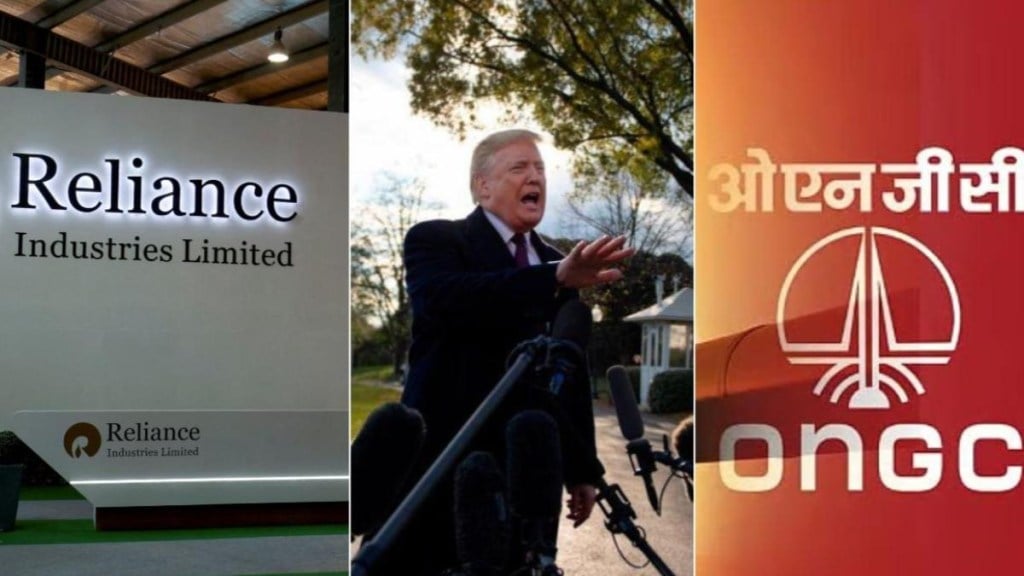
The United States’ capture of oil-rich Venezuela may help unlock $1 billion in long-pending dues for India’s state-run hydrocarbon explorer ONGC Videsh (OVL), and accelerate crude production from the fields in the Latin American country, where it has equity interest.
In addition, Venezuelan oil supplies to Reliance Industries (RIL) could gather pace under a 15‐year crude contract with Petróleos de Venezuela (PdVSA).
According to analysts, India, as the world’s third-largest oil importer, may stand to gain as resumption of Venezuelan oil supplies would offer a strategic alternative to Middle Eastern crude, reduce exposure to geopolitical shocks, and strengthen its hand in price negotiations. Indian refiners are technically configured to process Venezuelan heavy crude.
RIL, according to media reports, had obtained a licence from US Treasury’s Office of Foreign Assets Control (OFAC) in July 2024 for crude imports from PdVSA, notwithstanding the sanctions, but actual trade hasn’t picked up.
OVL has a 40% stake in the San Cristobal onshore oilfield in eastern Venezuela, where PdVSA holds 60%. Though the field is seen to be commercially viable, the US sanctions on Venezuela blocked access to rigs, equipment and services needed to sustain output, and the wells have practically dried up.
Venezuela failed to pay OVL $536 million in dividends due on its 40% stake in the field up to 2014, and a near-equivalent amount for the subsequent period for which the Venezuelan authorities refused to permit audits, effectively freezing the claims settlement.
In April 2025, the Donald Trump administration re-imposed sanctions on Venezuela’s oil sector in response to President Nicolas Maduro’s alleged failure to meet his election commitments, but said some firms would be authorised to trade and operate in Venezuela.
An international consortium comprising three Indian companies — OVL, Indian Oil Corporation, Oil India – and Repsol of Spain and Petronas of Malaysia was declared the winner of an international bidding process in April 2008 to develop a multi‐million-dollar oil project integrated in Carabobo in the Orinoco belt of Venezuela. Now that the US sanctions on the Latin American country have been lifted, the Indian companies’ investments in the fields could be revived, analysts said.
India’s oil purchases from Venezuela surged in the late 2010s, reaching over 4,00,000 barrels per day at peak levels, but the ties have weakened since 2019 due to the sanctions. India was forced to cut oil imports from the country and scale back commercial activity to avoid secondary sanctions, Global Trade Research Initiative (GTRI) said.
Apart from oil, India’s trade with Venezuela is small and declining. At its peak in 2018-19 India was procuring $ 7.24 billion crude oil from Venezuela, which fell to $ 6.02 billion in 2019-20 before Covid pandemic reduced it to $643 million in 2020-21 and then to negligible levels in 2021-22.
The US mounted an unexpected attack on Venezuela on Sunday and captured Maduro, with Trump vowing to “run the country” until there is a “proper” transition of power. Maduro is now believed to be in custody at a New York detention centre.
From Stranded Assets to 1,00,000 BPD
Once sanctions are eased, OVL can move rigs and other equipment from places, such as its parent ONGC’s oil fields in Gujarat, to San Cristobal to revive output that has plummeted to 5,000-10,000 barrels per day, PTI reported quoting officials in the know of the matter. The onshore field can produce 80,000-1,00,000 bpd with more wells and better equipment, they said, adding that San Cristobal needs rigs similar to those operating in Gujarat, and ONGC owns many such rigs.
US control of the Venezuelan oil sector also means exports to the world would start soon, the sources added. Trump has already stated that, as part of the takeover, major US oil companies would return to Venezuela, which has the world’s largest oil reserves, and refurbish badly degraded oil infrastructure.
The Organisation of the Petroleum Exporting Countries (OPEC) said it would likely maintain steady output, despite the latest developments. Eight member countries-Saudi Arabia, Russia, the UAE, Kazakhstan, Kuwait, Iraq, Algeria and Oman-had agreed in November to pause production hikes for January to March. The policy may remain unchanged.
OVL had earlier sought a ‘specific licence’ sanctions waiver, similar to one OFAC had granted to Chevron to operate the oilfield and export oil from it.
OVL and other Indian firms can also take more fields in Venezuela and revive production from the Carabobo-1 Area – another Venezuelan heavy oilfield with Indian interest. OVL holds 11% in Carabobo-1, while IOC and Oil India hold 3.5% stake each.
Post the US action, PdVSA may undergo restructuring, analysts said. In the worst-case scenario, its stake can be taken over by a US company or any new entity that Washington may erect. Analysts added the US cannot replace all the international companies and will need firms like OVL not just for their expertise but also for the market they bring in.
“If sanctions are eased – as seen in past geopolitical episodes, such as Panama in 1990, when aid and trade restrictions were lifted shortly after the removal of General Manuel Noriega – trade flows can resume rapidly. Under such circumstances, Venezuelan barrels could again return to Indian refineries,” said Nikhil Dubey, Senior Research Analyst at Kpler, in a post on LinkedIn.
Breaking the Middle East and Russia Dependency
Major Indian refiners, such as Reliance Industries, Rosneft-based Nayara Energy, IOC, HPCL-Mittal Energy and Mangalore Refinery, have the complexity needed to run these grades efficiently in blends to produce fuels like petrol and diesel.
“India is actively diversifying its crude basket – not only to reduce its dependence on Russian oil, but also amid ongoing India-US trade discussions, where lowering exposure to Russian barrels remains a key theme. In that context, if sanctions on Venezuela are eased, Venezuelan crude could offer additional flexibility to Indian refiners and help ease supply concentration risks,” Dubey said.
Before 2019, Venezuela exported 707 million barrels of crude oil a year, with the US absorbing about 32% and China and India 35%. By 2025, exports declined to 352 million barrels a year, with China taking 45%.
Analysts said with Venezuelan oil under its belt, the US will no longer be dependent on OPEC producers like Saudi Arabia and the UAE.
“In a way, Trump has sent a strong message to Saudi Arabia. His logic of having discovered Venezuelan oil and so being its true owner, also holds good for the Middle East. After all, it was US firms which discovered oil in Saudi Arabia and other places, and as a corollary, it can also capture Saudi crown prince Mohammed bin Salman Al Saud,” an analyst tracking the sector said. With its own oil and gas production and Venezuelan output, the US will no longer be dependent on any other part of the world for its energy needs. Its dependence on China, however, continues for non-energy items, but Trump is trying to cut even that through his tariffs and encouraging local production, he said.
For the oil market, the restart of Venezuelan oil flows should bring in price stability, but Trump would not like the rates to slip below $60 a barrel as this would make US shale oil and gas production economically unviable, another analyst said.
“The best case for him will be to ask OPEC to lower its production to accommodate Venezuelan flows into the market.” Venezuela holds the world’s largest proven oil reserves – 303 billion barrels, which are more than 267 billion barrels of Saudi Arabia, but output has collapsed due to underinvestment, mismanagement, and sanctions.
A US-directed overhaul – bringing capital, technology, and operational discipline – could lift production significantly within a year, adding supply to global markets, analysts say.
“If production rises and payments normalise, trade can restart almost immediately.” Geopolitically, a US-dominated oil sector in Venezuela would also dilute China’s leverage, which currently enjoys priority access to Venezuelan crude through debt-repayment deals. Any renegotiation of those arrangements could open space for India to regain long-term supply contracts.
While legal disputes and infrastructure decay pose risks, analysts argue these are manageable under a US-backed framework.
Apart from oil, the disturbance in Venezuela will have little impact on India’s trade and economy as the volume of goods exchanged between the two countries has already collapsed due to the US sanctions.
In 2024-2025, India’s total imports from Venezuela were just $ 1.64 billion, of which crude oil accounted for $ 1.53 billion. In 2025-26 as the US tightened its grip around Venezuela starting January 2025 – immediately after President Donald Trump’s inauguration – imports dropped to just $ 364 million in April-November this financial year. Of the total imports, crude oil accounted for $ 325 million. Other imports — copper, aluminium, chemicals, iron and steel –are marginal.
India’s exports to Venezuela also suffered, falling to $ 95 million in April-November from $ 212 million in 2024-25. Almost 50% of the exports to Venezuela are of pharma products. The exports of pharma fell to $ 41 million in April-November of this financial year from $ 108 million in 2024-25.
(With agency inputs)