



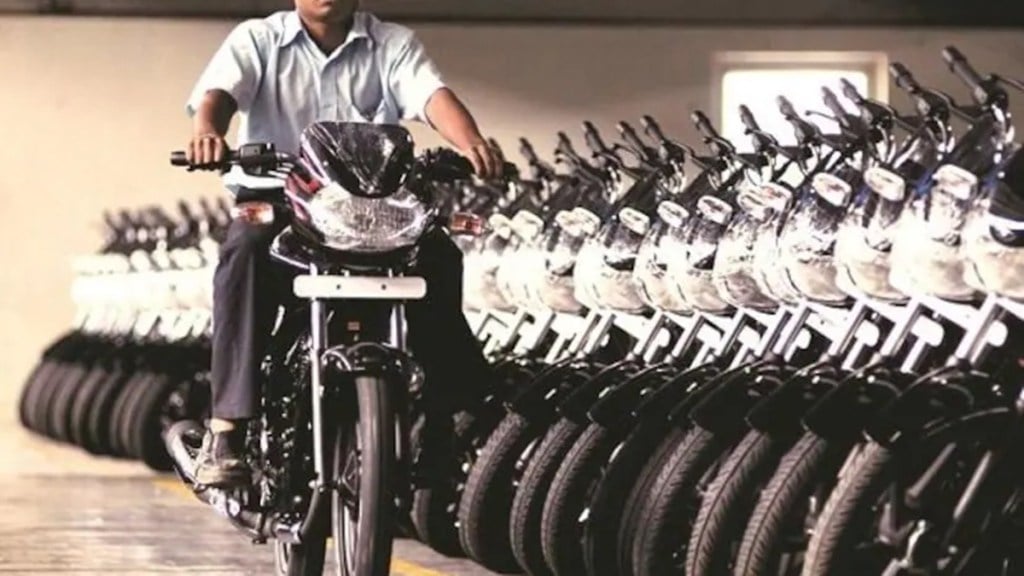
The two-wheeler industry scaled a fresh peak in 2025, with annual sales crossing the 20-million mark for the first time, ending a six-year period of stagnation. Total sales during January–December 2025 stood at 20.3 million units, a 7.1% increase over 2024 volumes of 18.9 million units and 3.5% higher than the previous record of 19.6 million units achieved in 2018.
The sector had witnessed a downturn beginning in 2019, followed by a prolonged slowdown as the Covid-19 pandemic disrupted demand. The recovery was further delayed by successive regulatory changes, including the mandatory introduction of combined braking systems (CBS) and the transition to BS-VI and OBD-II emission norms. Industry estimates suggest these compliance measures raised two-wheeler prices by nearly 30%, putting pressure on affordability, especially in the mass commuter segment.
Policy-Led Recovery
Demand revival in 2025 was aided by a key GST reform announced in September. The tax rate on two-wheelers with engine capacities below 350 cc was reduced to 18% from 28%, improving affordability and lifting volumes in the commuter category. In contrast, two-wheelers above 350 cc attracted a higher GST of 40%, increasing prices for premium and leisure models.
Following the GST cut, the industry witnessed healthy double-digit growth, compared with a largely stagnant performance in the pre-GST-cut period. Between January and August 2025, sales grew marginally by 1.4%, with 12 million units sold. However, growth accelerated sharply in the post-reform period, with sales rising by 16.5% between September and December 2025, totaling 8,295,861 units in just four months.
Electric Momentum
The year also marked a structural shift in the market, with electric two-wheelers accounting for 6.3% of total industry sales, up marginally from 6.1% in 2024 and a negligible 0.1% share in 2018, underscoring the rapid adoption of EVs over the past seven years.
Among manufacturers, Hero Electric retained its leadership position despite a decline in market share. The company sold 5.8 million units in 2025, translating into a 28.7% share, down from 36% in 2018.
Honda Motorcycle & Scooter India also saw a marginal erosion in its share. The Japanese major posted sales of around 5.0 million units in 2025, accounting for 24.8% of the market, compared with a 25.8% share in 2018, despite similar absolute volumes.
Homegrown TVS Motor strengthened its market position in 2025, increasing its market share to 18.7% from 17.2% in 2024. In contrast, Bajaj Auto saw its share decline to 10.6%, down from 11.5% in the previous year. Suzuki Motorcycle recorded a modest gain, with its market share rising to 5.4% from 5.1% in 2024.