



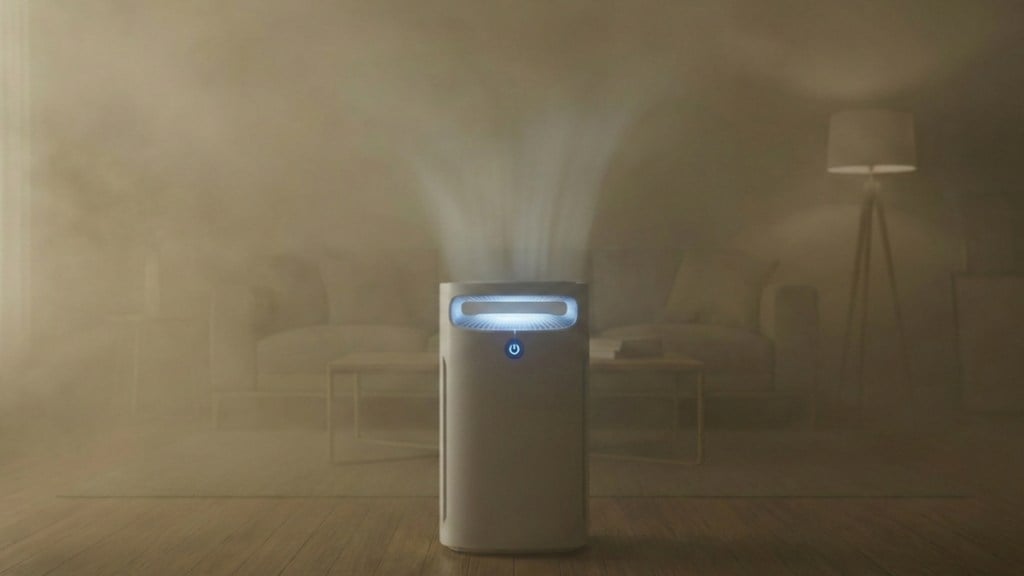
The Centre on Friday told the Delhi High Court that cutting the Goods and Services Tax on air purifiers without following the required procedure could open a ‘Pandora’s Box’. The court was hearing a petition that asked for air purifiers to be treated as medical devices and for the GST on them to be reduced from 18% to 5%, at a time when Delhi is facing a severe air pollution crisis.
The Centre said that the matter is being examined at the highest level. It, however, sought more time to give a measured response. “This will open a Pandora’s Box. Parliamentary committee has recommended something to us. It will be considered. There is a process. We are not saying anything. We are not saying whether it will be done or not. Constitution issue is involved,” the Additional Solicitor General (ASG) N Venkataraman, representing the Centre, told the Court. The ASG added that if the GST Council mechanism is bypassed in this case, then more GST exemptions may be sought without following the proper procedure.
Air purifiers to be classified as medical devices?
As the petitioner, advocate Kapil Madan, continued to press his argument that air purifiers should be treated as medical devices and taxed at a lower rate, the court observed that such policy decisions would likely have to wait until the GST Council meets.
The judges noted that the government was worried that allowing such a request could lead to many similar petitions asking the court to direct the GST Council on tax matters.
Madan argued that a plain reading of the tax notification showed that air purifiers should fall under one schedule but were being taxed under another.
The ASG assured the court that the government would clarify, through its written response, when a meeting of the GST Council is held.
‘Not only is the clean air taxed, it is being taxed wrongly,’ says petitioner
The court remarked that the issue affects everyone, especially given the current pollution situation.
Madan said that any delay would mean continued hardship for Delhi residents. He pointed out that deciding the matter was a straightforward process, but delays would only worsen the impact on the city. He also argued that clean air was not only being taxed but was being taxed incorrectly.
The court responded that it could not act on the matter at this stage without first hearing the government’s reply. It asked the government’s counsel to ensure the issue is taken up soon after the court’s vacation.
The court then gave the government ten days to submit its response. The next hearing has been scheduled for January 9, 2026, and the petitioner has been allowed to file his reply before that date.