



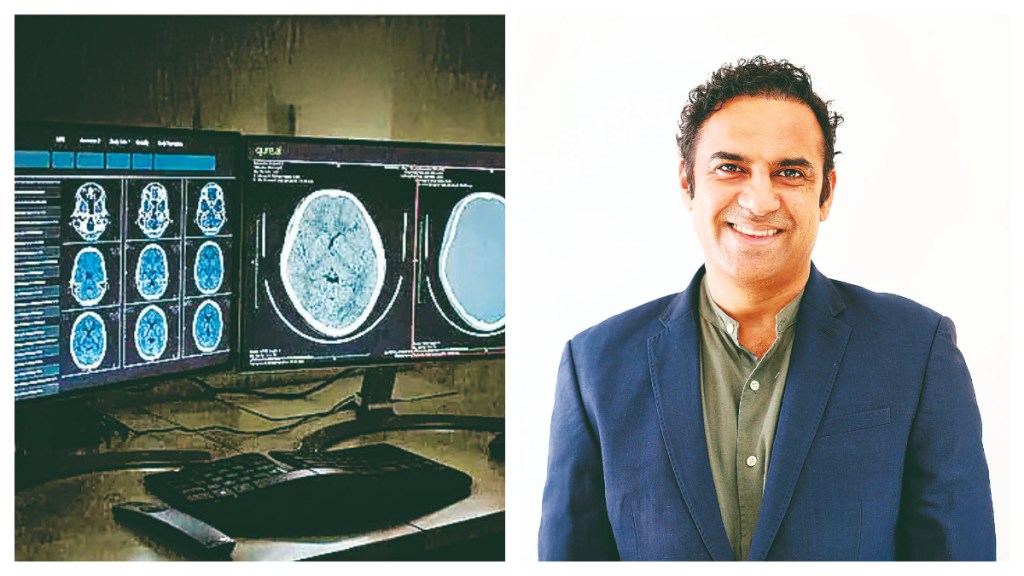
Frontline healthcare workers – including nurses, doctors, and support staff – face intense pressure on account of heavy patient workload and staffing shortages. More than 40% of their time is spent on manual data collection, giving them little time to engage more with patients. AIRA, an AI-powered co-pilot tool developed by Mumbai-based healthtech firm Qure.ai, is proving to be a game-changer for caregivers. It acts as a digital assistant to help with patient documentation, clinical decisions, and administrative tasks, freeing them up for more patient care.
“AIRA in the hands of every healthcare worker will free up their time for more patient interactions via automated data collection and better clinical protocol adherence,” said Prashant Warier, co-founder and CEO, Qure.ai. “It is being piloted in several regions, including India and some countries in Africa, with new users expected in Asia in the coming months. With AI, we can make a seismic shift towards health equity in low- and middle-income countries. We have demonstrated this in tuberculosis (TB) and are motivated to do the same now for primary healthcare,” he told FE.
Qure.ai applies advanced AI to medical imaging, particularly chest X-rays and CT scans, to support early detection, triage and structured follow-up for conditions such as tuberculosis, lung nodules (which can be an early indicator of lung cancer), and other critical chest conditions. Its solutions help clinicians identify important findings more quickly and consistently and improve real-time decision-making in busy clinical settings. Globally, Qure.ai’s technology has impacted more than 36 million lives, is deployed across 4,700+ sites, and is active in 105+ countries, Warier said.
AIRA is designed to automate the digitisation of medical records, all while reducing repetitive and time-consuming tasks that frontline healthcare workers often need to perform throughout the day. In high-volume, resource-constrained settings, including HIV care, TB, mother and child care and other chronic disease nurses, doctors, frontline health workers find themselves torn between administrative and clinical tasks, with the former consuming a lot of the bandwidth.
Qure.ai’s tool supports this by taking over predictable, business-as-usual tasks such as filling the electronic medical record, making appointment reminder calls, and managing standard patient follow-ups. This frees up time, mental bandwidth, and clinical judgment for doctors.
“At high-volume clinics where there are limited resources, the demands of seeing multiple patients a day can be intense,” said Dawn Kuruvilla, a medicine consultant who led the first AIRA pilot at Robertsganj, UP. “It has quietly become an essential support and augments us as clinicians by lifting the burden of paperwork and routine tasks that once consumed our time. With that load off the shoulders of doctors, one can be more attentive, compassionate and effective at the bedside.”
AIRA Workflow
AIRA is powered by large language models, advanced speech-to-text systems and multilingual translation capabilities. It listens to patient interactions, converts speech into text, translates when required and then feeds that information into the language model to generate accurate documentation, summaries and next-step actions.
One of its most critical benefits is speed: the system is designed to generate a complete summary which gets added to the existing electronic medical record/information system of the user, while still enabling the healthcare worker to make final edits. The system is designed to sit on top of existing clinical workflows and make them smoother and easier to manage. Many clinics still rely on manual typing or handwritten records, which can be difficult to maintain. AIRA helps remove this challenge by enabling voice-based input and by digitising information that usually exists only on paper. In regions where paper documentation is still the primary system, clinicians can take a photograph of a form and AIRA will convert the entire document into a clean digital file. This improves accuracy, ensures better record-keeping and makes patient data timelier.
Scaling Health Equity
“AIRA’s use case is to support primary care settings such as primary health centres in India, with physicians, nurses, and other field workers at the heart of it,” Warier said. The company’s goal with this tool is to enable and upskill a million healthcare workers. The Qure.ai offering is being adapted to work within multilingual and resource-constrained healthcare systems. “The aim is to create a scalable and language-flexible tool that supports health workers in regions where documentation systems are still evolving and where workforce strain is high,” he added.
In India, Qure.ai plays a key role across public and private health networks. Their technology has powered large-scale cancer and lung health screening programmes, supported state government-led initiatives in Punjab and Goa, and enabled mass TB screening and early detection across high-burden districts. Beyond lung health, Qure.ai solutions support cardiovascular risk assessment from routine imaging and enhance critical care delivery, especially in emergency and stroke settings where rapid interpretation of head CT scans can be lifesaving.