



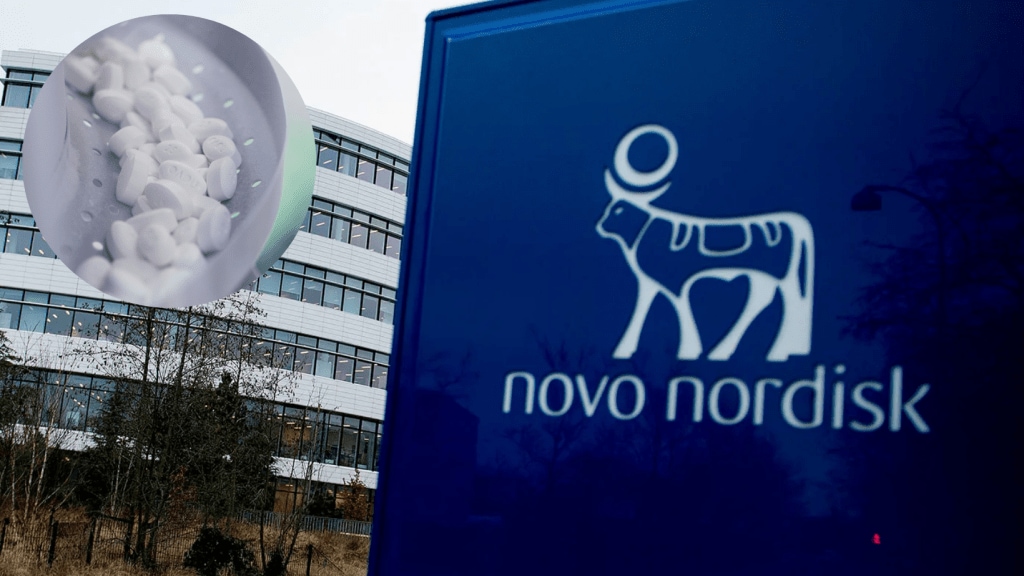
Novo Nordisk is set to sell its new oral Wegovy weight-loss pill in the United States at a much lower price for people paying out of pocket. This is aimed at expanding access beyond insurance coverage.
From January 5, 2026, self-pay patients can purchase the lower 1.5 mg and 4 mg doses for $149 per month, and the higher 9 mg and 25 mg doses are priced at $299 per month. The pricing applies only to patients who pay directly, without using private or government insurance, indicating a strategic shift in how obesity drugs are marketed in the US.
A response to limited insurance coverage
Weight-loss medications in the US continue to face patchy insurance coverage, leaving many patients with high out-of-pocket costs or no access at all. By introducing a fixed self-pay price, Novo Nordisk is bypassing insurance hurdles such as prior authorisations and reimbursement delays. The $149 price point positions the Wegovy pill as the most affordable prescription semaglutide-based weight-loss option in the US so far, making it more competitive with other oral treatments and wellness alternatives.
FDA approval that enabled the price reset
The pricing follows the US Food and Drug Administration’s approval of the oral version of Wegovy in late 2025. This marked the first time semaglutide, previously available mainly as a weekly injection, could be taken as a once-daily pill for obesity treatment. While earlier cash-pay programmes had already lowered prices for injectable Wegovy to about $199–$349 per month, the pill introduces a simpler, needle-free option that broadens the drug’s appeal.
Same medicine, different way into the body
Both the pill and the injection contain semaglutide, which works by reducing appetite, increasing feelings of fullness, and helping regulate blood sugar. The key difference lies in how the drug is absorbed. As Dr Yousef Said, Medical Director at GluCare. Health by meta[bolic], explains, “The real difference is not what the drug does, but how it enters the body. The injection is absorbed steadily under the skin, while the pill has to be absorbed through the stomach and intestine. That means the pill must be taken very precisely, on an empty stomach and exactly as instructed, to work well,” Said told Gulf news.
What the clinical evidence shows
Studies indicate that when taken correctly, the pill can deliver weight-loss results comparable to the injectable version. A Phase 3 trial, OASIS 4, published in The New England Journal of Medicine, found that adults taking the once-daily 25 mg oral semaglutide pill lost an average of 16.6 per cent of their body weight over 64 weeks, compared with about 2.7 per cent for those on placebo, when combined with lifestyle support. Commenting on typical outcomes, Dr Said told Gulf News, “People can lose a significant amount of weight over time, often in the range of 15 percent of their body weight over about a year.”
Why adherence matters more than the format
Doctors emphasise that long-term success depends on which form of treatment a patient can consistently follow. Some patients prefer a weekly injection, while others find a daily pill easier to manage. “Some people do better with a weekly injection, others prefer a daily pill. The option that a patient can stick to long term is usually the one that delivers the best results,” Dr Said explains. Dr Ali El Houni, Consultant Endocrinologist at Medcare Royal Speciality Hospital, told Gulf News, “At the maximum maintenance doses approved for weight loss, the efficacy is very similar as compared to the injection.”
By offering the Wegovy pill at $149 per month for self-pay patients, Novo Nordisk is betting that affordability, convenience, and direct access will drive wider adoption of oral weight-loss therapy. If successful, the strategy could influence how other obesity and semaglutide-based drugs are priced and sold in the future and giving patients a prescription option that avoids insurance complexity but still requires medical supervision and lifestyle changes to work effectively.