



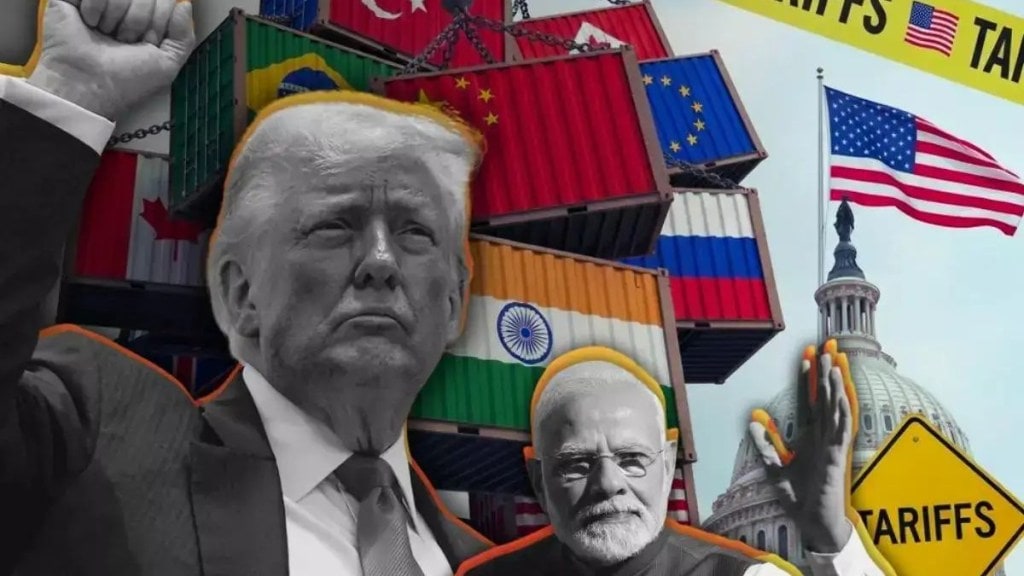
The US under Trump 2.0 unsettled the global economic order in 2025—with little regard for its own legacy as the world’s foremost advocate of free trade and open markets. The volatile temperament of the executive head of the world’s most powerful nation turned a mammoth tariff offensive into a whirlwind affair: outrageous threats followed by sudden retreats, interspersed with opaque deal-making.
It was never a level playing field. Trump kept conjuring up fresh moves against major trading partners. Most of them—including the EU, the UK, Japan and South Korea—capitulated with minimal protest and struck deals by July or early August, ahead of the August 27 deadline for country-specific “reciprocal tariffs”.
None of these arrangements honoured established international frameworks or the customary give-and-take of bilateral negotiations. But that was never Trump’s concern whose disdain for multilateral rules extended well beyond trade.
Trump’s dubious belief that running a trade surplus with the US amounts to an economic crime was accepted by almost everyone—except China and India.
How did China and India register their protest
Beijing resisted by resolve; New Delhi by expediency. China, the principal early target alongside Canada and Mexico, mounted an effective counter. Trump was forced to retreat from his most extreme tariff proposals, and a truce emerged by late October. China’s leverage stemmed not only from its role as a low-cost supplier across a vast range of goods, but also from its dominance in rare earths and critical minerals—inputs vital to new-age manufacturing.
India’s experience was markedly different. Additional tariffs imposed over MFN rates reached a punitive 50%—including a 25% reciprocal tariff and an equal penalty for Russian oil purchases—effective mid-September. This was unexpected, especially since New Delhi was among the first to open dialogue after Trump announced the so-called “Liberation Day tariffs” in early April.
An India–US bilateral trade agreement (BTA), agreed in principle during Prime Minister Narendra Modi’s February visit to Washington and expected to be signed by autumn, remains elusive. India’s refusal to endorse Trump’s repeated claims of halting “Operation Sindoor” may have irked him, but the prolonged delay—despite multiple rounds of talks—points to deeper disagreements.
New Delhi’s determination to protect vulnerable domestic constituencies, particularly farmers and livestock breeders, appears to have prevented Trump from securing a deal he could project as a political victory. At the same time, India has made pragmatic overtures. Russian oil imports have been gradually moderated; defence and energy purchases from the US scaled up; nuclear patents allowed; supplier liabilities capped; and the ability of nuclear plant operators to sue material suppliers circumscribed.
Plans to dilute ‘public safeguard’
Plans are under way to dilute “public safeguard” provisions in India’s IPR laws. Earlier, India scrapped equalisation levies on overseas e-commerce and digital service providers, benefiting Big Tech. Reports suggest that duty-free or low-duty imports of US soyabean and corn may be permitted, though dairy—especially liquid milk—remains protected.
Taking stock of 2025, Trump’s tariff assault has not unravelled as quickly as expected. The US economy beat forecasts, with GDP growth of 3.8% in the June quarter and 4.3% in September. Consumer spending remained resilient, aided by a booming stock market that disproportionately benefited high-income households. The trade deficit narrowed sharply—from a peak of $136.4 billion in March to $53 billion by September.
Average effective import tariffs jumped from 2.5% in January to 27% by April, before easing to just under 17%—still a 90-year high. Tariff revenues nearly tripled, potentially adding over $250 billion to government coffers for the year. Such numbers allow Trump to argue that his policies reclaimed “stolen wealth” and narrowed the trade gap. Yet consumer sentiment remains subdued. Persistently high prices are likely to weigh on spending in coming quarters, and US consumers—not exporters—will ultimately bear the brunt of the tariffs.
For now, India’s merchandise exports to the US have rebounded—from a steep fall during May–September to an unexpected 22% rise in November. But this recovery is driven by temporary factors: clearing backlogs, shifting to less substitutable products, and absorbing margin pressure to retain long-standing customers. Exporters cannot endure such stratospheric tariffs indefinitely. If unresolved, trade could become a larger drag on India’s GDP, already heavily reliant on domestic demand.
India’s simple average MFN tariff of 17% is among the highest globally, though effective rates are far lower. Over 90% of Customs revenues come from less than 4% of tariff lines, and import duties account for just 3.8% of Union Budget receipts—no higher than in the US.
India therefore has room to cut tariffs across most lines. But indiscriminate reductions would be a mistake. Selective import substitution can still support domestic value creation. With greater experience in negotiating FTAs, India is rapidly expanding preferential trade—over 60% of imports could soon flow through such routes, up from less than a quarter today.
The objective must be competitiveness. Trade policy should serve that end—not ideology. China withstood US pressure not through moral appeals to free trade, but through sheer economic leverage. India’s strategy must be no different.