



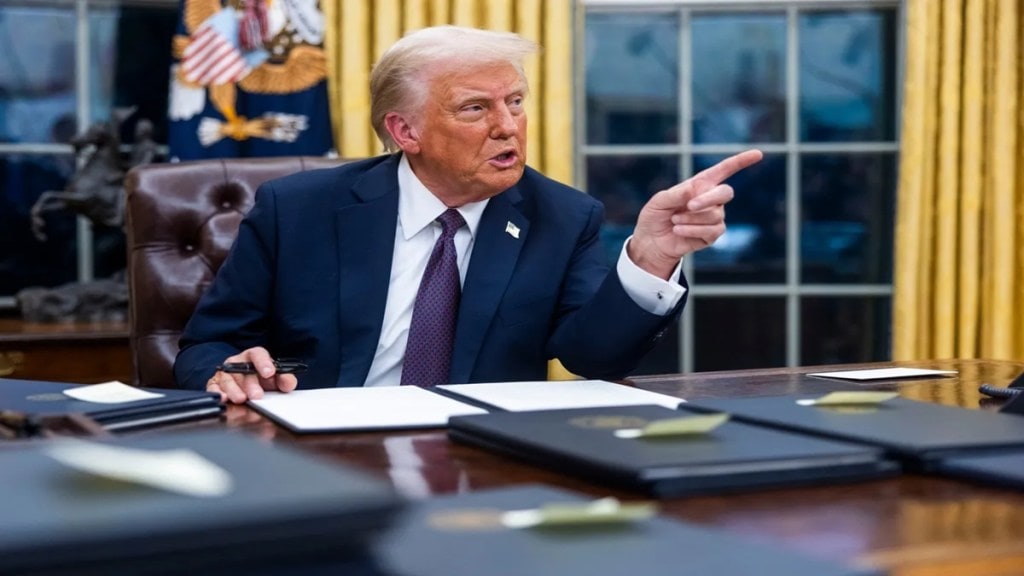
United States President Donald Trump has reiterated his challenge to the traditional interpretation of birthright citizenship, asserting that it was historically meant solely for children of enslaved individuals.
His views came during an interview with POLITICO, as the US Supreme Court prepares to hear a significant case on the subject.
The interviewer asked Trump if the court sides with him and ends birthright citizenship, would he try to take away citizenship from people who already have it?
On Revocation
Trump said, “Honestly, I haven’t thought of that, but I will tell you this: the case is very interesting because that case was meant for the babies of slaves.
And if you look at the dates on the case, it was exactly having to do with the Civil War. That case was not meant for some rich person coming from another country, dropping, putting a foot in our country, and all of a sudden their whole family becomes, you know, United States citizens. That case is all about slaves, the babies of slaves.
And it was a good reason for doing it, and that’s all it was about. And people now are understanding it. It’s been explained to them, and I think the court understands it too.”
On January 20, 2025, President Donald Trump signed an executive order restricting birthright citizenship to infants born to illegally present parents or temporary visa holders, such as students or tourists. According to President Trump’s executive order, American citizenship can only be conferred to children whose parents are US citizens or have a US Green Card.
14th Amendment
The ratification of the 14th Amendment remains one of the biggest contentious issues in the birthright citizenship case. Trump has stated that the 14th Amendment was ratified shortly after the Civil War, granting citizens of the United States automatic citizenship.
As of now, those born in the USA are protected under the 14th Amendment of the American Constitution, which states – The Fourteenth Amendment of the U.S. Constitution guarantees citizenship to all children born in the United States, regardless of race, color, or ancestry.
The Fourteenth Amendment’s Citizenship Clause states,” all persons born or naturalized in the United States, and subject to the jurisdiction thereof, are citizens of the United States.
“That would be a devastating decision if we lose that case. Because our country cannot afford to house tens of millions of people who came in through birthright citizenship. When that happened, it was meant for the babies of slaves.
And if you look at the exact dates that it was passed, it all had to do with the Civil War and the end of the Civil War. It’s that little period of time, and people now are starting to understand it,” added Trump in the interview to POLITICO.
The birthright citizenship case remains a hot topic for non-immigrants in the US. The case is now in the highest court in the US and the US Supreme Court has agreed to hear the birthright citizenship case, but the dates for the hearing of arguments have not been decided.