



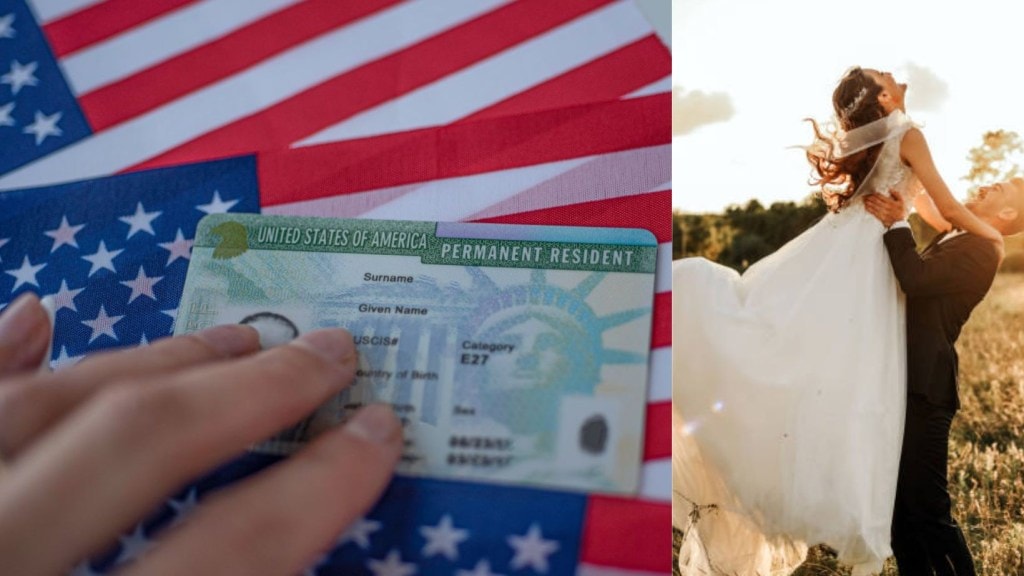
For decades, marrying an American citizen was seen as one of the safest ways to secure a US Green Card. Today, that belief no longer holds true. Immigration lawyers warn that marriage alone will not guarantee permanent residency in the United States. What matters more now is whether the marriage looks real in everyday life.
“Being in a relationship does not get you a Green Card. Living together gets you a Green Card,” said Brad Bernstein, a US immigration attorney with over 30 years of experience.
Under US law, spouses of American citizens fall under the category of “immediate relatives” and are eligible to apply for a Green Card. But eligibility does not mean approval.
During the Donald Trump administration, marriage-based Green Card applications have come under stricter examination. Immigration officers are focusing less on paperwork and more on whether couples actually live like husband and wife.
“The government does not care if you are legally married,” Bernstein said. “They care if your marriage is genuine.”This heightened scrutiny is part of a broader immigration crackdown. The Trump administration suspended the Diversity Visa Lottery, which earlier offered up to 50,000 visas each year to people from countries with low immigration to the US.
Living apart can lead to rejection
According to Bernstein, one of the biggest red flags for immigration officials is when married couples do not live together. “If spouses do not share a home, then their Green Card case is already going down,” he said. He explained that USCIS officers do not accept reasons like work, education, money problems or convenience for living separately. “They do not care why you live apart,” Bernstein said. “They only care whether you actually live together as husband and wife.”
In a video shared on Facebook, Bernstein said that cohabitation is the most important factor in marriage-based Green Card cases. “Immigration rules see a real marriage as one where spouses share a home every day,” he said. If couples do not live together, officers begin questioning the relationship. Once doubts arise, the case can quickly turn into an investigation. “When they start questioning, they are looking to deny you,” Bernstein warned. “If you want a marriage Green Card, you live together. Period.”
USCIS and ‘good faith’ marriages
US Citizenship and Immigration Services says it evaluates the totality of a relationship. Officers look beyond addresses and documents to decide if a marriage was entered into in good faith. According to USCIS policy, even legally valid marriages can be denied if there was “no good faith intent to live together as spouses” and if the marriage was meant to bypass immigration laws.
More changes ahead
The tightening does not stop with marriage cases. USCIS has also reduced the duration of work permits for Green Card applicants to 18 months. President Trump has ordered a review of Green Cards held by permanent residents from 19 countries earlier marked as “countries of concern.” This decision followed recent violent incidents involving Green Card holders in Washington, DC, and at Brown University. For immigrants hoping marriage will open the door to permanent residency, the message is clear. A wedding certificate is not enough anymore. What matters is how a couple lives after the wedding. As Bernstein put it simply, “Marriage on paper means nothing if you are not sharing a life together.”