



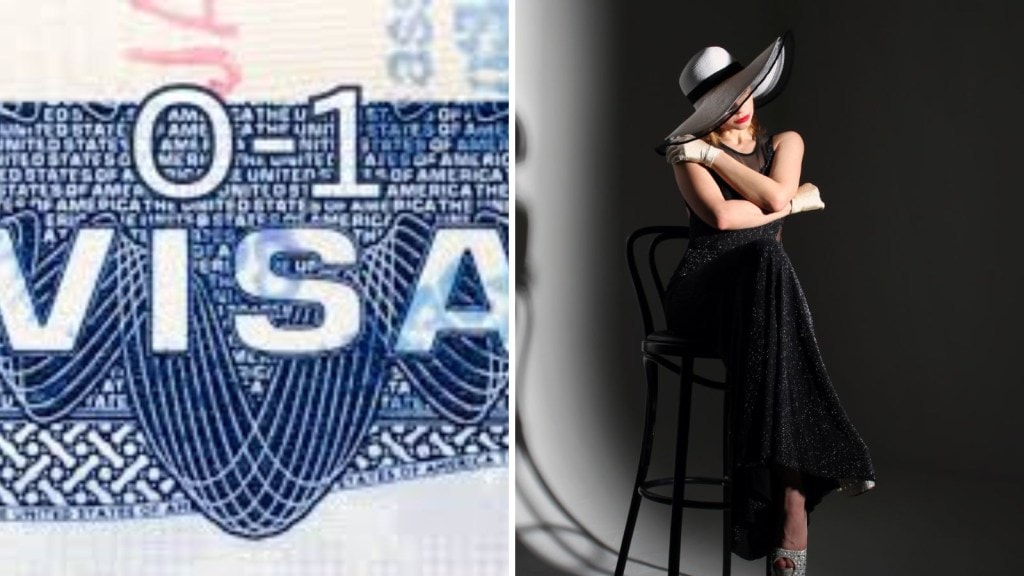
The world of US visas for creative talent is changing. What used to be reserved for movie stars, famous musicians, and top artists is now opening up to social media influencers and online creators. According to a recent report from the Financial Times, today, follower counts, likes, and online earnings can help someone qualify for an O-1B visa — once reserved for those with awards and critical acclaim — showing how the rules of “extraordinary talent” are adapting to the digital age.
O-1B visas are shifting towards social media stars
Immigration attorney Michael Wildes, whose father defended John Lennon and Yoko Ono from deportation decades ago, spoke to The Financial Times, describing how the focus has shifted from classic icons to “scroll kings and queens.” “In the past, I represented names like Boy George and Sinéad O’Connor,” Wildes told FT. “Now a growing number of clients are social media stars and OnlyFans creators.”
As the US has tightened several visa rules, including H-1B and F-1, while partially or fully restricting entry from as many as 39 countries, the popularity of the O-1 visa has surged. According to immigration attorneys cited by FT, the O-1 visa, reserved for individuals with “extraordinary ability” in arts, science, business, education, or athletics, has seen a dramatic increase in applications from influencers.
High follower counts and earnings can now serve as commercial success. Landing a paid brand deal can serve as proof of talent, and appearing at an event or launch can be treated as starring in a renowned production, according to Fiona McEntee, founding partner of the McEntee Law Group. “If you think about how many people are on social media every day and how few actually make a living from it, it really is a skill,” she said.
O-1 visas, including O-1B for arts and O-1A for other exceptional abilities, increased by more than 50 percent from 2014 to 2024, according to FT. If compared, the total number of non-immigrant visas issued grew only 10 percent. Still, O-1 visas remain a small fraction of all non-immigrant visas, with fewer than 20,000 granted in 2024. This is less than one-tenth the number of H-1B visas issued. In September, President Donald Trump introduced a $100,000 one-time fee for new H-1B petitions, signalling bigger changes in US immigration policy.
Concerns from traditional artists
Some immigration lawyers worry that the shift toward online influence is changing how artistic talent is judged. Protima Daryanani, managing partner of the Daryanani Law Group, told FT, “We have scenarios where people who should never have been approved are getting O-1s. The process has been watered down because people just meet the categories.”
Shervin Abachi, founder of Abachi Law in New York City, added that artists who create work not designed for online hits may be at a disadvantage as immigration officials now rely on metrics like follower count and algorithm-driven engagement. “Officers are now seeing petitions where value is framed almost entirely through algorithm-based metrics,” Abachi told FT. “Once that becomes normal, artistic merit starts to look like a scoreboard.”