



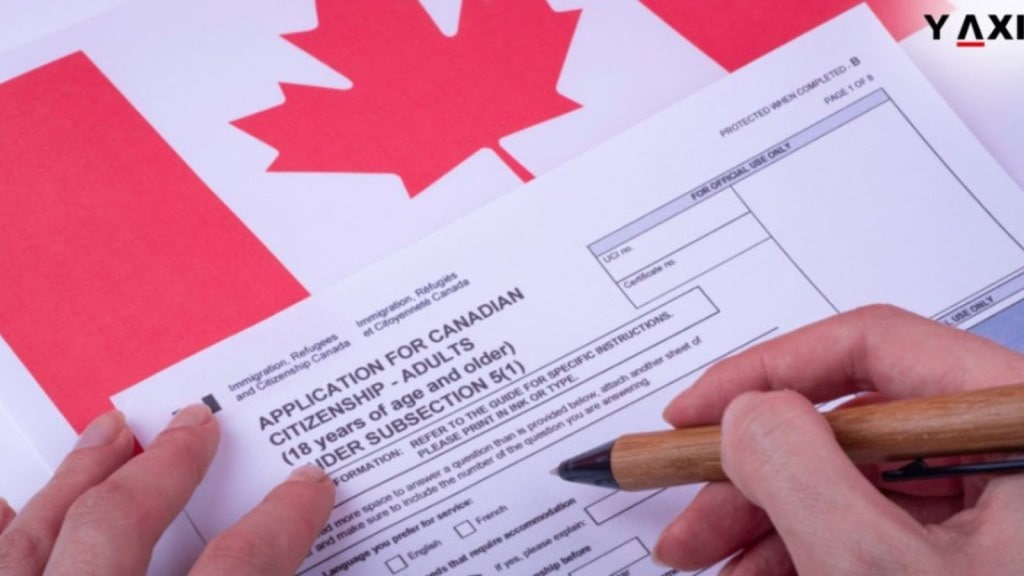
Canada is set to introduce several new laws and changes in 2026. Under Prime Minister Mark Carney, the government is correcting past citizenship issues for thousands of “Lost Canadians” born abroad. The country has also unlocked its Immigration Levels Plan for 2026 to 2028 as part of the federal budget for the 2025–26 financial year.
The country plans to welcome significantly fewer foreigners across most immigration categories (including student visas) in 2026. Canadian officials have also been given the power to suspend applications partway through the process under certain conditions. The Express Entry pathway was also expanded to create a new category for doctors while H-B visa holders now have an accelerated immigration route to Canada.
New Citizenship rules for “Lost Canadians”
At least 115,000 people born outside Canada, often called “Lost Canadians,” could become eligible for citizenship under new rules coming in 2026. The changes, part of Bill C-3, let Canadian parents born abroad pass citizenship to children born or adopted abroad. Parents must meet a “connection test,” showing they spent at least three years in Canada before their child’s birth or adoption.
“Canadian citizenship will be provided to people born before the bill comes into force, who would have been citizens if not for the first-generation limit or other outdated rules of past legislation,” according to IRCC.
This law will fix errors from a 2009 Conservative citizenship law, which was later ruled unconstitutional by the Ontario Superior Court. Immigration Minister Lena Metlege Diab said the new law will fix existing issues in the Citizenship Act. “Bill C-3 will fix long-standing issues in our citizenship laws and bring fairness to families with children born or adopted abroad. It will provide citizenship to people who were excluded by previous laws, and it will set clear rules for the future that reflect how modern families live. These changes will strengthen and protect Canadian citizenship.”
Immigration cuts and caps
Canada’s immigration plan for 2026–2028 introduces major reductions in the number of newcomers, including permanent residents, international students, temporary workers, and refugees.
- Permanent residents: The new cap is 380,000 in 2026, down from 395,000 in 2025 and much lower than 483,000 in 2024. The economic category will grow from 59% of admissions in 2025 to 64% in 2026. This means the number of economic immigrants will rise from about 229,750 in 2025 to nearly 239,800 in 2026. At the same time, family reunification numbers will fall slightly by about 4.5%, and refugee and humanitarian admissions will decline by roughly 9.7%.
- Temporary foreign workers: The cap is set at 230,000, down from 367,750 in 2025. The government says these reductions follow several reforms introduced in 2024 to better manage the international student system.
- Refugees and protected persons: The target is 56,200, nearly 12,000 fewer than the previous goal
- International students: Admissions will drop to 155,000 new student visas in 2026, with 150,000 planned for 2027 and 2028. This is a big decrease from 360,000 in 2024 and 437,000 in 2025.
- Temporary residents: Total temporary resident admissions will drop from 673,650 in 2025 to 385,000 in 2026, and further to 370,000 in 2027 and 2028.
- Transitioning temporary residents to permanent residency: A one-time program will allow up to 33,000 temporary workers to become permanent residents in 2026 and 2027. (For workers in “in-demand sectors” like healthcare and trades.) Another one-time initiative will help around 115,000 eligible Protected Persons already in Canada gain permanent resident status over the next two years.
Stronger processing under Bill C-12
One of the major shifts in 2026 comes from Bill C-12, officially known as the Strengthening Canada’s Immigration System and Borders Act. Unlike typical updates that adjust eligibility criteria, this law gives immigration authorities more control over applications already in process.
Under the new rules, some applications could be suspended, cancelled, or terminated under certain conditions. This move is designed to improve system integrity and administrative control, rather than just approving or rejecting files case by case. For applicants, it means that being “in process” no longer guarantees final approval.
According to IRCC, “Bill C-12 is designed to keep people in Canada safe. It would make sure law enforcement has the right tools to: protect Canada while upholding Canada’s privacy and Charter rights, keep our borders secure, fight transnational organized crime, stop the flow of illegal fentanyl as well as crack down on money laundering.”
Express entry for doctors
In 2026, Express Entry will introduce a new selection category specifically for doctors. The new category will cover:
- General practitioners and family physicians (NOC 31102)
- Specialists in surgery (NOC 31101)
- Specialists in clinical and laboratory medicine (NOC 31100)
- Applicants will need at least 12 months of work experience in Canada to qualify.
New options for H-1B visa holders
Another measure in focus is an accelerated immigration pathway for US H-1B visa holders. Under this program, “Anyone with a valid H-1B Speciality Occupations visa living in the US was able to apply and successful H-1B visa applicants receive an open work permit for up to 3 years.” The pathway is designed for highly skilled professionals already vetted under the U.S. H-1B system.
Please note- The initial 10,000-application cap for the H-1B open work permit was already reached. New applications are closed now.
Study permit updates
International student policies are also changing in 2026. Caps and allocations will guide intake at the federal and provincial levels. A PAL/TAL exemption will apply to certain graduate-level students at public institutions starting January 1, 2026. Provincial allocation targets will work differently at different places, with Ontario at 70,074, Quebec at 39,474, and other provinces and territories receiving smaller allocations.
According to IRCC, “Next year, IRCC expects to issue up to 408,000 study permits, including 155,000 to newly arriving international students, as outlined in the 2026–2028 Immigration Levels Plan, and 253,000 extensions for current and returning students. This number is 7% lower than the 2025 issuance target of 437,000 and 16% lower than the 2024 issuance target of 485,000.”
Paused home care worker pilots
The Home Care Worker Immigration pilot will remain paused, with IRCC confirming no reopening in March 2026.
Due to ongoing high demand and limited spaces, intake for the Home Care Worker Immigration pilots is paused and will not reopen in March 2026: https://t.co/jM45SxZlAR
— IRCC (@CitImmCanada) December 20, 2025
While we understand that this will be disappointing for prospective applicants and their families, this pause… pic.twitter.com/vnpKLX2k3O
Business Immigration and new entrepreneur pilot
Canada is tightening business immigration programs while preparing a new targeted entrepreneur pilot. Restrictions will limit general intake to improve inventory and processing efficiency. The pilot is expected to be more focused, selecting entrepreneurs who meet specific economic and business criteria.