



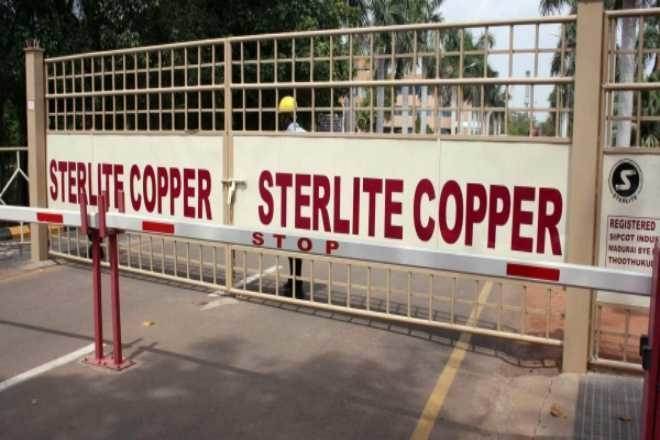
Vedanta on Friday said Sterlite Copper plant cannot be singled out for its closure when there were nearly 67 other industrial units, including three thermal plants, in the same industrial belt at Tuticorin.
In his continuing arguments on Friday, before the division Bench of the Madras High Court which is hearing the company’s case, senior counsel for Vedanta Aryama Sundaram said there was no grounds for closure in the absence of any evidence of pollution as closure was not the only remedy even if there were crippling pollution problems.
Sundaram also submitted that Tamil Nadu Pollution Control Board (TNPCB) had only directed the removal of copper slag because it was obstructing the flow of the river and not because it was a pollutant, as it is non-hazardous. The allegation of copper slag being a pollutant was not relevant to TNPCB’s case until the matter reached the NGT, he added.
To substantiate his argument, Sundaram pointed out that the research referred to by the state to deem copper slag as a pollutant was based on processes and older technologies different from the processes followed in Sterlite.
The Stanford report cited by the state had mentioned about copper smelters that operated between 1860s and 1950s. That technology is now obsolete as we are 60 years down the line and technology has improved in that period.
Citing reports that show copper slag is an inert material, he emphasised and further said if it were a pollutant it would not be recommended for land-filling and road construction.
Sundaram said CPCB had clarified to TNPCB in 2003 that the copper slag produced in Sterlite Copper would not be toxic given the high temperatures at which it is produced.
It is highly stabilised, non-toxic and non-leachable.
Sundaram went on to cite reports from the Indian Road Congress, National Institute of Oceanography, Bureau of Indian Standards and the NHAI to argue that the copper slag produced in Sterlite is non-toxic.
Sundaram argued that as per the latest MoEF rules, copper slag is non-toxic and cited MoEF notes from 2008 and 2016, which indicate that gypsum and slag from pyro-metallurgical operations fall under non-hazardous category.
While countering TNPCB’s grounds about Sterlite not having hazardous waste authorisation, he pointed out that the TNPCB itself was sitting on the application for the renewal of Hazardous Waste Authorisation and it is wrong to say Sterlite did not submit it.
Sundaram also stressed that it was necessary to receive the consent to operate (CTO) first to be able to secure authorisation for handling hazardous waste, and not the other way around.
The company’s arguments will continue on next Thursday (July 4) and after Vedanta, the HC expects to hear the arguments from other petitioners/pleaders, sources here said.