



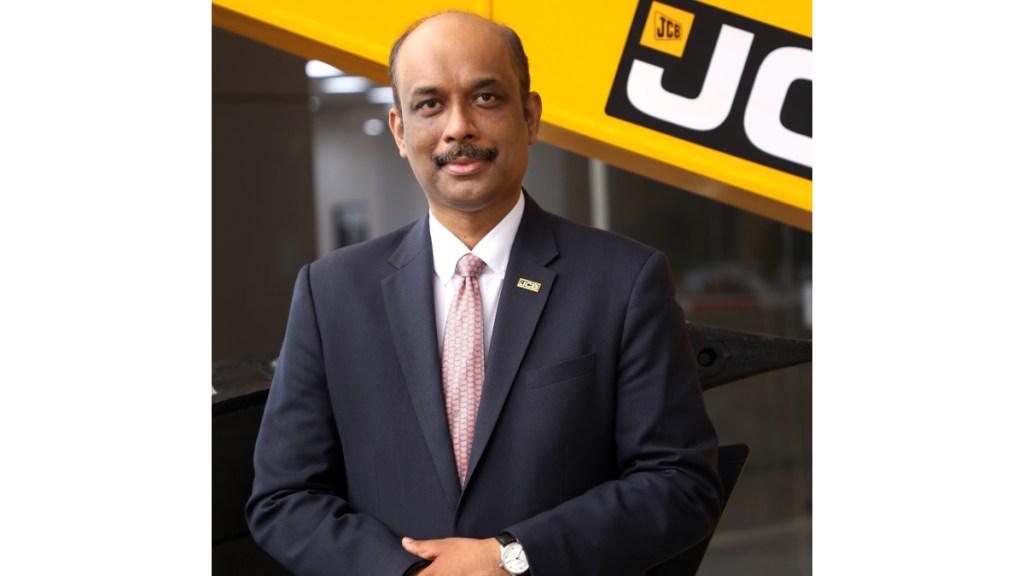
India is the third largest market for construction equipment and off-highway equipment globally. While the megatrend of electrification, connected and autonomous is still time away in the heavy machinery space, Deepak Shetty, CEO & MD, JCB India shares his take on future trends.
What are your views on alternate energy like H-CNG, hydrogen and electric in the off-road construction equipment industry?
JCB is much ahead of most of its competition when it comes to hydrogen technology and is absolutely focused on that. Around 3 years ago, we launched CNG backhoe loader, and a year and half later, we launched India’s first mini-electric excavator. JCB is fully committed to alternate energy. We are continuously investing in R&D.
Are you also looking at improving localisation levels to improve capacity utilisation and debottlenecking?
We are already doing a lot, in fact, for our IoT (Internet of Things) platform we work very closely with Wipro and Pricol. We have developed the complete solution in India. And now we are putting it on our export machines and sending it all around the world. The whole ecosystem is being developed and JCB is working closely with our partners.
What are your views on autonomous capabilities in the off-road construction equipment segment as this could offer almost 24×7 operations?
Even without autonomous solutions, we have got machines running 23-24 hours, which is called ‘hot seat transfer’. Our machines are really flogged by the customers. But I think autonomous technology in India is still some distance away, there are still many opportunities in traditional applications. Autonomous is also about investment in drone technology, but whenever the demand comes we will be ready.
What about training women operators to work on heavy machines?
The overall participation of women operators is on the lower side, but JCB India is amongst the first companies to connect with ITI to train women’s batch of operators. We are working on how we can improve the participation of women in running the machines.
What is the average lifespan of the vehicles and the replacement cycle?
Every time we think the average lifespan is 10-15 years, we come across customers who have been using our machines for long, for instance 1984. Our customers use the machines for much longer than the passenger vehicles, for many of them it is not just about the machine but emotion. Normally the average for the industry is 10-15 years before they make the change.
Lastly, when do you see the commercial acceptance and maturity of hydrogen energy in India?
I expect it to start in the next 5 years. The government is also quite aggressive towards the potential of hydrogen as a fuel, we have seen the same during the recently held G20 Summit as well. Compared to anywhere else in the world, I am very bullish on the hydrogen economy taking shape in India.


