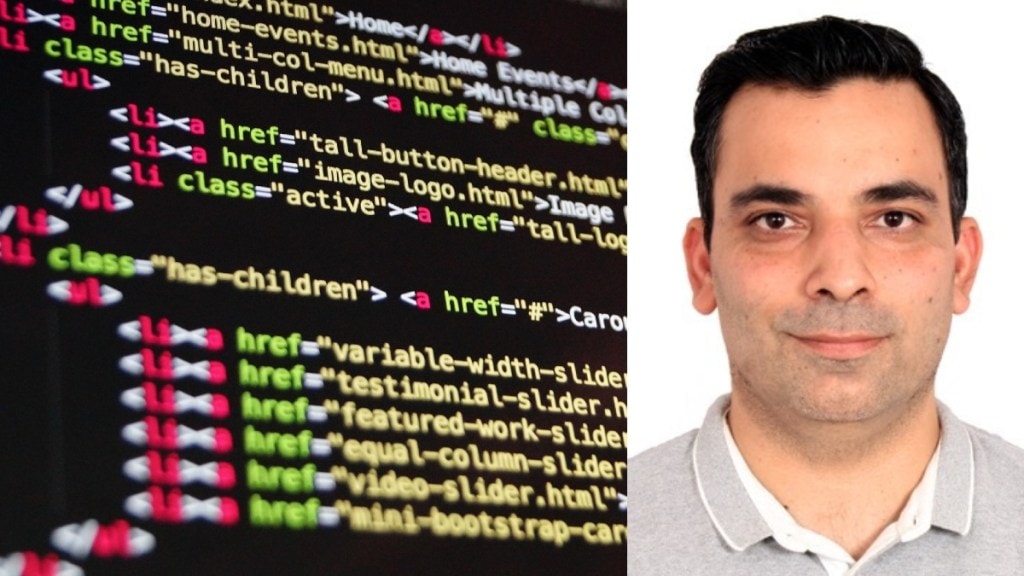
AI is transforming how software is built, but the process remains complex and fragmented. Amit Kumar Tyagi, CEO of TrueReach AI, explains how his company is tackling these challenges, making software development faster, more reliable and scalable, while carving a unique path in the AI space.
Q: Take us back to the beginning. Was there a specific moment when you realised the way software is built today is fundamentally broken?
There were actually two moments. The first was when we saw GPT-3, long before ChatGPT became popular. It wasn’t just another AI model—it felt like general-purpose intelligence. We immediately saw its potential to transform software development, which is why we started TrueReach AI even before large language models became mainstream.
The second moment came from observing early “spec-to-code” startups. Users were saying that the same description could result in different software specifications. That made us ask: how do you know a spec will actually produce working software? The industry solution was to have senior engineers manually review everything—but that doesn’t scale. That’s when we realised we needed to solve this problem to make AI truly valuable for building software.
Q: AI coding tools are launching every week. What makes TrueReach AI fundamentally different?
Most tools just generate code. We focus on producing software. Real software is a system of interconnected decisions that need to stay coherent over time. We make this possible with three key choices.
First, we remove human prompting. Every prompt in our system is automatically generated because humans are inconsistent, and software can’t afford that variability.
Second, we use information theory instead of guesswork. We measure if an instruction contains enough information to produce the correct output. If it doesn’t, we fill the gap before executing it.
Third, we use a three-system architecture: one for design, one for maintaining context across the lifecycle, and one for execution. This lets us orchestrate the entire software development lifecycle, not just generate snippets of code.
Q: Orphan code is a major issue with autonomous agents. How do you handle governance?
Orphan code happens when agents work alone—they don’t know what already exists or how their output fits into the system. Our architecture stops that from happening. Every instruction includes full context, and we check integration readiness before any code is written.
Architecture, context, and execution are tightly connected, so code is never created in isolation. Governance isn’t an add-on for us—it’s built into the system.
Q: You mention reducing 120 man-weeks of work to just 24. How does that efficiency happen?
The savings come from every stage of the software development lifecycle.
In discovery, effort drops from eight to four man-weeks because requirements are structured and clarified automatically. Design and architecture shrink from fourteen to three man-weeks as decisions and edge cases are generated upfront.
The biggest impact is in development and testing—reducing from eighty to ten man-weeks—thanks to automated, context-aware execution and continuous validation. Quality assurance drops from twelve to three man-weeks because integration defects are fewer, and deployment effort falls slightly, from six to four man-weeks, since systems are already production-ready.
It’s not one big optimisation – it’s efficiency compounded across every stage.