



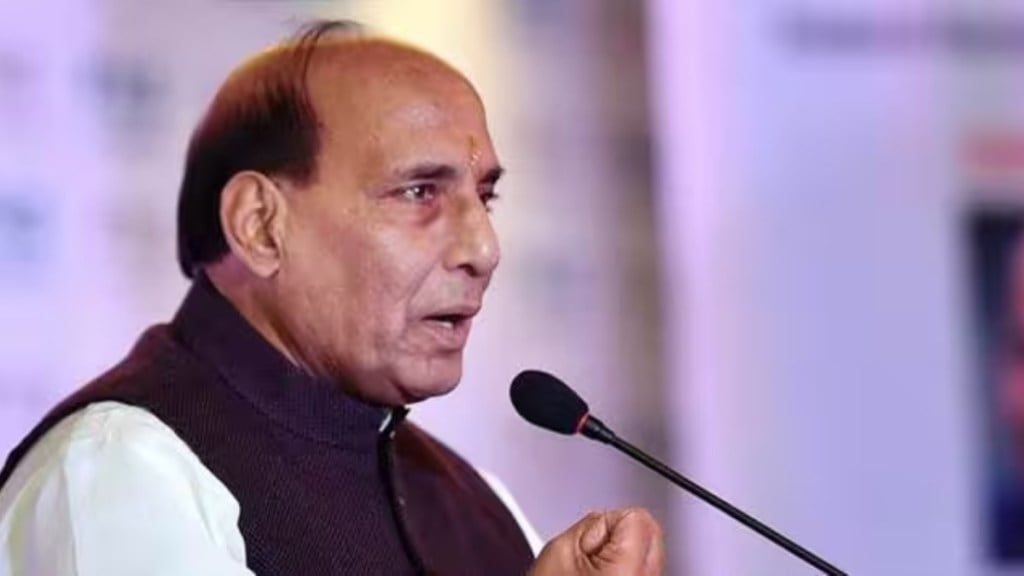
Over the past nine years, the defence sector has taken remarkable strides towards achieving self-reliance, a feat attributed to the dedicated efforts of the Government under Prime Minister Narendra Modi. This progress was highlighted by defence minister Rajnath Singh during a G-20 Summit organized by a private TV news channel in New Delhi on August 19, 2023.
In his address, Singh emphasized the importance of ‘Aatmanirbharta’ (self-reliance) in enabling independent decision-making on global matters aligned with India’s national interests. He pointed out that dependency on defence equipment imports poses a threat to India’s strategic autonomy, adversely impacting both trade balances and the economy. In an official statement issued by the Ministry of Defence late Saturday evening, the pursuit of self-reliance, he stressed, not only strengthens the economy but also generates substantial employment opportunities.
The minister elaborated on the Ministry of Defence’s strategic steps to achieve ‘Aatmanirbharta’. Notably, eight positive indigenization lists were issued: four by the Department of Military Affairs containing 410 weapons and platforms for the Armed Forces, and four others by the Department of Defence Production, encompassing 4,666 items for Defence Public Sector Undertakings (DPSUs). These lists, coupled with a ban on imports of these items, highlight the government’s commitment to domestic manufacturing. He noted the indigenous development of key assets like INS Vikrant, Light Combat Aircraft Tejas, and the country’s overall movement towards self-reliance.
Addressing India’s G-20 presidency, Singh underscored the nation’s growing stature on the global stage. He discussed India’s shift in foreign policy from non-alignment to a pragmatic, issue-based multi-alignment approach. This shift, he asserted, empowers India to make decisions guided by national interest rather than external pressures.
He lauded the Government’s efforts for elevating India to become one of the top five economies globally, with projections pointing towards achieving a US$ five trillion economy and top-three global economy status in the upcoming years. He highlighted India’s transformation from a ridiculed low-growth economy to the fastest-growing major economy globally.
Singh highlighted the government’s commitment to poverty eradication, resulting in over Rs 13.5 crore people rising above the poverty line in the last five years, as per NITI Aayog. He cited international recognition from institutions such as the World Bank and International Monetary Fund for these poverty alleviation efforts. He also mentioned how India transitioned from the “Fragile Five” category to the esteemed “Fabulous Five” in Morgan Stanley’s assessment.
Regarding education and health, Singh acknowledged the establishment of new IITs, IIMs, and universities across the country. The introduction of the National Education Policy and the Ayushman Bharat Yojana were highlighted as transformative steps in these domains.
He celebrated India’s digital transformation, with the nation recording a significant increase in digital transactions over the years. He commended India for leading in global digital transactions, with the number skyrocketing from around Rs 127 crore in 2013-14 to a staggering Rs 12,735 crore in 2022-23.
In closing, Singh highlighted the government’s resolute stance against corruption, asserting stringent actions against those involved in money laundering and exploiting common resources. He characterized ‘New India’ as aspirational, rejecting narratives of weakness and embracing themes of bravery, patriotism, and cultural pride. Concluding his address, he expressed the Government’s commitment to shaping an empowered ‘New India’ in the next 25 years, aligning with the nation’s journey towards becoming a developed and empowered nation by 2047.