



By DEBAJIT SARKAR
Artillery plays a major role in any conflict because it can deliver indirect fire over long distances and large areas, causing significant damage and casualties to the enemy forces. Artillery can also support the advance of friendly troops by suppressing or destroying enemy positions, or counter the enemy’s artillery by using radars and drones to locate and target their guns. Artillery has been a decisive factor in many wars, such as the ongoing war in Ukraine, and the Kargil conflict with Pakistan, which is especially relevant for India.
Since artillery is crucial in a conflict and China and Pakistan have a large artillery arsenal, the Indian Army must find ways to counter the enemy’s artillery. Developing a new range of affordable surface-to-air missiles (SAMs) that can target enemy artillery is one such way.
Some might suggest imported options are available, however, importing foreign weapons reduces the incentive and opportunity for domestic research and development of arms and military equipment. This can lead to a loss of technological innovation and competitiveness in the global arms market. Hence, the optimal solution is for Defence Research and Development Organisation (DRDO) to create this system in house by fine tuning the technologies it has already developed for the anti-tank guided missiles(ATGMs) and Very Short-Range Air Defence System(VSHORADS) and then transfer the technology to a local Indian private company that can mass produce these SAMs.
These new SAMs, which are designed to protect the Indian Army’s infantry and armoured columns from artillery and rocket attacks, will require defence vehicles with decent detection performance against incoming ordnance and drones. The new missiles, which should be of MANPAD size or smaller with a short range of 3-5km in altitude and distance, should be designed to be lighter and smaller. Their aim is to hit the target directly with a 3kg HE warhead to destroy incoming artillery shells and rockets. In other words, it should be like a CIWS for ground vehicles, but it uses missiles instead of a cannon.
Of course, they will also use Spyder and Akash-NG and the upgraded Shilka as well for air defence against other threats but the new system is intended to carry hundreds of ready to fire missiles at once at large numbers of targets at once.
To deal with optically guided threats DRDO should develop a laser jamming system, but a LIDAR system that can detect and engage them would also be useful.A combination of Active Radar Homing(ARH), Imaging Infrared (IIR), and command guided methods would offer the best performance against different threats and conditions, as each method would have the best intercept capability. The most diverse range of targets and threats could be detected and engaged by using sensors that can operate with radar, IIR, Lidar and colour night vision digital video.
All kinds of forces, including rear area logistics forces, will be using these new SAM systems, so these vehicles would be part of the columns of trucks and soft vehicles that support armoured units. These vehicles would mainly counter artillery, so a nearby artillery radar could give them the target information they require, while BMP-2 types would help prevent any ambush attempts. These new SAM systems may even be capable of shooting down some rockets and ATGMs.When the enemy runs out of unguided artillery shells, they will have to use the more expensive guided shells, which the Indian forces can counter with EW systems.
Today if the Ukrainian Leopards and Bradleys or the Russian T-72s and T-90s had such new SAM systems, they could approach enemy lines able to shoot down rockets and artillery shells directed at them and also incoming ATGMs and the helicopters that launched those missiles while units behind their attacking force could be looking for enemy artillery and aircraft to attack as they open up.
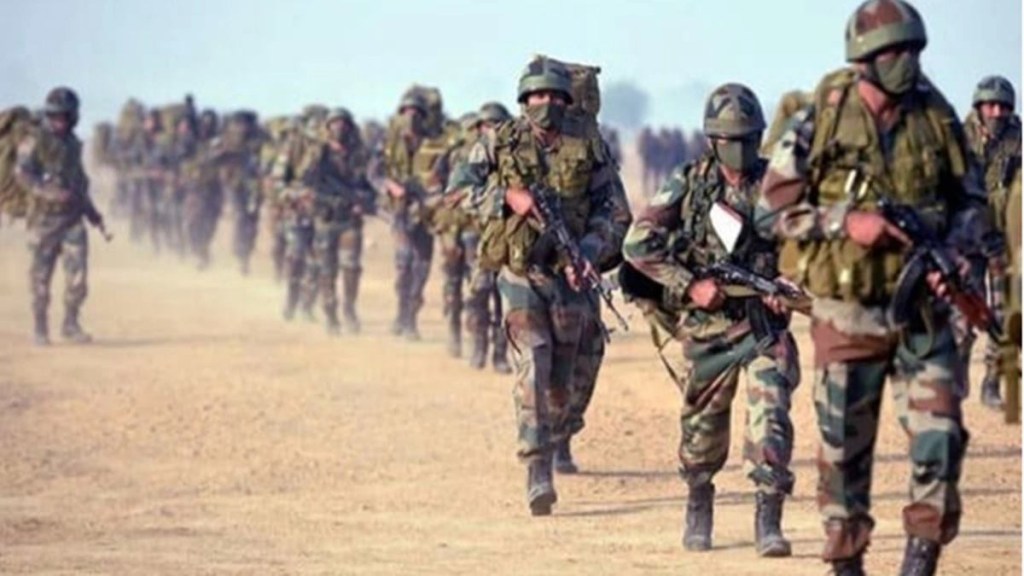
By destroying or suppressing enemy artillery units, the Indian Army can reduce the threat of shrapnel and explosions, and protect their own personnel and equipment. Neutralizing enemy artillery will also help the Indian Army gain an advantage in combat, as they can advance or maneuver without fear of being hit by enemy fire.
The author is a subject matter expert on competitive intelligence and market research in the defence and aerospace industry.
Disclaimer: Views expressed are personal and do not reflect the official position or policy of Financial Express Online. Reproducing this content in any form without permission is prohibited.