



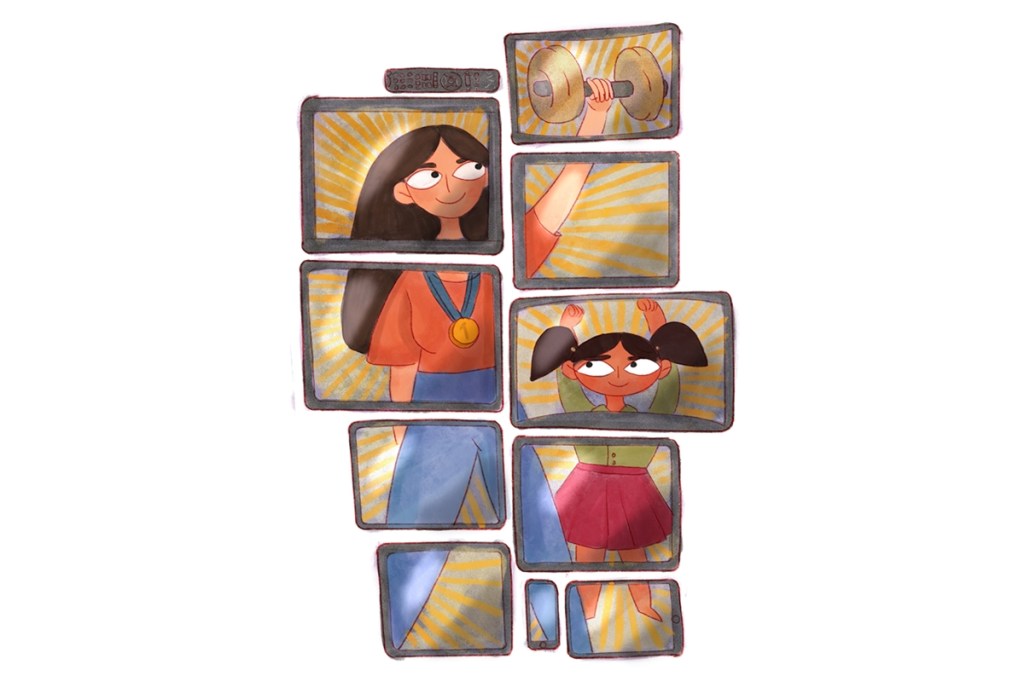
Women interviewed across different life stages and town classes pointed out that it is not them but others in their sphere who lag behind them, and they are the ones in need of empowerment. They feel that advertising can be their ally in this journey, according to the GenderNext study conducted by The Advertising Standards Council of India (ASCI) and Futurebrands. The study covers patterns of portrayals across multiple categories, such as personal care, fashion, beauty, home and hearth, gadgets and wheels, money and education. It also touches upon how advertising portrays women versus how they see themselves and want to be seen.
GenderNext acts as a guide for stakeholders – brand owners, marketers, advertising professionals – to aid the creation of more progressive depictions of women in advertising, Subhash Kamath, chairman, ASCI, said. “The deep insights on women, and what they feel about advertising is a fantastic input into advertising creation, and we hope that brands and advertisers will be motivated by the findings to depict women in more progressive ways. We also intend to set up a task force to evaluate advertising guidelines on harmful stereotypes,” he added.
The study reveals that for young unmarried women, common stereotypes used in advertising such as women joyfully undertaking the drudgery of work was not aspirational at all. Typical women’s day ads that show women emerge victorious after significant struggle were not considered particularly empowering. Women are tired of ads showing young women being bestowed with freedoms only after putting up a fight.
For Lipika Kumaran, the lead author of GenderNext, the study reveals that while there are some positive moves, mainstream advertising still heavily borrows from an inventory of overused, and sometimes harmful stereotypical tropes. A detailed study of over six hundred advertisements revealed several problematic tropes- such as sensualising the act of eating by women, showing women as spenders in financial advertising, women running around the house while others lounge around, male gaze acceptance in beauty ads, showing women as lower down in tech-hierarchy in gadget ads, male celebrities challenging and instructing women, among others.
The study proposes a category agnostic framework “The SEA (Self-esteemed – Empowered – Allied) Framework” that aims to guide stakeholders in imagining as well as evaluating portrayals of women in their advertising by building empathy and aiding evaluation. The study also proposes a 3S screener for scripts/storyboards, casting, styling to identify stereotype red flags. The screener looks at aspects of a) Subordination b) Service and c) Standardisation
For Santosh Desai, MD, Futurebrands Consulting, as an influential form of popular culture, advertising has historically been a significant source for the propagation of gender stereotypes. “While things are changing, what this study, initiated by ASCI and carried out by Futurebrands uncovers, is that gender continues to be represented in a skewed and discriminatory manner. Some obvious ways of stereotypes are less visible, but there are many other ways, both subtle and not-so- subtle, in which gender portrayals continue to be skewed. The GenderNext study has identified some common patterns of discrimination and has also created a framework that enables marketers to identify and eliminate such undesirable representations,” he highlighted.
Read Also: Reliance Retail acquires majority stake in Ritu Kumar’s firm Ritika