



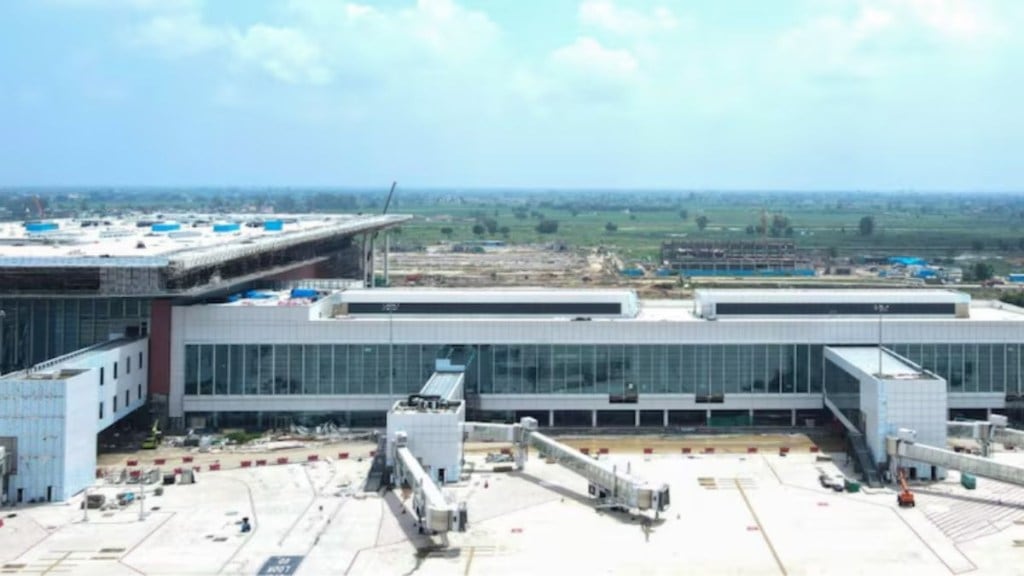
When Noida International Airport opens, it wants to do something radical for an Indian flyer: make itself almost invisible.
There will be no crush around check-in counters, no serpentine queues held together by retractable belts, no army of staff herding passengers from one checkpoint to the next. Instead, India’s newest greenfield airport is betting that software—not manpower—will run the show. Billed as the country’s first fully digital, mid-sized airport, Noida has been designed from scratch to operate largely on automation and self-service.
That “from scratch” part matters. Unlike Delhi, Mumbai or Hyderabad—where technology has been bolted on to decades-old processes—Noida has had the luxury of a clean slate. “The ₹10,000-crore airport has been built as the country’s first fully digital airport,” says Christoph Schnellmann, chief executive officer of Noida International Airport. A single master systems integrator, he explains, is stitching together everything from core IT and operational platforms to passenger-facing systems, ensuring they function as one integrated whole.
Accelerated automation at the airport
The result is an airport where humans step back and machines step forward. From the moment passengers enter the terminal, the journey is designed to be self-directed. Self-bag-drop kiosks replace traditional check-in counters. Self-boarding gates take over at departure. Staff remain in the background—overseeing operations, handling exceptions and meeting regulatory requirements—rather than processing every traveller by hand.
Automation extends to the airport’s most time-consuming choke points. Phase I will have 13 security lanes, with cabin baggage screened through an automated tray retrieval system that keeps trays moving and queues flowing. Checked-in bags will pass through a fully in-line baggage handling and tracking system, reducing manual intervention and guesswork. The goal, says Schnellmann, is predictability—shorter waits for passengers and smoother planning for airlines.
Even the terminal’s physical design reflects this digital-first mindset. Noida Airport will use a mixed-rotation gate system, rare for an airport of its size. A gate that handles a domestic arrival in one slot could handle an international departure in the next. The flexibility cuts aircraft turnaround times and squeezes more efficiency out of every stand, while a multi-level layout keeps domestic and international passengers segregated to meet security norms.
The notable feature isn’t any single automated feature but the way everything is wired together. Check-in, baggage, security, retail and ground transport systems are being built to exchange data in real time. To manage this digital nervous system, the airport has brought in Kyndryl, which will run technology operations using its AI-driven Kyndryl Bridge platform.
The platform continuously monitors the health of IT and operational systems, flagging issues before they snowball into passenger-facing disruptions. Cybersecurity, too, is not an afterthought. Automated threat detection and first-response mechanisms are embedded into daily operations, reflecting the reality that a digital airport is only as strong as its cyber defences.
Ease of transport
Beyond the terminal, the airport is thinking just as hard about how passengers arrive and leave. From day one, Noida airport will be plugged into a network of intercity and long-haul buses, airport taxis and a fleet of electric taxis operated by Mahindra Logistics Mobility. An MoU with the Uttar Pradesh State Road Transport Corporation will enable direct bus connectivity to Noida, Greater Noida, Ghaziabad, Agra, Aligarh, Mathura–Vrindavan and Meerut.
The ambition goes further. By 2030, the ground transportation complex is being designed to handle up to 50,000 vehicles a day—cars, buses and two-wheelers included. Underground space has already been reserved for future metro and Namo Bharat train stations, signalling a long-term, multimodal vision rather than a patchwork of add-ons.
On the airside, the airport will be equipped with CAT III navigation systems, allowing operations even in low-visibility conditions. Phase I is designed for 12 million passengers a year, with traffic expected to reach 6–8 million in the first full year of operations. Expansion to the next phase will be triggered once volumes hit 80% of initial capacity.
Over time, the airport is planned to scale up aggressively—first to 30 million passengers annually, then 50 million, and eventually 70 million by 2050. IndiGo will be the launch carrier, while Akasa Air plans to operate both domestic and international flights, initially linking Noida with Bengaluru, Hyderabad, Mumbai and Kolkata.
The terminal has also been future-proofed for the next wave of security technology. Full-body scanners and next-generation CT scanners for hand baggage are already part of the blueprint—systems that would allow passengers to keep laptops and liquids inside their bags.
If it all works as planned, Noida airport will offer a glimpse of what Indian aviation could look like when technology stops being an upgrade—and becomes the foundation.