



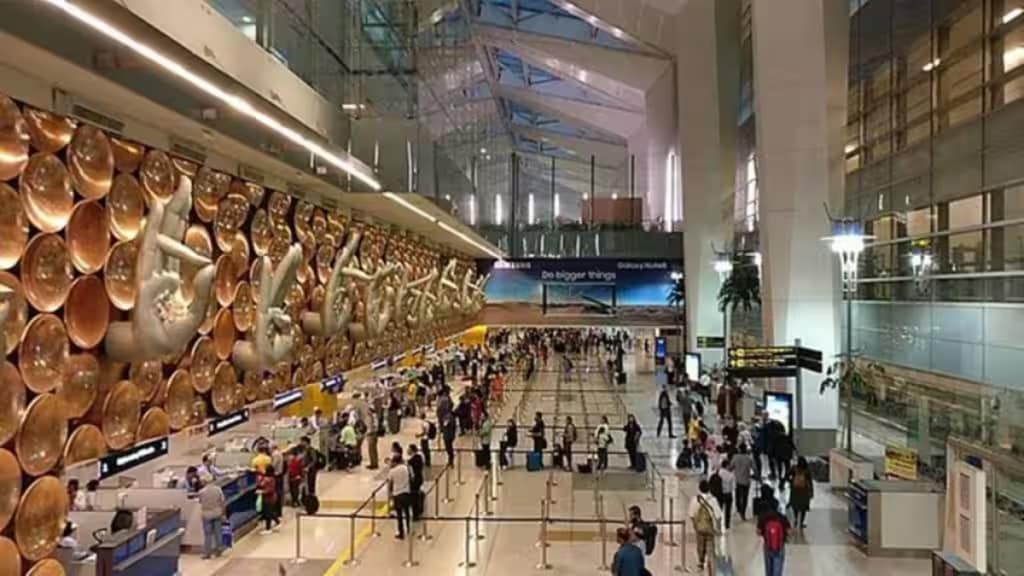
Passengers at the Delhi and Mumbai airports may soon have to pay much higher charges. In fact, in some cases, they may have to up to 22 times more, after a recent ruling by the Telecom Disputes Settlement and Appellate Tribunal (TDSAT). TDSAT is the appeals body that handles disputes related to telecom and airport regulations.
Flight tickets likely to get costlier
The tribunal has changed the way airport tariffs are calculated for the period between 2009 and 2014. Because of this new formula, both airports are now owed over Rs 50,000 crore for money they could not recover during those years. The plan is to collect this amount through higher passenger fees and increased landing and parking charges. If implemented, this could make flight tickets costlier and possibly slow down passenger growth.
The Airports Economic Regulatory Authority (AERA), along with Indian airlines and major foreign carriers like Lufthansa, Air France and Gulf Air, has challenged the order in the Supreme Court. The case will be taken up on Wednesday by a bench of Justices Aravind Kumar and Nilay Vipinchandra Anjaria.
Massive hike in user development fee (UDF)
Citing people familiar with the matter, a report by The Economic Times said that the user development fee (UDF) at Delhi airport could jump from Rs 129 to Rs 1,261 for domestic flyers, and from Rs 650 to Rs 6,356 for international travellers. At Mumbai airport, the domestic UDF could rise from Rs 175 to Rs 3,856.
For international passengers flying out of Mumbai, the fee could jump from Rs 615 to Rs 13,495
Government officials have said that they are worried that such a steep hike will slow down passenger growth. One senior official told ET that passengers should not end up paying the price for long legal fights between airports and airlines. According to the official, such a sudden rise in ticket prices would hurt travellers the most, because airports are natural monopolies and airlines will simply pass the cost on to customers.
The issue goes back nearly twenty years, to the first phase of airport privatisation in 2006. AERA, the airport tariff regulator, sets charges for five-year periods based on the operator’s investment and revenue. But AERA only came into existence in April 2009, three years after control of the airports had already moved from the Airports Authority of India (AAI) to private players DIAL and MIAL. DIAL belongs to the GMR Group, while MIAL was run by GVK at the time and is now owned by the Adani Group.
Because older data on assets and investments were unreliable, the government and the private operators agreed in 2006 to use something called the Hypothetical Regulatory Asset Base (HRAB). This helped estimate the value of airport assets for 2008–09 when exact figures weren’t available, so tariffs could still be calculated.
When AERA set the tariff for 2009–14, it counted only aeronautical assets, things directly needed for flight operations and passenger handling, such as runways, terminals and check-in counters.
But DIAL and MIAL argued before TDSAT that AERA should also include non-aeronautical assets like duty-free shops, car parks and lounges. In 2018, the tribunal backed AERA’s approach, and the Supreme Court upheld that decision in 2022. After that, the airport operators went back to the Supreme Court using a 2011 civil aviation ministry letter to seek a review.
The Supreme Court sent the matter back to the tribunal, which in July reversed its earlier stand and sided with the airport operators, saying non-aeronautical assets should have been included.
The tribunal also said that, during the disputed period, tariffs were actually being calculated using the value of such non-aeronautical assets.
Under TDSAT’s fresh order, the two airports should have collected about Rs 50,000 crore more in tariffs. That gap is now expected to be recovered through higher airport user fees.
Even though the case is still in court, concerns over rising airport charges have come up often in Parliament. Earlier this year, a parliamentary committee questioned the aviation ministry, saying fees have soared many times since private operators took over the airports.