



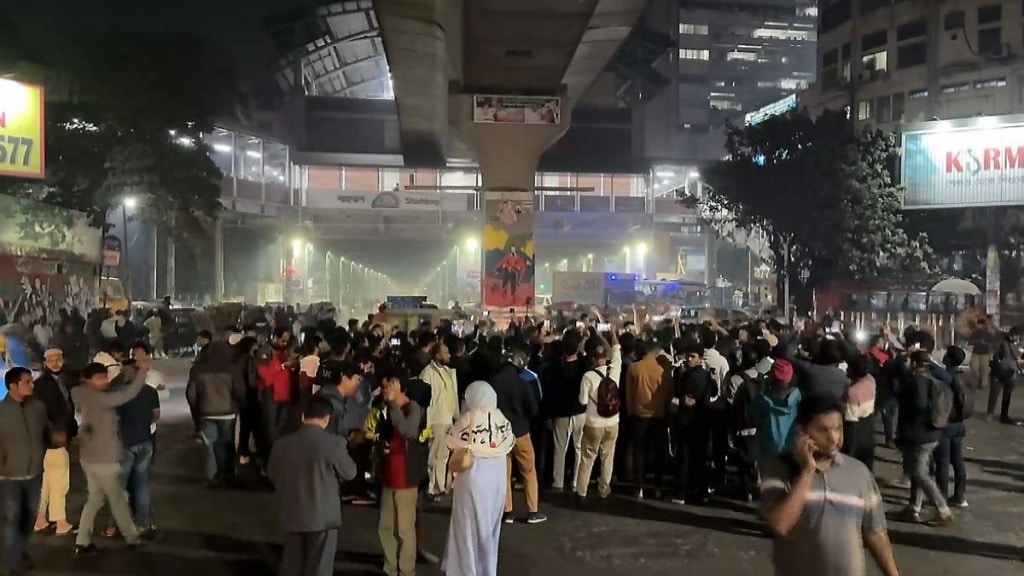
A sudden violent situation in Bangladesh has left everyone surprised as thousands of protesters marched on the streets attacking media offices, setting ablaze them with people inside and targeting the home of an Indian diplomat. Anti-India slogans were raised in the country as Thursday night witnessed an intense agitation spreading to multiple cities. Reason – the death of a youth leader – Sharif Osman Hadi. He was also a candidate in general elections to be held in Bangladesh in February.
Hadi was a mass leader known for his role during July 2024 students’ movement against then-PM Sheikh Hasina‘s regime. He always played on anti-India rhetoric. Now, many believe those who shot him are in India, like Sheikh Hasina who fled her country in August.
But the atmosphere against India was there for some days now, and Hadi’s death just made it more intense. What is exactly behind it?
Why have anti-India protests rocked Bangladesh?
Recently, the Ministry of External Affairs (MEA) called for holding free, inclusive and credible elections in Bangladesh. Another release issued three days earlier on December 14 also mentioned the issue.
Bangladesh strongly objected to India’s call for holding “fair and participatory” elections. The country’s foreign affairs adviser Towhid Hossain, said there was no need for the “advice” given in India’s latest statement.
He said, “We do not seek advice from our neighbors on how to conduct elections in Bangladesh.” Hossain added that Delhi’s role in the matter was “completely unacceptable.”
3 Key factors in the matter
Among the key reasons behind the chaos are three key factors: Bangladesh’s past three controversial polls, India’s refusal to return Sheikh Hasina and alleged role in rehabilitating Awami League, reported BBC Bangla.
In the last elections in Bangladesh, allegations were levelled against India for interfering on behalf of ousted leader – Sheikh Hasina. Awami League General Secretary Obaidul Quader had then said that even though the opposition tried to sabotage the election in collusion with foreign countries, “India stood by its side.”
The report mentioned that many in Bangladesh believe India interferes not only in elections, but in some internal matters as well – a claim New Delhi has always denied. Under Muhammed Yunus, the India-Bangladesh ties went sour as Yunus said that India’s northeastern region is vulnerable to it.
India strongly objected to it, affirming that the remark is not in good taste and the country will not compromise on its territorial integrity. However, time and again, Yunus has repeated the mistake.
The larger public protests in Bangladesh are of the view that India is sheltering those who are responsible for the killing of Hadi, and other leaders and the current state of their country.
Sharif Osman Bin Hadi was a key leader of Bangladesh’s 2024 student-led uprising Inqilab Mancha. He was being seen as a possible candidate from the Dhaka-8 constituency in the national elections scheduled for February next year. Hadi was also known for his strong criticism of India. Hadi presented himself as a firm critic of any political group he believed was under New Delhi’s influence.
Hadi was shot in the head on December 12 in Dhaka while travelling in a battery-powered auto-rickshaw; the attacker fired at him from a motorcycle. After the shooting, Hadi was taken to a local hospital and then to Singapore, where he died.