



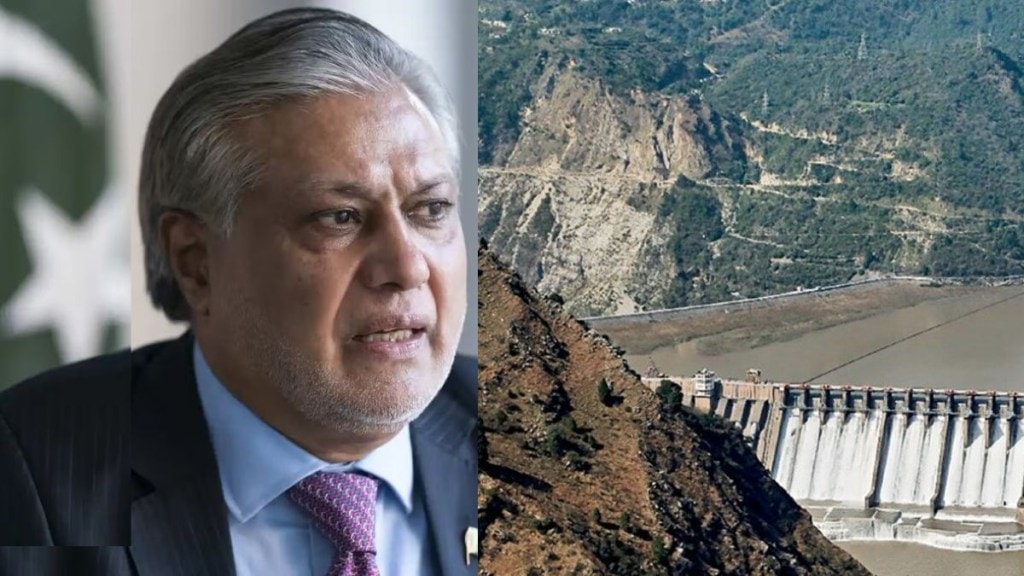
Pakistan’s Deputy Prime Minister Ishaq Dar on Friday accused India of seriously undermining the Indus Waters Treaty by withholding ‘crucial data’ regarding variations in the flow of the Chenab river. Dar said that India’s ‘manipulation’ of Indus water basins comes at a time of a agricultural cycle that directly threatens the life and livelihood in Pakistan.
Speaking about Pakistan’s resolve to resume data sharing through treaty mechanisms, Dar said that water is a lifeline and it “cannot be weaponised”. He added that Pakistan has conveyed its concerns to United Nations Secretary-General António Guterres and the President of the UN General Assembly and urged them to intervene in the situation. Dar also recalled that Pakistan’s National Security Committee had earlier warned that any move to block or divert water flows to Pakistan would be viewed as an “act of war”.
What’s the current status of the Indus Water Treaty?
India had put the Indus Water Treaty (IWT) in Pakistan in “abeyance” following the infamous Phalgam attack in April. Brokered by the World Bank, IWT governed the distribution and use of the Indus river and its tributaries between India and Pakistan since 1960.
Earlier this year, in September Pakistan’s prime minister had claimed that India was no longer providing detailed river-water information through the official Permanent Indus Water Commission channels and that information was being shared only via diplomatic channels, not through the treaty’s established mechanism.
Previous comments made by India’s Ministry of External Affairs (MEA) on the matter maintain that the treaty is in “abeyance”. However, India still went out of its way to share some flood data on humanitarian grounds through diplomatic channels, but not in the customary level of detail or through the formal treaty mechanism.
What else did Dar say?
Ishaq Dar, who also occupies the position of Foreign Minister in Pakistan made these comments while addressing media outside his office regarding variations in the flow of the Chenab river. Dar’s comments came a day after Pakistan’s water commissioner sought clarification from India regarding variations in the flow of the Chenab river.
Several Pakistani media outlets suggested that India had released water into the river without prior intimation earlier in December. MEA has made no comments opposing these allegations yet.
“India had halted sharing information, hydrological data, and joint oversight required by the treaty, which had exposed Pakistan to floods and droughts. These actions strike at the heart of the Indus Waters Treaty with escalating consequences both for regional stability and the sanctity of international law, ” the minister said towards the end of his media interaction.