



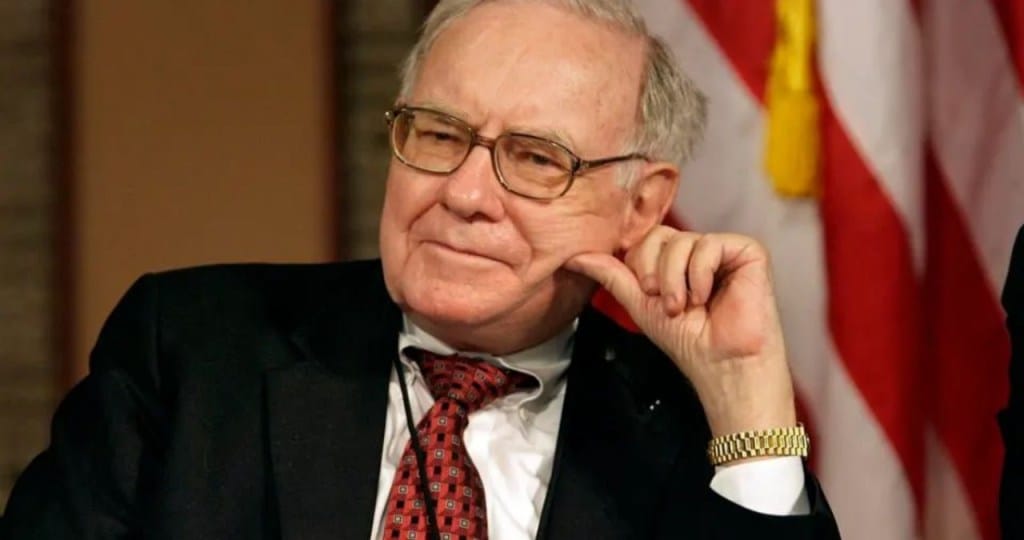
Warren Buffett stepped down as the CEO of Berkshire Hathaway on the final day of 2025 — concluding one of the most extraordinary leadership tenures in corporate history. The ‘Oracle of Omaha’ has made a long list of nearly prescient investment calls over the decades with millions following his cues like divine guidance. Buffett took over a struggling New England textile manufacturer nearly six decades ago — gradually transforming it into a diversified global powerhouse valued at more than $1 trillion.
But even soothsayers can occasionally err. And Buffett has been vocal about his occasional misses during interviews and in shareholder letters — highlighting the need for constant vigilance and humility while investing. His November 2025 letter to shareholders also emphasised the role played by luck — be it his own life and circumstances or the investments he chose.
“Over the years, I have made many mistakes. Consequently, our extensive collection of businesses currently consists of a few enterprises that have truly extraordinary economics, many that enjoy very good economic characteristics, and a large group that are marginal. Along the way, other businesses in which I have invested have died, their products unwanted by the public,” he wrote in a 2023 letter to shareholders.
Why did his forays into India fail?
Berkshire Hathaway made two distinct attempts to tap into the Indian growth story between 2011 and 2018 — both ending in quiet exits and muted results. It invested approximately $300 million (around Rs 2,200 crore) in one of India’s biggest fintech companies — buying a 2.6% stake in One97 Communications (the parent firm of Paytm) in August 2018. The move had a reported valuation of $10-12 billion and came amid rapid digitisation in the country.
But the hands-off approach without board engagement or follow-on capital left Berkshire exposed to the 2021 IPO crash and regulatory woes. Paytm also lacked a durable economic moat (relying on loss-leading cashbacks and subsidies in payments amid UPI’s zero MDR dominance) that did not allow for profitable scaling.
‘The worst deal I’ve made’
The 1993 acquisition of Dexter Shoe Company would likely top this list — with the billionaire businessman later lamenting the move as a “wholly stupid blunder” that ended in factory closures and a ‘loss’ of more than 25,200 Berkshire Class A shares.
“I made an even worse mistake when I said “yes” to Dexter, a shoe business I bought in 1993 for $433 million in Berkshire stock (25,203 shares of A). What I had assessed as durable competitive advantage vanished within a few years. But that’s just the beginning: By using Berkshire stock, I compounded this error hugely. That move made the cost to Berkshire shareholders not $400 million, but rather $3.5 billion. In essence, I gave away 1.6% of a wonderful business – one now valued at $220 billion – to buy a worthless business. To date, Dexter is the worst deal that I’ve made. But I’ll make more mistakes in the future – you can bet on that,” he admitted in a 2007 letter.
Gas and oil bets amid 2008 financial crisis
The same year he also bet big on Energy Future Holdings — purchasing bonds worth $2 billion (without consulting Charlie Munger) — at the peak of natural gas prices. But prices had dropped sharply in 2008 amid the shale boom, fracking surge, and financial crisis. EFH suffered massive losses and ultimately declared bankruptcy in 2014. Berkshire eventually sold its $2.1 million bond purchase at a loss of $873 million.
Buffett also invested extensively in US oil major ConocoPhillips just before oil prices peaked in 2008 — holding approximately 84 million shares worth $7 billion as oil hit $147/barrel peaks. The financial crash had initially slashed the share valuations by several billion dollars. Berkshire had held onto its shares and sold gradually till 2014 — regaining some of the losses — and retained shares worth about $1 billion.
Missing the tech giants
Buffett has repeatedly noted in recent years that he had missed early investments in tech giants such as Google and Amazon — calling it major errors of omission” that could have easily made billions. A crucial tangent here was his miscalculation when it came to IBM — coming in 2011 after years of insistence against investing in technology stock that he didn’t understand. He had also begun trimming his investment in 2017 and opined that IBM faced “big strong competitors”. But the IBM episode thrust him into the realm of technology stocks and later led to his very profitable Apple investment. Buffett has also previously told shareholders he was caught “sucking his thumb” when he failed to follow through on a plan to buy 100 million Walmart shares that would be worth nearly $10 billion today.
Both Buffett and Charlie Munger have repeatedly noted that one of their biggest regrets was not buying shares of Alphabet Inc. He also opined during the 2017 Berkshire Hathaway AGM that missing Google was the “biggest tech failure” made by the company. Buffett had also revealed during interviews that the founders of the company had come to meet him soon after its IPO with an investment prospectus. But the legendary stock-picker had passed. His initial hesitance towards Amazon also stemmed from similar reasons — that he did not quite understand the business. He had later called the e-commerce giant another major investment miss.
“I knew the guys (the Google founders). And so I had plenty of ways to ask questions or anything of the sort and educate myself, but I blew it,” he admitted during a company meeting.
Missing due diligence and integrity checks?
Several deals that went awry for Buffett overlooked red flags in operations and management or bypassed integrity checks for various reasons. A strong example would be the takeover plan for Lubrizol Corporation pitched by David Sokol. The former chairman of several Berkshire subsidiaries had failed to reveal that he owned stock in the chemical firm — leaving Berkshire in violation of insider trading rules. He earned approximately $3 million in profits as Lubrizol was purchased for roughly $9 billion.
He had also overpaid for Tesco after trusting the British retailer despite issues with overpayment, scandals and discounters. The investment highlighted integrity/competitive lapses and eventually resulted in a $444 million loss for Berkshire Hathaway.
Selling banks too soon
The former Berkshire Hathaway CEO had soured on many bank stocks ahead of the COVID-19 pandemic — unloading shares and relatively low prices. Repeated scandals involving Wells Fargo had made Buffett begin unloading his 500 million shares, many of them for around $30 per share. He also sold off his JP Morgan stake at prices less than $100. Both stocks have more than doubled since then.