



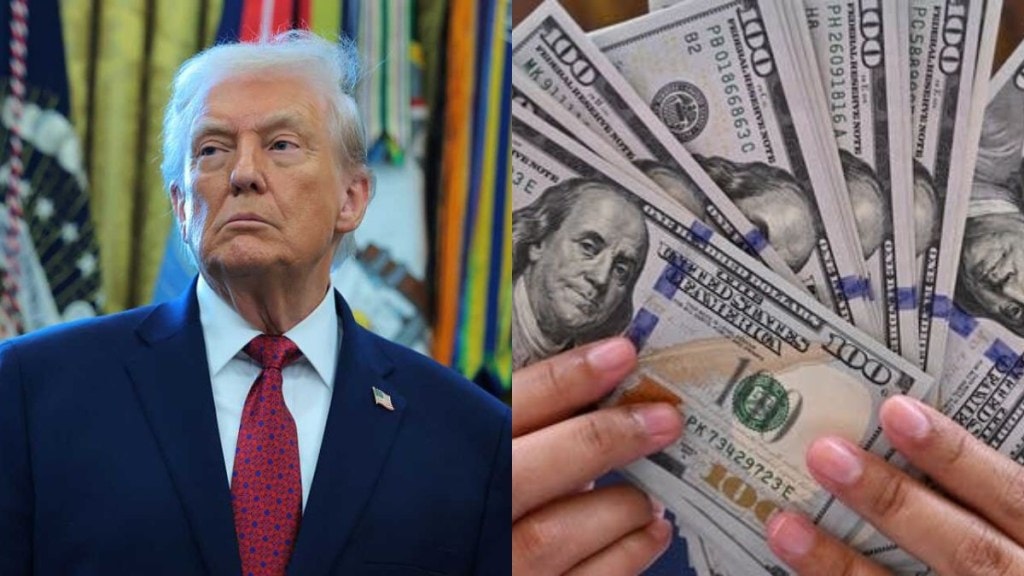
Many Americans could receive much larger tax refunds in early 2026, due to President Donald Trump’s signature tax law, according to Treasury Secretary Scott Bessent. Bessent said the retroactive impact of the One Big Beautiful Bill Act (OBBBA) could lead to refunds of “$1,000, $2,000” for many households when they file their taxes next year while speaking on the All-In Podcast on Tuesday.
Bessent also currently serves as the acting commissioner of the IRS. For millions of families, tax refunds are often the largest single payment they receive in a year, and the Trump administration has repeatedly explained these refunds as a major financial boost at a time when many Americans are struggling with rising costs.
Retroactive tax refunds
Trump signed the OBBBA into law in July, but its provisions apply retroactively to the start of 2025. This means many workers have already paid more in taxes through paycheck withholding than they actually owe under the new rules. Bessent has previously said households should expect “very large refunds” in 2026 compared to past years because of these retroactive tax cuts.
The White House has pointed to research from financial services firm Piper Sandler to support these claims. According to estimates cited by CBS, the average refund could rise by $1,000, reaching $4,151 per filer during the 2026 tax season.
Reasons behind larger refunds
Piper Sandler economist Don Schneider explained that most workers have not adjusted their tax withholding to account for the new law. “People really aren’t adjusting their withholding this year. It would be pretty difficult to do so you don’t even know how much of a tax cut you’re going to get from overtime or tips or something,” Schneider said, adding, “When people go to file, I think they’ll be surprised by really, really large refunds.”
Bessent said refund amounts will vary based on income levels and whether people earn tips or overtime pay, but estimated most Americans could see refunds between $1,000 and $2,000.
Schneider said the total value of refunds could reach historic levels. “In a typical year, we might have about $270 billion in individual income tax refunds, and that could be as high as that plus another $90 billion,” he said. “So it could be one of the largest refund seasons ever.”
Independent analysts have raised concerns about the broader impact of the OBBBA.
According to the Congressional Budget Office, the law will increase the US deficit and disproportionately benefit higher-income households. The CBO estimates that families in the top 10 percent will gain an average of $12,000 between 2026 and 2034. Meanwhile, households in the poorest 10 percent are expected to lose about $1,600 per year, partly due to cuts to Medicaid and food assistance programs.
Schneider also noted that the biggest refund gains would not be evenly spread across all income groups. However, he said the benefits would be “really concentrated in kind of the middle- and middle-upper income part of the income distribution.”