



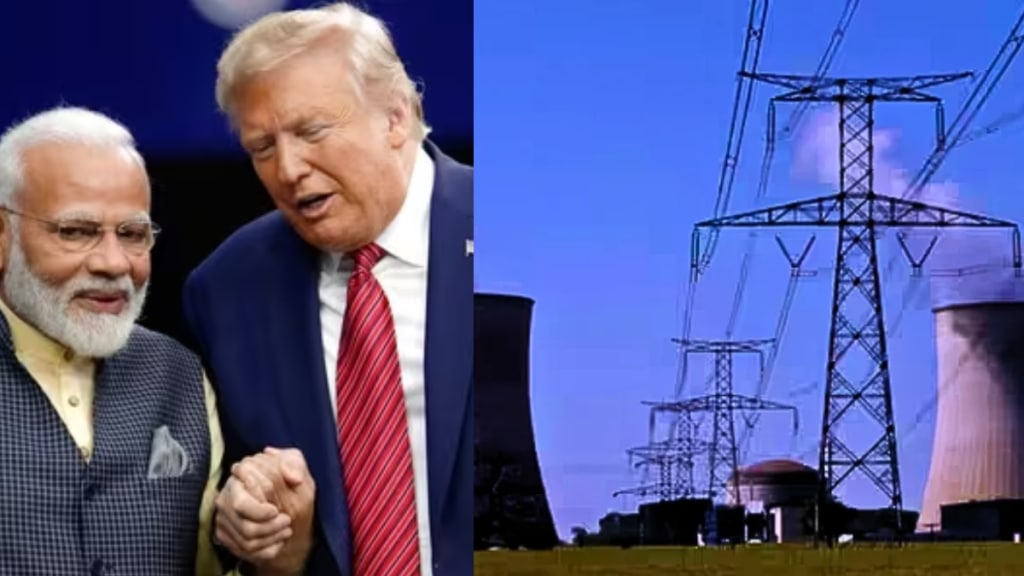
The United States has welcomed India’s SHANTI Bill 2025, calling it a move that will deepen energy security cooperation and support peaceful civil nuclear engagement between the two countries.
Reacting to the passage of the Bill, the US Embassy in India posted on X, “We welcome India’s new #SHANTIBill, a step towards a stronger energy security partnership and peaceful civil nuclear cooperation. The United States stands ready to undertake joint innovation and R&D in the energy sector.” The legislation was passed by Parliament last week and this is a shift in how India governs its civilian nuclear sector.
We welcome India’s new #SHANTIBill, a step towards a stronger energy security partnership and peaceful civil nuclear cooperation. The United States stands ready to undertake joint innovation and R&D in the energy sector. pic.twitter.com/ja0vCAhPzt
— U.S. Embassy India (@USAndIndia) December 22, 2025
What is the SHANTI Bill?
SHANTI stands for the ‘Sustainable Harnessing and Advancement of Nuclear Energy for Transforming India’ Bill, 2025. The Bill seeks to modernise India’s nuclear laws and create a single, updated framework for civil nuclear activities in the country.
According to the government, the Bill “consolidates and modernises India’s nuclear legal framework” and “enables limited private participation in the nuclear sector under regulatory oversight”.
Opening the nuclear sector to private players
So far, only public sector companies have been allowed to operate nuclear power plants in India, although joint ventures were permitted. The SHANTI Bill changes this by allowing private companies and joint ventures to construct, own, operate and decommission nuclear power plants and reactors in India.
Such activities will be permitted only after obtaining a licence, which includes mandatory safety approvals related to radiation exposure. The Bill states that “any department of the Government of India or any institution or authority or corporation established or owned or controlled by such government, any government company, any other company, a joint venture among any of the aforesaid; or any other person expressly permitted by the central government, by notification, to set up such facilities or undertake such activities,” will be eligible to apply for a licence.
Replacing older nuclear laws
The SHANTI Bill proposes to repeal the Atomic Energy Act of 1962 and the Civil Liability for Nuclear Damage Act of 2010. The government’s aim is to bring these laws together under one framework to simplify licensing procedures, liability provisions, regulatory oversight and dispute resolution in civil nuclear matters.
Regulation, clean energy and long-term goals
The Bill strengthens regulatory oversight by granting statutory recognition to the Atomic Energy Regulatory Board. The government has said the legislation “supports India’s clean-energy transition and the long-term objective of achieving 100 GW nuclear energy capacity by 2047. The SHANTI Bill applies only to civilian nuclear activities. These include nuclear power generation and the peaceful use of radiation in healthcare, agriculture, industry and scientific research. Military nuclear activities remain outside the scope of the Bill, and the civilian sector will continue to be tightly regulated to address safety, security and environmental concerns.