



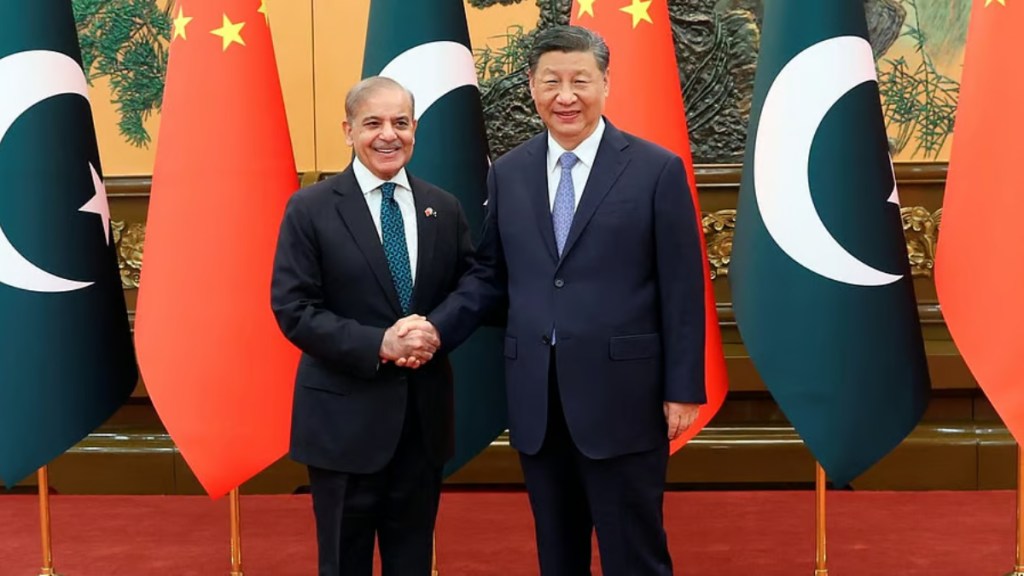
A latest assessment by US’ Pentagon has cautioned India against Beijing’s dual-track strategy, easing tensions along the Line of Actual Control (LAC) while simultaneously deepening military cooperation with Pakistan.
The US Department of Defense’s 2025 Annual Report to Congress on Military and Security Developments Involving the People’s Republic of China has offered a detailed evaluation of China’s evolving national strategy, rapid military modernisation and expanding global footprint.
The report analysed the growing capabilities of the People’s Liberation Army across land, air, naval, space, cyber and nuclear domains, and assesses their implications for regional stability and the rules-based international order.
What did the report find?
The 100-page document examined China‘s growing capabilities across land, air, naval, space, cyber and nuclear domains and flags their implications for regional stability and the rules-based international order.
According to the report, India and China agreed in October 2024 to disengage from the remaining standoff points along the Line of Actual Control (LAC), marking a tactical de-escalation after years of tension. However, the Pentagon assessment suggested that Beijing’s primary objective behind calming the LAC was to stabilise ties with Delhi and prevent a deeper India–US strategic alignment.
The Pentagon also highlighted a persistent trust deficit between India and China, rooted in past border clashes and Beijing’s wider regional behaviour.
On space cooperation, the report said that throughout 2024, China increased its space cooperation outreach worldwide, probably to boost its image as a collaborative space power while “undermining US global leadership”, particularly with developing nations, according to PTI.
As of December 2024, China has signed nearly 200 intergovernmental space cooperation agreements with more than 50 countries and international organisations, covering fields including earth observation, deep space exploration, satellite development, lunar exploration, and manned spaceflight.
US expresses concern over Pakistan’s ties with China
On the other hand, the US also expressed concern over China’s close military ties with Pakistan. The report confirmed that China has delivered 36 J-10C fighter jets to Pakistan since 2020, significantly boosting the Pakistan Air Force’s frontline combat capability. It also noted that China and Pakistan continued to co-produce JF-17 fighter aircraft, while Islamabad remained a key recipient of Chinese armed drones and naval platforms.
The assessment further said that China and Pakistan conducted joint counterterror drills in December 2024, underscoring the depth of their defence cooperation.
It also identified Pakistan as a potential location for future Chinese military facilities, a move that would extend the PLA’s reach close to India’s borders.
Overall, the 100-page report highlights that while China has adopted a posture of tactical restraint along the Line of Actual Control (LAC), it continues to contest India’s territorial claims, particularly in Arunachal Pradesh, and remains Pakistan’s largest supplier of military equipment.