



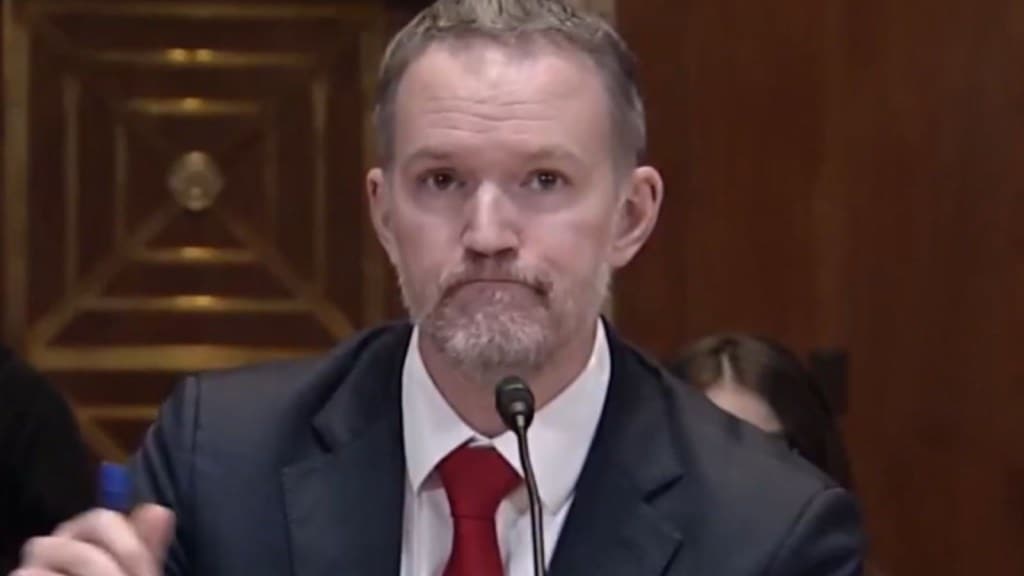
The United States has said that its trade talks with India are moving faster than they have in years. Jamieson Greer, their top trade official, has said that Washington is ready to extend the same “no-tariff” treatment it gives to other partners, but only to countries that are willing to “play ball.”
Speaking about India, Brazil and Singapore, he explained that while the US does not yet have full trade deals with them, talks with India are “fairly far advanced.” He added that if these countries come to the table and offer the market access the US believes it deserves, Washington is open to giving them similar benefits.
Talks with India ‘fairly advanced’: US Trade rep
Speaking to lawmakers on Wednesday, Greer said, “As we have gone through and accomplished our trade deals with countries, this is an area where we have agreed to give them no reciprocal tariff, again recosgnising the 1979 agreement, and this status of the industry in America as a net exporter, with brazil india Singapore, we don’t have deals with these countries yet, with India its fairly far advanced.”
He added, “In my expectation, we can certainly talk about extending treatment to those countries if they are willing to play ball and come to the table and give the United States the market access it should have.”
"We don't have trade deals with India or Brazil yet but with India talks are fairly far advanced," announces US Trade Representative Jamieson Greer pic.twitter.com/0SmRFL4yeb
— Shashank Mattoo (@MattooShashank) December 10, 2025
On the Indian side, Commerce Minister Piyush Goyal said this week that talks for a bilateral trade agreement are “continuously progressing.” A US team is in Delhi for another round of discussions, their second visit after the Trump administration’s 25% duty and an additional 25% penalty on Indian goods linked to India’s Russian oil purchases. The visiting US delegation is led by Deputy USTR Rick Switzer. The main negotiator, Brendan Lynch, is holding meetings with India’s Joint Secretary Darpan Jain.
Earlier, Greer told American lawmakers that India’s latest proposals are “the best we’ve ever received as a country.” He said this unusual willingness to open up has made Washington take the discussions even more seriously, especially in areas that have remained stuck for a long time.
Greer explained that a USTR team is already in New Delhi this week, working through difficult farm-trade issues such as sorghum and soy. While he admitted that India still has “resistance… to certain row crops,” he added that New Delhi has been “forward-leaning” compared to the past.
Why the US is pushing India talks harder now
During the hearing, senators showed concerns about rising stockpiles of American crops and the unpredictable buying pattern of China. Committee Chair Jerry Moran said India had always been a “difficult country to crack,” but Greer responded that the current engagement was much more serious than in earlier administrations.
He said the US was refocusing trade ties worldwide, opening markets in Southeast Asia and even parts of Europe, which in turn will help Washington negotiate more firmly with large partners like India. Greer also said this approach was giving farmers “structural, constant access” instead of temporary openings that disappear with political changes.
On energy, Moran mentioned that India could become a major buyer of US ethanol made from corn and soy. Greer did not directly comment on India but said many other countries had already agreed to open their ethanol markets. He also mentioned that the European Union had promised to buy $750 billion worth of US energy products over several years, including biofuels.
Tariffs still on table
Greer added that US believes in strong enforcement, including tariffs, as a necessary factor to unlock markets. “They respond to enforcement,” he told lawmakers, arguing that this strategy was shifting how trading partners behave. He said Washington was “breaking the mould” on traditional trade thinking and securing commitments from other countries on tariffs, regulations, and even FDA approvals.
India is one of America’s fastest-growing export markets, but agriculture still remains a point of discussion due to tariffs and sanitary rules.