



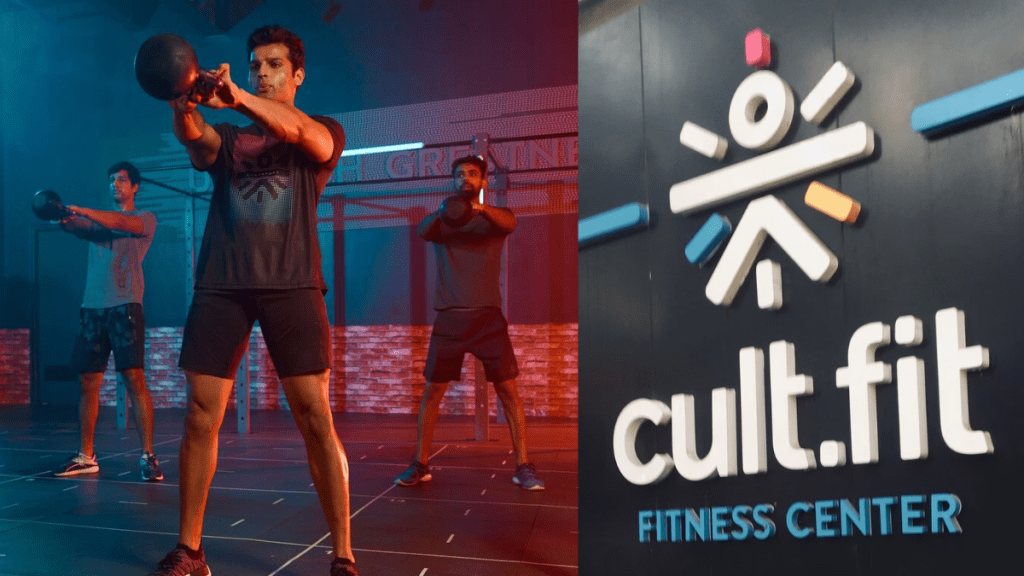
When Cult.fit (formerly called Cure.fit) launched in Bengaluru in 2016, it looked like just another fitness startup in a crowded market. The app offered gym memberships, yoga sessions and group workout classes for young professionals in the city.
Nearly a decade later, the company has transformed into one of India’s largest integrated health platforms, spanning physical fitness centres, digital workouts, mental health therapy, nutrition services, doctor consultations and an online store for fitness products. Now, it has expanded to one of world’s powerhouses, The United States.
A startup born out of gaps in India’s health system
Cult.fit was founded by Mukesh Bansal and Ankit Nagori, both former Flipkart executives, with a simple but ambitious goal, to bring fitness, nutrition and mental well-being under one roof.
“From day one, the mission was to make health easy,” Shamik Sharma, head of international business and digital initiatives back then told US Chamber.com.
The founders saw clear gaps in India’s health and fitness ecosystem, fragmented gyms, limited access to quality trainers, little focus on mental health, and no single platform tying it all together.
Seeing through their experience in e-commerce and technology, they built Cult.fit as a tech-first company, combining physical centres with a mobile app, expert-led classes and data-driven personalisation.
The company opened its first fitness centres in Bengaluru, offering yoga, strength training, dance workouts and group classes. Over time, it expanded across major Indian cities and grew to nearly 225 fitness centres.
How Cult.fit scaled quickly in India?
According to Cult.fit’s financial statements, the growth in India has been rapid. Its operating revenue rose from Rs 216 crore in FY22 to Rs 694 crore in FY23, and further to Rs 927 crore in FY24. In FY25, revenue reached Rs 1,216 crore, growing 31% year-on-year.
Fitness subscriptions have remained the biggest driver, contributing 73% of FY25 revenue at Rs 889 crore. Product sales, including fitness equipment and merchandise, added Rs 326 crore.
The losses have been significant in the past, the company has steadily narrowed them, from Rs 889 crore in FY24 to Rs 481 crore in FY25, with EBITDA performance improving and strong momentum continuing into FY26.
The company has raised more than $660–675 million in funding from investors including Temasek, Accel, Kalaari Capital, IDG Ventures, Chiratae Ventures and Oaktree Capital. Mukesh Bansal, who earlier co-founded Myntra in 2007, brought nearly two decades of tech experience to the venture.
How Covid-19 accelerated Cult.fit’s growth?
Before March 2020, Cult.fit’s business was so much dependent on physical fitness centres. Around 60% of its revenue came from offline gyms. When COVID-19 hit and lockdowns forced gyms to shut, the company faced an existential crisis.
Instead of slowing down, Cult.fit just put their energy in another direction. “When our gyms closed, we immediately knew that our customers would miss in-person classes so we created live classes through our app,” said Sharma to US Chamber.
The app turned into a digital-first platform offering live, instructor-led workouts across strength training, pilates, cardio and yoga. During lockdown, Cult.fit signed up 1.5 million new users and added 100,000 paid subscribers after launching a paywall in India.
Technology as the differentiator
One of Cult.fit’s standout features is its proprietary Energy Meter, which tracks a user’s effort during workouts. Once the camera is enabled, explosive movements are captured and converted into an energy score. Users can see their performance in real time, compete with others in the class, and receive rankings at the end of each session.
“Our goal has always been to offer our users a seamless and outstanding experience,” said Ankit Nagori, Co-founder, Cult.fit in its press release that announced expansion to the US. “By merging real-time instruction and motivation with our proprietary Energy Meter, coupled with world-class trainers, the user experience of group fitness classes is second to none.”
Testing the waters in the United States
As Cult.fit’s digital platform gained traction in India, the company noticed organic demand from users overseas, particularly in the United States.
“Lockdown has expedited these efforts,” Sharma told CNN Business. “When we saw the demand for our app in the United States, we launched rapidly.”
Cult.fit began testing its app in the US in mid-2020, offering live fitness and therapy sessions. Within months, the app recorded around 75,000 downloads. Initially, all sessions were offered free, with plans to introduce a subscription model later.
“This is an exciting time for Cult.fit as our rapid growth will afford millions of new users in the United States the opportunity to enjoy our app during a time when people need it the most,” said Mukesh Bansal, CEO,Cult.fit
“Due to Covid-19 and the changing culture, there is a demand for effective methods of working out without having to spend thousands of dollars on equipment or leaving the house. We offer a positive experience for anyone looking to work out, cook, or meditate.”
Building a local team without setting up shop
Unlike India, Cult.fit did not rush to set up a physical presence in the US. Instead, it focused on hiring local talent to understand the market better.
“US is one of the top markets worldwide,” says Shalabh Malhotra who was a part of Cult.fit’s business operations team back then told to CNN Business.
The company used an employer-of-record model through PGC to hire US employees without setting up a legal entity. This helped the company to walk through complex labour laws, healthcare benefits and compliance requirements.
“We realised early on to be successful, it’s important to localise everything,” Malhotra explained to CNN Business. “We wanted to make sure we had a dedicated team of US staff who knew the market from a marketing and product point of view.”
Cult.fit’s expansion into the United States is still measured, digital-first and experimental, even as India continues to anchor its revenues and scale. In a crowded global wellness market, the company is betting on technology, localisation and patience rather than rapid physical expansion.