



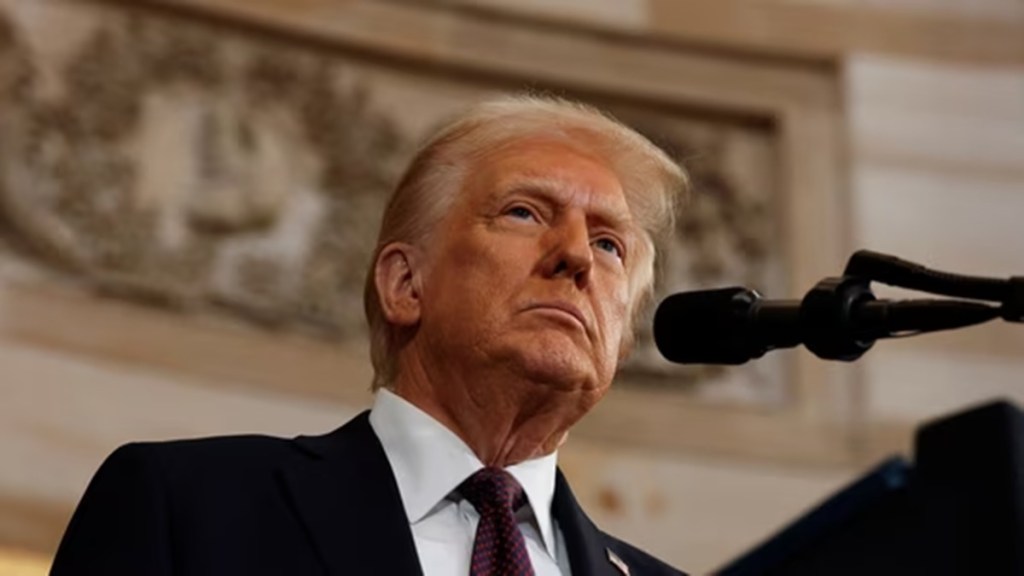
Federal immigration authorities will now be permitted to arrest individuals and carry out enforcement actions in and near sensitive locations such as churches and schools. This marks a significant departure from long-standing policies that previously restricted operations in these areas. Acting Homeland Security Secretary Benjamine Huffman announced the policy change, stating that agents will now have greater discretion in enforcement decisions.
“Criminals will no longer be able to hide in America’s schools and churches to avoid arrest. The Trump Administration will not tie the hands of our brave law enforcement, and instead trusts them to use common sense,” Huffman said in a statement.
Policy change
This policy change underscores a major shift from the approaches taken by previous administrations. In 2011, Immigration and Customs Enforcement (ICE) implemented a policy to prevent arrests in sensitive locations. The Biden administration maintained similar guidelines. The new directive removes these protections, which immigrant advocates argue could foster fear within immigrant communities, potentially discouraging children from attending school or individuals from seeking medical care.
In addition to the policy on sensitive locations, the Trump administration announced the phaseout of parole programs that allowed certain migrants to temporarily live and work in the United States. Republicans have long criticised the Biden administration for allegedly overextending the parole program to multiple nationalities.
“The Biden-Harris Administration abused the humanitarian parole program to indiscriminately allow 1.5 million migrants to enter our country. This was all stopped on day one of the Trump Administration. This action will return the humanitarian parole program to its original purpose of looking at migrants on a case-by-case basis,” the statement added.
Reactions from Advocates and Lawmakers
The rollback of these policies has sparked criticism from immigrant advocacy groups, who warn that ending protections at sensitive locations could lead to widespread fear and reluctance to seek essential services. They argue that such policies undermine public safety and community trust.
Conversely, supporters of the new measures argue that they are necessary to enforce immigration laws effectively and prevent individuals from exploiting the previous system to evade arrest.
As the Trump administration moves forward with these changes, legal challenges and pushback from advocacy organisations are expected. The administration remains firm in its stance that these measures will strengthen immigration enforcement and restore order to the system.
US, India Discuss Immigration Concerns
US Secretary of State Marco Rubio held talks with his Indian counterpart, Subrahmanyam Jaishankar, on Tuesday to address concerns over “irregular migration,” the State Department reported. The discussions come as newly sworn-in President Donald Trump moves swiftly to implement executive orders aimed at deporting millions of undocumented immigrants, a core campaign promise.
According to Bloomberg, India has expressed its willingness to collaborate with the Trump administration to identify and repatriate its nationals living illegally in the US, with reports suggesting around 18,000 individuals could be affected. “Secretary Rubio also emphasised the Trump Administration’s desire to work with India to advance economic ties and address concerns related to irregular migration,” the State Department stated.
Despite the focus on illegal immigration, India reiterated the importance of skilled worker mobility under the H-1B visa program, a critical component of US-India economic relations. Trump, who previously questioned the program, has now expressed support, echoing billionaire Elon Musk’s stance in favour of the visas. In the last fiscal year, 78 per cent of the 265,777 H-1B visas issued by the US went to Indian professionals, highlighting the country’s significant contribution to the American workforce.
(With agency inputs)