



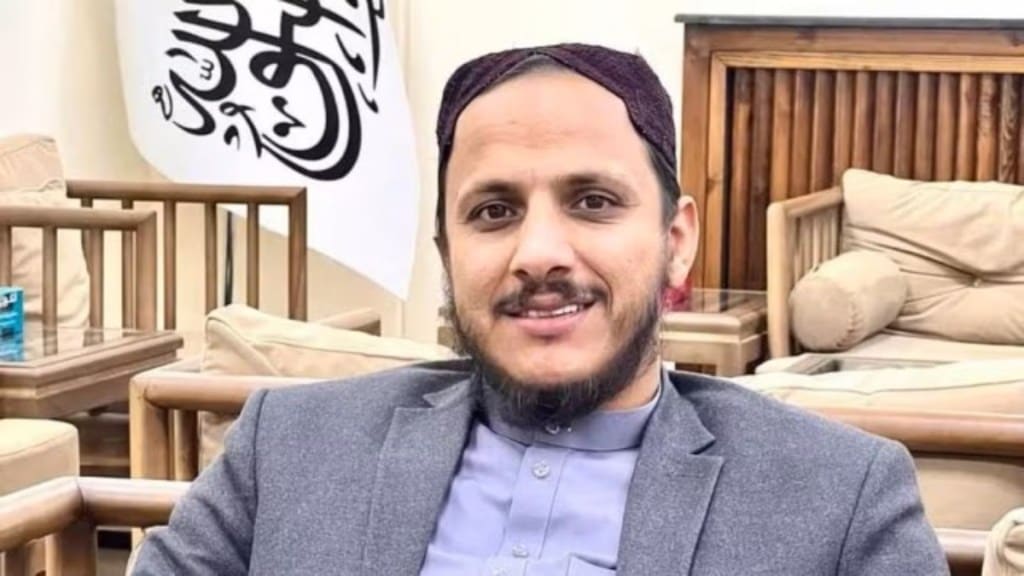
The Taliban government in Afghanistan has nominated Ikramuddin Kamil, a PhD graduate in international law from New Delhi’s South Asia University, as the acting consul for the Afghan consulate in Mumbai. This proposal, which comes after an Indian delegation’s recent visit to Kabul, is awaiting approval from the Indian government.
Kamil’s appointment, if sanctioned, would mark the first formal diplomatic post in India by the Taliban since it took power in Afghanistan in August 2021. The decision to propose Kamil—an individual who has studied in India for seven years under a scholarship from the Ministry of External Affairs (MEA)—may reflect a strategic effort by the Taliban to leverage existing ties and familiarity.
Sher Mohammad Abbas Stanikzai, the Taliban’s deputy foreign minister for political affairs and himself an alumnus of Indian military training, announced Kamil’s new role on social media. “In the city of Mumbai, India, the acting Consul of the Islamic Emirate of Afghanistan, Dr Hafiz Ikramuddin Kamil,” Stanikzai posted on X.
Kamil’s deep ties with India extend beyond his academic background. Previously, he served as Deputy Director at the Department of Security Cooperation and Border Affairs within Afghanistan’s Ministry of Foreign Affairs. Currently stationed in Mumbai, Kamil has reportedly commenced his duties despite the absence of formal recognition from the Indian government. His current role is unofficial, positioning him as an Afghan national assisting the Afghan community in India rather than as a formally recognized diplomat.
India’s diplomatic relationship with Afghanistan has been strained since the Taliban’s takeover, leading to the withdrawal of Indian diplomats from Kabul and the departure of Afghan diplomats from New Delhi, many of whom sought refuge in Western countries. In the interim, a single former Afghan diplomat has maintained minimal operations at the Afghan mission in India.
The need for consular services has remained significant due to the large Afghan diaspora in India. According to sources, “More staff is required to effectively service the Afghan nationals in India,” emphasizing the demand for continued support and representation.
This proposed appointment follows a notable visit to Kabul by an Indian delegation led by JP Singh, Joint Secretary of the MEA’s Pakistan-Afghanistan-Iran division. During this visit, the delegation engaged with Afghanistan’s interim defence minister, Mullah Mohammad Yaqoob, to discuss avenues for humanitarian aid and the strategic use of Chabahar Port in Iran to boost connectivity.
Sources have noted that while India has not officially recognized the Taliban regime, the move to appoint Kamil could signal subtle shifts in engagement. This comes at a time when the Taliban is keen on acquiring a United Nations seat to bolster its international legitimacy. However, India’s stance remains cautious, weighing the implications of formal interactions with a regime that has yet to gain global recognition.
The Taliban’s initiative to manage approximately 40 Afghan diplomatic missions worldwide is aimed at sustaining ties and supporting Afghan nationals abroad. Acknowledging the challenges faced by the Afghan community, a former Afghan diplomat, Aziz Maarij, highlighted that maintaining connections with India is essential. “Maintaining relations with India, especially when Afghanistan faces global isolation and Afghan citizens and traders need secure economic ties, could solve many of Afghanistan’s challenges,” Maarij noted to Tolo News.
Whether Kamil’s appointment will pave the way for deeper engagements between India and the Taliban remains uncertain. For now, he stands as a unique figure bridging the gap between his homeland and the nation where he completed his academic pursuits.