



Nvidia Corp is on the verge of a policy victory as US lawmakers chose not to include a proposal restricting AI chip exports to China in the upcoming defense authorization bill, a Bloomberg report said. The report added that the Guarding American Innovation for National Security (GAIN AI) Act, which would have acquired Nvidia and Advanced Micro Devices to offer advanced chips to US customers first, was left out of the must-pass legislation which is expected to be released Friday.
Nvidia pushes back on chip curbs
Bloomberg reported that the measure was at the centre of an intense policy fight that placed China hawks and AI safety advocates against Nvidia and other industry leaders. Nvidia argued that the bill would restrict global competitiveness. It also maintained that it was already ensuring US customers get priority access to its most advanced chips.
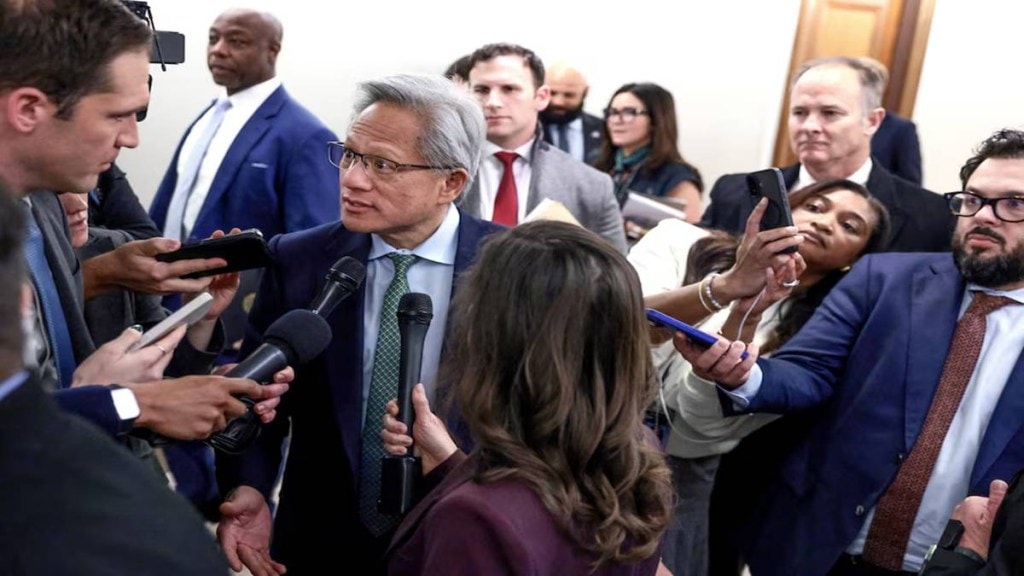
The lobbying effort resulted in Nvidia CEO Jensen Huang’s visit to Washington this week, where Bloomberg noted he told reporters that he was present to “answer questions about AI”.
White House hints at alignment with Nvidia’s position
The decision also comes as the White House reviews whether Nvidia’s H200 chips should be permitted for export to China. The senior officers continued to be split, even as President Donald Trump had earlier suggested that he may allow sales to a downgraded Blackwell chip.
The Bloomberg report also highlighted that White House AI adviser David Sacks has pushed for broader chip sales to China to boost US global technological leadership.
Meanwhile, Trump met Huang and stated that the CEO understood his views on export controls, as per a report by Reuters. Huang warned lawmakers that fragmented US regulation could slow down AI innovation.
Huang also downplayed concerns about the smuggling of restricted GPUs. He said that Nvidia’s AI data centres are enormous, consist of over a million components and are expensive, making illegal transport impractical.