



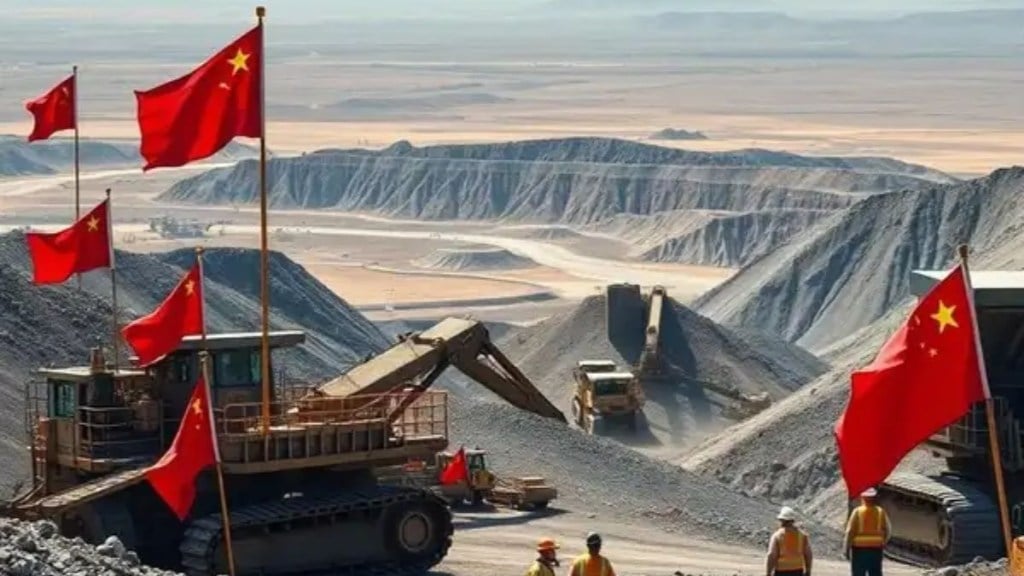
China on Friday approved exports of rare-earth metals strictly for civilian use, a move that could ease immediate supply concerns for Indian industries even as Beijing retains tight control over materials with potential defence applications.
The announcement comes amid sustained diplomatic engagement by India, which has repeatedly raised concerns over shortages of rare-earth elements critical for manufacturing automobiles, electronics, renewable energy equipment and advanced machinery.
China accounts for around 70% of global rare-earth mining and nearly 90% of processing, making its export policy decisions central to global supply chains.
What China has announced
China’s Foreign Ministry said export controls on rare-earth-related items are not targeted at any specific country and that applications would be approved if they meet regulatory requirements and are meant for civilian use.
The Chinese government reiterated that it will not permit exports where rare earths could be used to manufacture defence equipment, citing the dual-use nature of medium and heavy rare earth elements. Beijing described such controls as consistent with international practice and non-proliferation norms.
China’s Commerce Ministry separately confirmed that it has already approved export applications from some Chinese companies, signalling that shipments have resumed after curbs imposed earlier this year amid trade tensions with the US.
What this means for India?
For India, the civilian-use approval window offers short-term relief for sectors facing supply stress, particularly automobiles, electronics, renewable energy and precision manufacturing.
Indian officials have flagged rare-earth shortages in multiple bilateral forums, including recent foreign ministry consultations in Beijing on December 12, where New Delhi pressed for an early resolution of export control issues.
However, the restrictions underline India’s continued strategic vulnerability due to its dependence on Chinese rare-earth supplies. While civilian approvals may stabilise near-term imports, uncertainty remains for sectors with overlapping civilian–defence applications.
The development also reinforces India’s push to diversify supply chains, invest in domestic rare-earth processing and deepen partnerships with alternative suppliers such as Australia and the US.
Amid the tariff war with the US, China has announced export control measures on rare earths, putting a squeeze on the precious metals. Reports from India spoke of growing concerns about shortages of the rare metals, especially in automobiles and other industries, prompting New Delhi to raise the issues in bilateral forums.
Beijing began easing the export controls after reaching an agreement with the US to permit the export of the semiconductor chips needed for China’s burgeoning AI industry. India has been pressuring China to resume rare earth exports, highlighting the issue in different bilateral dialogue platforms, including the recent consultations of foreign ministry officials here on December 12.
In the Beijing talks, the Ministry of External Affairs (MEA) said, “the Indian side emphasised on the need for early resolution of outstanding issues pertaining to export control. Regional and global developments of mutual interest were also briefly touched upon.” Besides rare earths, India has also been calling on China to permit the exports of its heavy boring machines to be used for mining.