



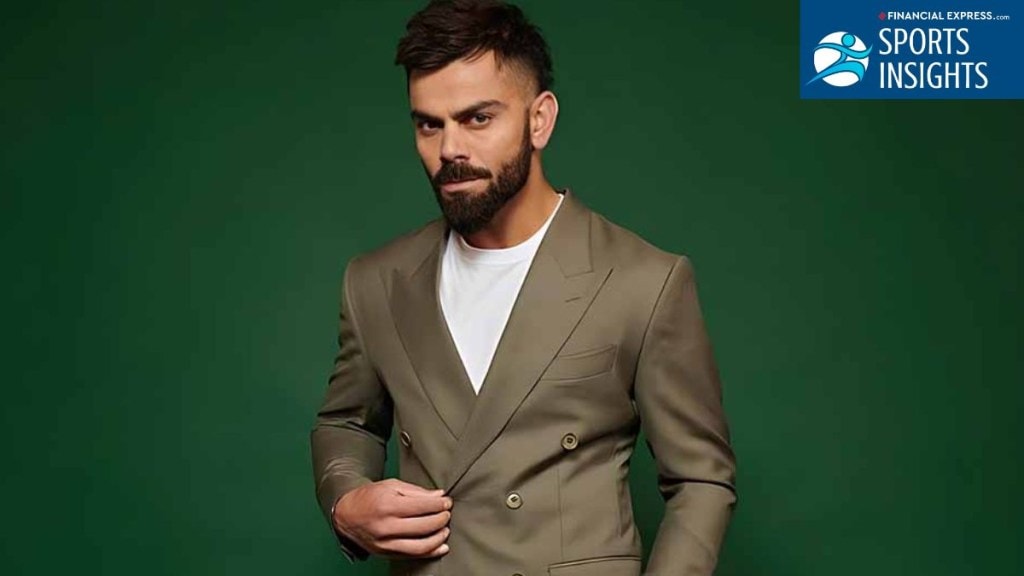
Virat Kohli never started with money. He started with control.
Before the big cheques and before people started counting his wealth on Instagram reels, there was just a boy in Uttam Nagar in West Delhi. His father worked as a lawyer. His mother took care of the house. No fancy life, just rules and discipline that shaped everything.
At three years old, Kohli didn’t ask for toys. He asked his father to throw balls at him. Again and again. Practice before play. That habit never left him.
When he failed to make the Delhi under-14 team, clubs with connections offered him a guaranteed spot. His father said no without thinking twice.
That one ‘no’ explains almost every business choice Kohli makes today.
What the numbers actually show
Let’s talk real numbers because people throw around big figures without understanding them.
In 2025, Kohli’s total worth sits somewhere between ₹1,050 and ₹1,100 crore. This money comes from three places – his cricket salary and match fees, the advertisements he does and the companies he owns part of.
Here’s what most people completely miss. More and more of his money now comes from owning companies, not just doing ads. That’s the real shift in how he thinks about wealth.
First big bet: Chisel Fitness
His first serious bet was Chisel Fitness back in 2014-15, where he put in ₹90 crore. He started it with Cornerstone Sport and this wasn’t some small test to see what happens. This was serious conviction money.
At that time, proper gyms in India were still a new idea and the market was completely unorganized. Kohli wasn’t betting on buildings with equipment. He was betting on a change in how people live, something he had already experienced himself.
Fitness had saved his own cricket career when he needed it most. So he put his money where his personal belief was. That same pattern shows up in every business move he makes after this.
The WROGN lesson that changed everything
Before One8, there was WROGN that he started with Universal Sportsbiz. The brand grew quickly and by early 2020s, it was in more than 350 stores with strong online sales. People who track these things said it was worth around ₹250-300 crore.
This whole experience taught him something critical that changed his approach forever. Getting paid to show your face makes good money, but owning the company makes real wealth. After WROGN, his business decisions changed completely. He started doing fewer ads and chasing more ownership.
One8: When success creates problems
When One8 launched in 2017 with PUMA, they called it an “athletic lifestyle” brand. But over time, it quietly became Kohli’s biggest money-maker. Today One8 means clothes and shoes, cafes and restaurants, perfumes, and shops in airports.
Industry experts place One8’s value at over ₹300 crore, though Kohli himself never confirmed this number.
But this success created a serious problem that most people don’t understand.
Why full control stopped making sense
Sportswear is a brutal business when you try to scale it. Profit margins stay thin. Making shoes needs huge capital. Expanding internationally breaks companies that don’t have expert operations.
Kohli faced a clear choice. He could control everything and watch growth slow down, or he could let people who know the business run the engine properly. He picked option two.
In 2025, he sold One8 to Agilitas Sports, a Bengaluru company started by former PUMA India executives. Then he made the move everyone misunderstood completely.
The ₹40 crore move everyone misunderstood
Immediately after selling, Kohli invested ₹40 crore right back into Agilitas itself. He got 1.94% of the company through special convertible shares.
This move was financially smart for three solid reasons. First, he turned a single-brand risk into platform-level upside. Second, his money now grows with the entire Agilitas business, not just One8. Third, those special shares give him protection if things go bad but full benefits if they go well.
On top of that, he signed an exclusivity clause. No deals with Nike. No deals with Adidas. No other sportswear brands at all. Financially and personally, he locked himself in with Agilitas.
This wasn’t an exit from the business. This was complete alignment with the people running it.
The quiet, calculated portfolio
Kohli doesn’t spray his money everywhere like some lottery winner. He concentrates it carefully in places he understands.
He put ₹2.5 crore into Digit Insurance when it was just starting. The company went public in 2023 and is worth billions now. He invested early in Blue Tribe Foods when plant-based meat was unknown.
He has money in Hyperice, a global recovery-tech brand worth more than $700 million. He invested in MPL, whose parent company Galactus Funware was valued at $2.3 billion at its peak. He owns a strategic stake in Rage Coffee and promotes the brand. He has long-term ownership in FC Goa in the Indian Super League and the UAE Royals tennis franchise.
Every single one of these bets connects to health, sport, young people or long life. No cryptocurrency gambles. No meme stocks. No chasing whatever is trending on Twitter.
The day that changed his money mindset
After his father’s death in 2006, Kohli changed in a fundamental way. According to his mother, cricket stopped being his passion and became his responsibility.
That thinking leaks directly into his business decisions today. He prefers long-term equity over quick endorsement fees. He trusts systems over catchy slogans. He chooses operators over image management professionals.
Even Anushka’s influence shows up in his choices. He takes fewer random risks. He makes cleaner alignment choices. He creates less noise around his moves.
Real financial takeaway
Virat Kohli is transitioning from being an income-rich athlete to an equity-rich businessman. Selling One8 and reinvesting ₹40 crore wasn’t some clever trick to fool people.
It was a balance-sheet upgrade, plain and simple. He reduced his operational risk. He increased his long-term upside potential. He aligned his interests with the company’s interests. And he removed his ego completely from the equation.
Final thought: Building it the Kohli way
Kohli’s business empire wasn’t built by chasing money at every turn. It was built the same way his batting peak was built. By showing up daily even when no one was watching. By trusting specialists to do what they do best.
His story is not about becoming rich.
It’s about building a future that matches his own way of living.
A batter whose entire cricket life was about fitness, belief and routine, ended up creating a business world based on the same three pillars.