



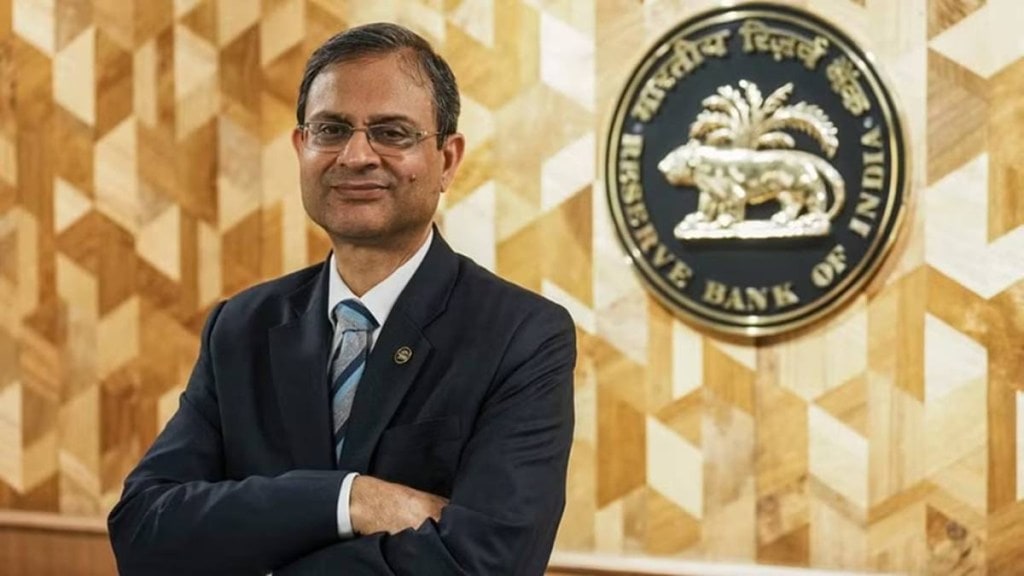
In the just released RBI bulletin, Sanjay Malhotra, governor of the Reserve Bank of India, concludes the year with his December 5th comment that does seem to add to the Yuletide cheer. From approaching “the new year with hope and vigour” he sees good reasons to “remain growth supportive” and “meet the productive requirements of the economy in a proactive manner while ensuring macroeconomic stability.”
Buoyed by an enabling domestic environment for growth, he says, “despite an unfavourable and challenging external environment, the Indian economy has shown remarkable resilience and is poised to register high growth. The headroom provided by the inflation outlook has allowed us to remain growth supportive.”
To Dinesh Khara, former chairman, State Bank of India, one of the important messages from the bulletin has been the continued growth momentum of the Indian economy. That there was front-loading of government capital expenditure aiding this process, is to him, crucial at this juncture and one that also helps support domestic demand, which he sees pick up. As India embarks on the new calendar year, Khara sees in these, levers that can support the future growth momentum.
Keki Mistry, former vice chairman & CEO, HDFC and an independent director on the boards of several leading companies, says, “the economy is doing well. The high-end consumption is good and even rural consumption is picking up.” To him, the scene on job-creation has also changed with new jobs getting created, particularly in the SME (Small and Medium-sized Enterprises) sector.
To Mistry and some of the other leaders from the finance arena, the slide in the rupee against the dollar is not really an area of concern especially when seen in terms of the average trends over the past 20 years, which do not seem to demonstrate any sharp fall. Albeit, some argue that in the interim, it may be to the advantage of the exporters.
Rupee volatility moderates, external sector remains resilient
On the rupee volatility, the article on the state of the economy refers to foreign portfolio outflows from the equity markets exerting “downward pressure on the rupee; nonetheless, rupee volatility moderated in November from a month ago and remained relatively lower than that for most major currencies. India’s external sector exhibited resilience despite a challenging global environment. Current account deficit narrowed in Q2:2025-26 compared to that for the same period last year with a moderation in merchandise trade deficit, robust services trade surplus, and resilient remittances.”
Nonetheless, it does see capital flows tempered by persistent global uncertainties. However, the foreign exchange reserves remain sufficient to comfortably meet India’s external financing requirements.
On job creation, the article quotes the Periodic Labour Force Survey (released on December 15th), which points to a decline in the “all-India unemployment rate to 4.7 per cent in November, with a fall in both rural and urban areas. Labour force participation rate rose to a seven-month high accompanied by an improvement in the worker population ratio. PMI employment for manufacturing witnessed deceleration in November but remained in the expansionary zone. PMI employment for services remained steady.”
While all eyes would be on the Economic Survey that Dr Anantha Nageswaran, the chief economic advisor (CEA) would be busy with at the moment, the article on the state of the economy does refer to the “Naukri JobSpeak Index,” which “surged in November led by fresh hiring especially in non-IT sectors like education, hospitality, and real estate. Work demand under the Mahatma Gandhi National Rural Employment Guarantee Scheme (MGNREGS) continued to contract, suggesting improvement in rural labour market conditions.’’
On the role of the manufacturing sector, Khara points to this segment accounting for nearly 17 per cent of India’s gross value added. Which, according to the bulletin, “plays a pivotal role in the country’s growth dynamics.”
Over all, the RBI bulletin’s summary of the developments during the year does point to a year well-concluded despite challenges. It also holds out hope on growth prospects and job creation. Many will apparently want to hinge onto these while keeping track of the ebb and flow of the geopolitical risks and the policy-setting responses in the unfolding new year.
While many studies and experts see the hard-to-ignore geopolitical risks, here are some highlights from an article in the bulletin that explores how major safe assets react to geopolitical shocks while it also examines the effectiveness of neural network models in forecasting these dynamics.
Here are some highlights:
• Crude oil price volatility is the most sensitive to geopolitical disturbances, reflecting its dependence on global supply routes and vulnerability to regional conflicts.
• Gold continues to demonstrate strong price stability, underscoring its enduring reputation as a trusted safe haven in times of financial stress.
• Silver and US Treasury securities exhibit moderate responses, balancing industrial demand factors and the traditional investor shift toward safety.
• Neural network-based models, particularly those that integrate country-specific geopolitical risk indices, provide more accurate forecasts of asset volatility than conventional econometric approaches.