



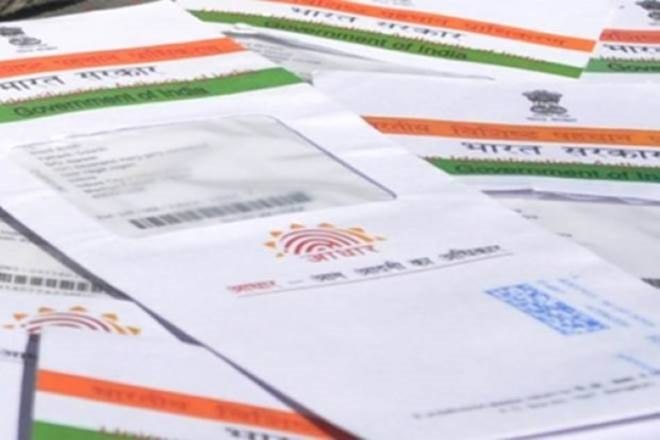
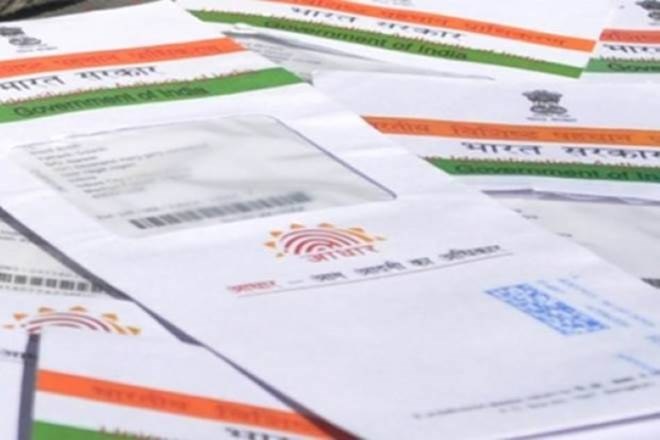
A five-judge Constitution bench of the Supreme Court on Wednesday started the final hearing on around 28 petitions challenging the constitutional validity of Aadhaar and its linking to a number of government schemes. Opening his arguments against the 12-digit biometric identification number, senior lawyer Shyam Divan appearing for petitioners told a bench led by Chief Justice Dipak Misra and justices AM Khanwilkar, AK Sikri, DY Chandrachud and Ashok Bhushan that the Aadhaar database “tends to terrorise citizens with the country becoming a totalitarian regime” as there is “no free consent in furnishing biometric information for Aadhaar”. Calling it a “giant electronic mesh that enabled the state to profile its citizens, track their movements and affect their social behaviour”, he said, “If the Aadhaar Act and programme is allowed to operate unimpeded it will hollow out the Constitution, particularly the great rights and liberties it assures to citizens.” “A People’s Constitution will transform into a State Constitution,” he said. Divan further said Aadhaar has given the state a “switch” that can cause the “civil death of a citizen”. “The collection of biometric data was patently illegal, and that could not have been corrected by passing the Aadhaar Act. Besides, it leaves behind an electronic trail and operates as a pervasive system. Can my body be used as a marker in a government programme?” Divan questioned Justice Chandrachud asked Divan if Aadhaar could be considered safe if the biometric information was used only for the purpose it was collected. “Can’t the state compel citizens to part with the biometrics in public interest? State can say biometric entry is required for children, teachers to ensure right to education. State spends crores on mid-day meals, but money is not reaching the children. Why can’t the state say it is a valid state interest to ensure that social benefits reach the right hands through the programme?” Chandrachud asked. “Then it becomes a pervasive society,” Divan said in response. “We are governed by rule of law. You can’t carve out an exception. If you compel, it becomes a surveillance society… This has huge ramifications. There is no safeguard that my data is safe.” However, Divan said he would address the issue later in detail.