



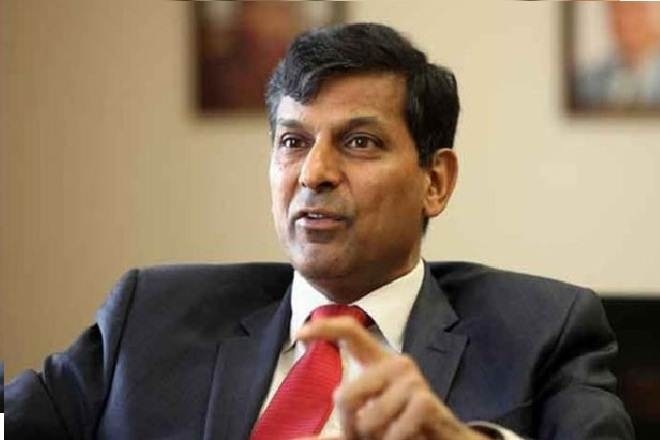
Amid a puzzlingly high degree of volatility in the GDP data with each update and the headline growth figures being far more sanguine than what assorted other high-frequency data points suggest of the state of the economy, former RBI governor Raghuram Rajan on Tuesday lent force to the apprehensions aired on this front by several reputed economists.
“There is a possibility that India is not growing at 7% (the official advance estimate for FY19),” the former International Monetary Fund (IMF) chief economist told CNBC TV18. Continued on Page 2 Rajan consulted on income scheme, says Rahul: P4 Rajan said he had no idea what statistics are pointing at currently and “a revamp” was needed “to really figure out what India’s true growth rate is”.
Also read| Rahul Gandhi’s NYAY: Raghuram Rajan tells why it’s not easy to implement minimum income scheme for poor
“I just think that we need now to essentially clean up, find out what in fact is the source of confusion with the new GDP numbers, with the revisions etc. I would say setting up an impartial body to look at it is an important step to resorting confidence,” he said.
The Central Statistics Office in the second advance estimate released earlier this month revised the real GDP growth in the current fiscal year down to 7% — a five-year trough — from 7.2% in the first advance estimate released in January. Fitch Ratings last week cut India’s economic growth forecast for the next financial year to 6.8% from its previous estimate of 7%, on weaker than expected momentum in the economy.
With the government finding it increasingly had to prop up the aggregate demand via public spending, the private investments are yet to pick up, exports are faltering and consumer demand is not strong enough to power a recovery. Of course, on the positive side, many sectors may be turning the corner and there is increased demand for bank funding in some sectors.
“I know one minister (in the Narendra Modi government) has said (that) how can we be growing at 7% and not have jobs. Well, one possibility is that we are not growing at 7%,” Rajan said. He did not name the minister.
Finance Minister Arun Jaitley has been stoutly defending the growth data saying an economy cannot be growing at 7-8% without creating jobs. He has also stated that no major social agitation indicates it hasn’t been jobless growth.
In November 2018, the CSO lowered the GDP growth during the Congress-led UPA government by releasing the back series data with the 2011-12 as base year. After this, the four years of the current government showed higher average growth than that achieved during the UPA regime.
Earlier this month, a group of 108 economists and social scientists said that lately, the Indian statistics and the institutions associated with it have come under a cloud for being influenced and indeed even controlled by political considerations.
“In fact, any statistics that cast an iota of doubt on the achievement of the government seem to get revised or suppressed on the basis of some questionable methodology,” the group had said in a statement.
On institutional freedom, Rajan said though no institution can be above the country, it doesn’t necessarily mean that elected representatives will always have absolute, unbridled powers upon them. The government has a lot of powers, but “we also need a government with very great capabilities to do efficiently what it needs to do,” the former RBI governor said.
A day after Congress chief Rahul Gandhi made the electoral promise of income support of Rs 72,000/annum per family for the poorest 20% of the population, Rajan said though the country might be able to afford such a scheme, it must be targeted at the “very poor.” (With PTI inputs)