



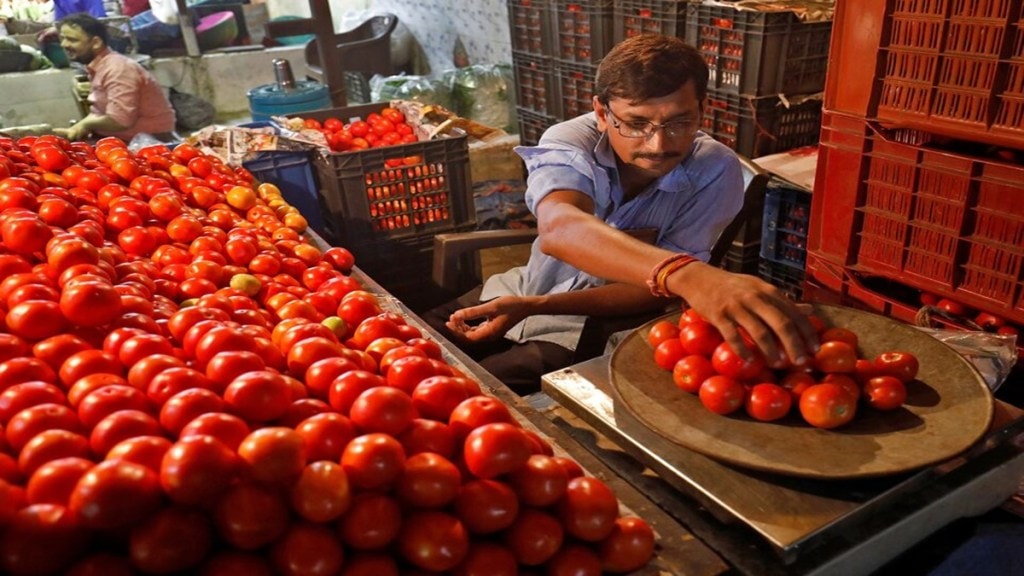
In a bid to rein in volatility in tomato prices, the government has formulated a scheme to give financial support to 28 business ideas including making of wine and bio-pesticides from the vegetable. The scheme will be scaled up under a hackathon to boost processing of tomatoes and reduction in post-harvest losses.
“These ideas are at the prototype stages and will be scaled up by giving support to ventures and attracting investments,” Nidhi Khare, secretary, department of consumer affairs, told FE.
Among other ideas are innovative packaging and transportation solutions to enhance shelf life and minimise post-harvest losses, creation of processed products that extend usability, reduce wastage and ensure year-round availability for tomatoes, Khare said.
India is the second-largest producer of tomatoes in the world and around 30% of the output is lost at various stages of the value chain.
These ideas will be presented to investors soon and these business ideas have led to filing of 14 patents and four design registration or trade marks.
“We received 1,376 ideas and out of that 423 were shortlisted in the first stage and finally 28 ideas were funded,” she said. These ideas were sought under categories including research scholars, industry individuals, startups, micro, small and medium enterprises, limited liability partnership and professionals.
She said more perishable commodities in milk has expanded through value additions and introduction of various products, in case tomato same could be replicated which would result in higher farmers realisation and availability of the commodity at an affordable prices throughout the year.
Tomato Grand Challenge (TGC) hackathon was launched in June last year to invite innovative ideas at various levels of the tomato value chain to ensure its availability to consumers at affordable prices and help tomato farmers get value for the produce.
“There is always high volatility in tomato prices. Rates increase sharply because of excessive rains, heat spells and pest attacks which also adversely impact farmers’ income,” Khare said while adding that during the year there are a couple of times tomato prices witness a sharp spike.
Retail inflation in tomatoes declined by 47% in August on year against a sharp spike of 161% in October compared to a year ago.
TGC was conceptualised by the consumer affairs department in collaboration with the innovation cell of the education ministry aimed at attracting innovators and researchers to address challenges in tomato production processing and distribution.
Tomato production as per the third advance estimate of agriculture ministry was estimated at 21.3 million ton (MT) in 2023-24 crop year, an increase of 4% compared to 2022-23.
Around 18 states, including Madhya Pradesh, Gujarat, Maharashtra, Chhattisgarh, Odisha, West Bengal, Telangana, Karnataka, Tamil Nadu, and Punjab contribute to the country’s tomato production.
According to an official note, the cycle of planting and harvesting seasons and variation across regions are primarily responsible for price seasonality in tomatoes.
“Tomato supply is spread across the country, any production vulnerability in any of the states disturbs the supply chain,’ the note stated. The department has identified June-August and October-November as lean production months when prices rise during these months.