



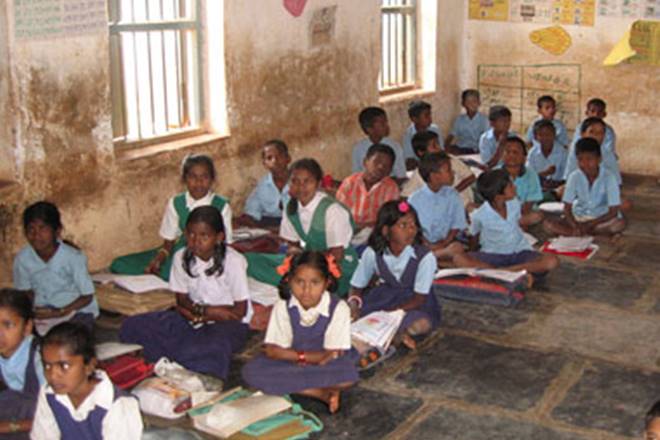
Nearly two-fifths of India’s schools not having access to power is a telling sign of persisting infrastructure gaps. As per data analysed by the National University of Educational Planning and Administration, only 62.81% of the schools in the country—19% in Jharkhand, that figures below even the hill-states and the North East—have electricity connections. The other laggards are Assam (25%), Meghalaya (28.54%), Madhya Pradesh (28.8%), Tripura (29.77%), Odisha (33.03%) and Bihar (37.78%), as per the last updated data with the Unified District Information System for Education (UDISE).
After the Right to Education (RTE) Act was implemented in 2010, it was expected that school infrastructure would get progressively better as the Act made compliance with basic infrastructure standards for schools to be recognised under various boards. However, as per UDISE data, the number of schools without drinking water (one of the RTE requirements) rose from 29,071 in academic year 2010-11 to 48, 138 in academic year 2015-16. Though electricity connection is not mandatory under RTE, schools without this numbered 319,441 in 2010-11 and 565,793 in 2015-16.
With most of the no-electricity schools in rural areas, where alternatives are fewer than in urban areas, the most vulnerable bear the brunt of slack infrastructure development. Against such a background, consolidation of schools that the Centre talked about recently may provide an answer. Instead of leaving schools half-equipped in areas where the creation and maintenance of necessary infrastructure is difficult, it would certainly seem more pragmatic to consolidate infrastructure in schools that are in a more accessible location. The problem, however, is that this will be against the guiding principle of distance not being a barrier to enrolment or continuing school education.