



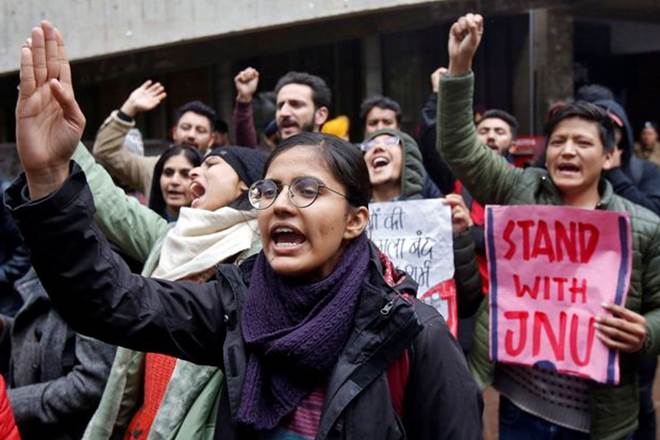
Given the conflicting views on the identity of the masked men who were allowed to unleash a reign of terror for several hours in the capital’s Jawaharlal Nehru University (JNU), perhaps a fuller picture will only emerge after a full inquiry; did the police not surface for hours because the JNU authorities didn’t let them in and who switched off the street lights outside the campus which allowed the miscreants to escape? Home minister Amit Shah asked the Delhi police to conduct a full inquiry into the events on Sunday itself, but given the doubts being raised over the role of the police force itself, perhaps a Supreme Court-monitored probe is a better idea; the JNU authorities claim to have lodged police complaints for several days running before the incident and one video that has gone viral shows the police standing by while the masked goons – with hockey sticks etc – are walking by. It is possible that the video is a fake or is morphed or, like the grab of the policemen pouring some liquid into a bus at the Jamia Milia protests some weeks ago, it is being portrayed out of context; indeed, India Today had found that the bus the policeman had supposedly burned was safe and sound in the bus depot. A Supreme Court-monitored probe will have more credibility, so ideally the government should order one; more so since, with the Delhi election schedule just announced, the violence will be given all manner of political colour.
The JNU authorities’ role also needs to be examined in detail since, even going by the press note released by the university, it is largely to blame for letting matters reach where they did. Indeed, the fact that a completely justified hike in hostel fees was portrayed as a right-wing government trying to suppress a left-liberal student body just shows how poorly things were handled by everyone including the central government; it didn’t help that a few years ago, the JNU vice-chancellor made it clear he thought the student body was anti-India when he asked the government to install a tank in the university so as to inculcate nationalism among the students. Sunday’s note by JNU talks of how, on January 3, masked students stopped the registration for the new semester by disabling the university’s servers; “a police complaint was filed immediately identifying the students”, the note says. The university fixed the servers but, it says, the same thing happened the next day when the students “damaged the power supplies, broke the optical fibres and made the servers dysfunctional again”… the authorities filed a police complaint again and “for the past few days, the group of agitating students also closed the buildings of some Schools” and “during the last couple of weeks, these agitating students also vandalized the admin block and ransacked the office of the Vice Chancellor … police complaints were filed”.
If, as the JNU authorities claim, the problem has been escalating for so long, what was the police doing all this while and, more important, if the police did little, why didn’t the authorities escalate the matter; there is, till now, no convincing explanation from anyone of why the police never stopped the violence given how centrally located JNU is. While the probe, should it be ordered, will examine these two issues, the police need to trace the culprits and several media reports have linked some WhatsApp messages inciting violence to people associated with the ABVP; while the ABVP has officially denied any hand in the violence, some of those quizzed by the media said their phones had probably been misused to send out messages; the messages are a reality, whether they are linked to the ABVP or someone else is something the police have to investigate. What has happened is a blot on India’s reputation and, apart from containing any further violence – and not just in JNU – the government owes it to the country to ensure an impartial inquiry.