



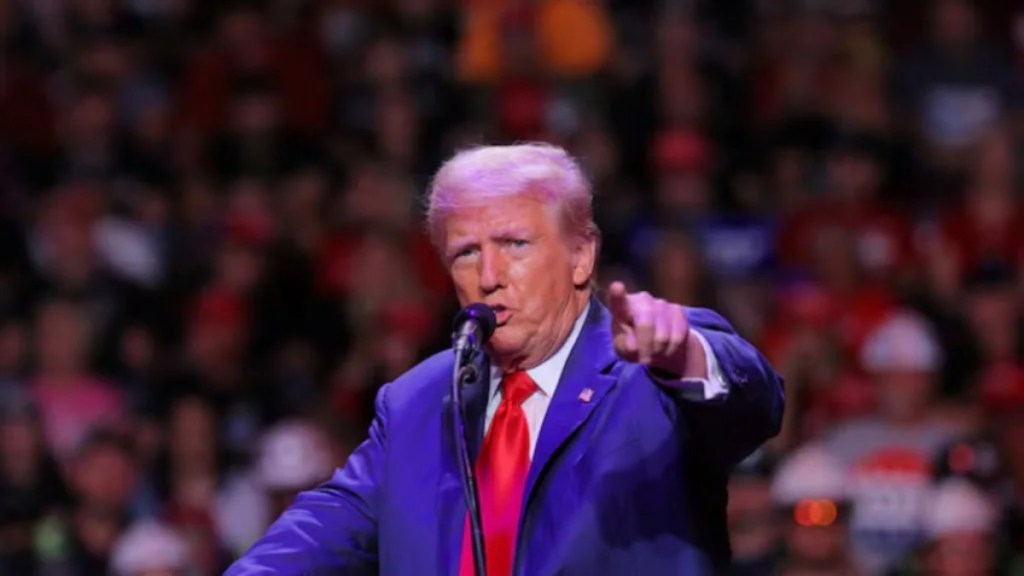
After imposing blanket tariffs on Canada, Mexico, and China, US President Donald Trump has turned the heat on the European Union (EU). Trump’s statement that he will “absolutely” impose tariffs on the 27-country customs-and-monetary bloc elicited a quick response, with Brussels vowing to strike back firmly if targetted.
Canada and Mexico, the top two trading partners of the US, too had signalled retaliation, while China has so far maintained an eloquent silence. Trump has by now made it clear that the executive order called “America First Trade Policy” that his administration issued immediately after assuming office is indeed meant to be followed through in letter and spirit.
Having either acted upon or pledged to move against the US’s top four trade partners already, he is very likely to move further. India has a consistent trade surplus with the US, which Trump abhors, and in his eye, the country is a “tariff abuser” and “currency manipulator”. What needs to be watched now is whether his imminent action against New Delhi on the trade front will be restricted to specified tariff lines like steel, aluminium, and pharmaceuticals, or a sweeping one.
Whatever that be, a full-blown global trade war has indeed begun, with potentially serious repercussions for global trade and economy. And its timing could not have been worse given that monetary easing by central banks is trundling along amid lingering uncertainties over global inflation. The world trade has just about rebounded from the 2023 trough. For any sensible observer, Trump’s moves would look feckless and idiosyncratic, and as harmful to the US as the rest of the world. Indeed, the US President has warned his people of the “pain” ahead, but insisted that it would be “worth the price”.
In Budget FY26, India announced significant tariff reductions on multiple products, and brought down the top slab to 70%. The lowering of tariffs on motorcycles, ethernet switches, etc. would aid American exports significantly (the US shipped $653.4 million worth of ethernet switches to India in FY24). These tariff cuts would therefore appear preemptive, in the face of Trump’s threats. For the record, government functionaries insist that India is a “low-tariff economy”. There is merit in this argument, given that although India’s applied import tariff of around 17% at present is relatively higher compared to mature economies, the country’s revenue from basic customs duty is just 4% of its import value.
That said, given that the US is India’s largest trading partner in goods and services combined, and the two economies have fast-growing economic ties and complementary markets, an across-the-board hike in US tariffs would hit India hard. Our strategy in this context should be a multi-pronged one, that combines aggression, tact, concessions, and a firm commitment to protect vulnerable domestic constituencies.
The US’s grouses against India’s economic policies go beyond tariffs. Washington, for instance, is peeved at India’s price controls on medical devices, import curbs on laptops, ban on foreign direct investment in inventory-based e-commerce, and the “restrictive” patenting regime. This accords New Delhi sufficient room for negotiation. There is ample proof in 21st century global trade history that retaliation is the most potent tool to deal with unilateral trade actions. The US’s own withdrawal of steel tariffs after India’s counter-move is illustrative. The 2001 concerted attempt by a clutch of countries against the US’s anti-dumping regime met with memorable success. History may repeat itself.