



History is like the commons. Any one can enter the commons and write or re-write history — until the myths are blown by subsequent research and study. European theorists, and some copy-cat Indian historians, portrayed the Aryans as a superior race who invaded and ‘civilized’ India and other lands. It was a myth. Ancient civilizations had flourished in many parts of India long before the Indo-Aryan movements: for example, archaeological discoveries in Keezhadi and other places in Tamil Nadu have traced a flourishing civilisation to 3500 BCE.
Christopher Columbus ‘discovered’ America was an early lesson in history that we all learnt in school. It was inaccurate in many ways; the land now called America was populated by men and women for several centuries before Columbus landed on the continent. Research has proved that the North Vikings had reached North America nearly 500 years before Columbus.
Distorians abound
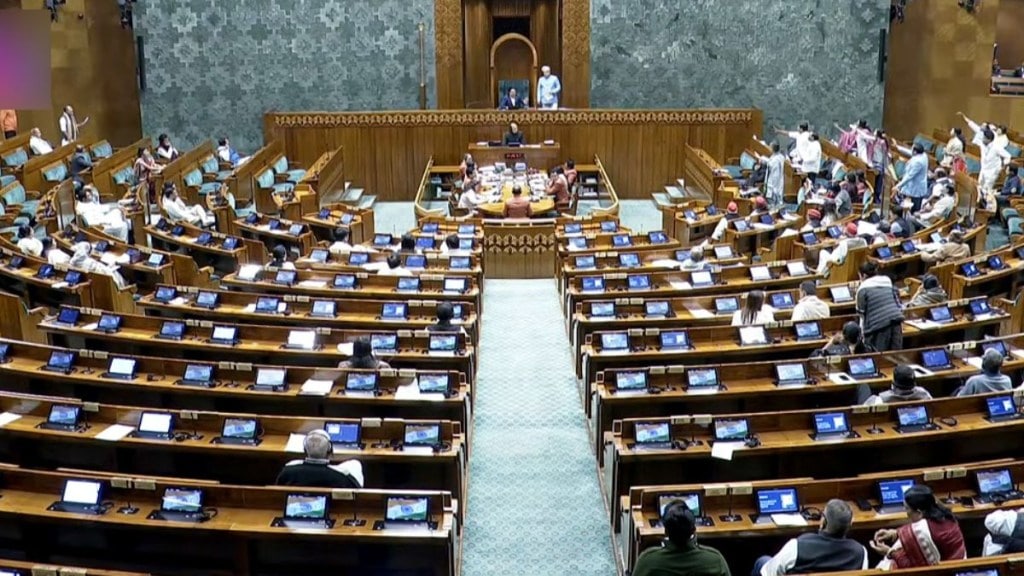
Politicians love to take liberties with history. The BJP (and the government) accused the Congress of mutilating the National Song, Vande Mataram, and insisted on a day-long debate in both Houses of Parliament in the winter session. The party’s speakers narrated their version of ‘history’; it was distorted history — distory. The chief distorian was the prime minister, Mr Narendra Modi. To quote his words:
“Vande Mataram was composed at a time when, after the 1857 freedom struggle, the British Empire was unsettled and imposed various pressures and injustices upon India… . It was then that Bankim-da issued a challenge, responding with greater force, and from that defiance Vande Mataram was born…
“…Mohammed Ali Jinnah raised a slogan against Vande Mataram from Lucknow on October 15, 1937. Instead of firmly countering the baseless statements of the Muslim League and condemning them, Jawaharlal Nehru, then Congress President, did not re-affirm his and the Congress party’s commitment to Vande Mataram and began questioning the Vande Mataram itself. Just five days after Jinnah’s opposition, on October 20, 1937, Nehru wrote a letter to Netaji Subhas Chandra Bose, agreeing with Jinnah’s sentiment…
“…(Nehru said) ‘I have read the background of the Vande Mataram song. I feel that this background may provoke Muslims.’
“…Unfortunately, on October 26, 1937, the Congress compromised on Vande Mataram, fragmenting it in their decision…history bears witness that the INC bowed before the Muslim League and acted under its pressure, adopting a politics of appeasement…The INC has become MMC (Muslim League-Maoist Congress)”.
Mr Amit Shah said that dividing the national song led to the politics of appeasement which led to Partition. It was a leap of imagination so absurd that even distorians will squirm in their seats.
A short history
Here is a brief time line of the song: 1870s Bankim Chandra Chatterjee wrote a few stanzas of a hymn that remained unpublished.
1881 An expanded version of the poem was included in the novel, Anandmath
1905 Rabindranath Tagore sang the poem while leading nationalist protest processions; Vande Mataram became a political slogan.
1908 Tamil poet Subramania Bharathi immortalised the phrase Vande Mataram in his poem Enthaiyum thayum… Bankim Chatterjee’s song was on the lips of every freedom fighter.
1930s Communal politics was on the rise, the song became controversial.
28-09-1937 Rajendra Prasad wrote to Sardar Patel raising apprehensions about widespread opposition to the song and suggesting that the Congress’s policy should be laid down. On the eve of the meeting of the CWC, Netaji Bose sought the advice of Tagore.
17-10-1937 Netaji Bose wrote to Jawaharlal Nehru to discuss the song in the CWC
20-10-1937 Nehru wrote to Bose that the controversy was manufactured by the communalists and that he would discuss the matter with Tagore and others.
26-10-1937 Tagore wrote to Nehru that the first part of the song stood on its own and had inspirational quality which was not offensive to any religious community.
28-10-1937 CWC adopted the two stanzas of the poem as the National Song.
January 1939 CWC reiterated the resolution at a meeting in Wardha in the presence of Mahatma Gandhi.
The selection of a few verses for a national anthem or song is not unusual. Jana Gana Mana, which is the
National Anthem, is an abridged version of the fuller poem by Rabindranath Tagore. National anthems of many countries are abridged versions of longer songs.
Mr Modi carefully avoided the fact that the RSS and the BJP’s predecessor had no role to play in India’s freedom struggle or in singing or popularising Vande Mataram. In fact, the RSS did not raise the national flag for 52 years in its national headquarters.
Wrong priorities
No one raised a controversy on the two-stanza national song since 1937. Why now? Parliament and the governments ought to be concerned with the pressing problems of the people in the present and on the ambitious goals of the country for the future.
China’s constituent bodies debate robotics, Artificial Intelligence, Machine Learning, the challenges of space, the oceans and data, and how these will profoundly transform human life on this planet. India’s Parliament should be concerned about the problems in the present that are poverty, education, healthcare, infrastructure, production of and access for all to goods and services, financial stability, trade deficit, climate change, and other knowns. In the future, India’s challenges will be growing inequality, population, internal migration, secularism, science and technology, and other unknowns.
Distorting history is bad enough, disdain for the future is unpardonable.