



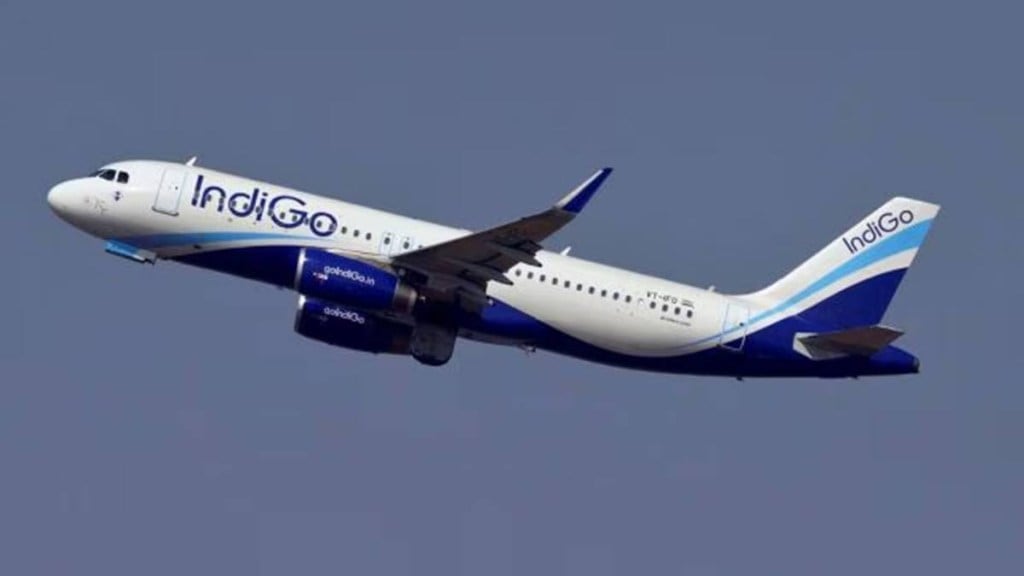
IndiGo’s shares plunged another 9% in intraday trade today, extending the carrier’s rough patch after a week of cancellations, delays and passenger complaints. In its latest update, the airline said it has managed to increase the number of flights operated and significantly improve its on-time performance.
Furthermore, the global brokerage Jefferies despite the turmoil has stuck to its optimistic view on the airline. With flight activity climbing again and a crisis management team now steering the recovery, it sees IndiGo’s dominant domestic position & expanding interrnational network remain intact, preserving its strategic edge. Let’s take a look at the key factors to watch –
IndiGo: A surge in flights after days of turbulence
The carrier reported a noticeable jump in activity on Sunday, saying it operated more than 1,650 flights, compared to around 1,500 the previous day. Its on-time performance also climbed to about 75%, a significant improvement from the 30% seen just 24 hours earlier. The airline added that “refund and luggage processing were running at full scale for both direct and indirect bookings,” an attempt to calm growing customer frustration.
This follows days of severe cancellation – over 1,000 on December 5 alone as IndiGo struggled with what it described as a system reboot that threw schedules across the network off balance.
IndiGo: Crisis management group takes charge
To take control of the situation, the airline formed a Crisis Management Group (CMG) over the weekend, bringing together key board members and senior leadership. The team includes Chairman Vikram Singh Mehta, board directors Gregg Saretsky, Mike Whitaker and Amitabh Kant, along with Chief Executive Pieter Elbers.
The Airline’s Crisis Management Group has been holding multiple internal discussions and receiving constant updates from the operational teams. As IndiGo put it in its filing, “The objective of these meetings and exchanges is to address, as quickly as practically possible, the hardships faced by our customers…while restoring operational integrity across the network.”
IndiGo: Acknowledging the scale of disruptions
CEO Pieter Elbers did not downplay the severity of the meltdown. In a message to passengers, he admitted that December 5 had been the toughest day, with more than half of IndiGo’s daily flights cancelled. The airline says the system reboot that triggered the disruptions is now being stabilised and that the CMG will continue to monitor the recovery.
Jefferies on IndiGo: Long-term view intact
Global brokerage firm Jefferies has weighed in on the ongoing IndiGo chaos and despite the disruptions, the brokerage has issued a buy rating on the stock with a target price of Rs 7,025. This indicates an upside potential of around 31% from current levels. According to the brokerage report, the airline’s recent troubles stem from a mix of regulatory changes and operational missteps that hit its tightly run network at the worst possible time.
- Jefferies on why IndiGo was hit the hardest
Jefferies in its report noted that IndiGo’s challenges intensified when the new Flight Duty Time Limit (FDTL), a regulation that reduces pilot duty hours and increases crew requirements took effect just as the airline had expanded its winter schedule. This combination, the report noted, was enough to push the network off balance. As per the brokerage report, the rule change “coincided with capacity expansion, tech issues, & congestion, triggering cascading disruptions.”
Other carriers, operating smaller fleets with more flexible schedules, experienced a comparatively mild impact. Jefferies pointed out that Air India’s reduced winter departures eased pressure on its pilot roster, giving it an unexpected advantage during this period.
- How IndiGo is resetting its operations
The brokerage noted that IndiGo is now in a full system reset. The carrier is revising schedules, lowering aircraft utilisation and reworking crew rosters to restore stability. According to the report, IndiGo is “targeting normal ops by Dec 10–15”, a timeline that may restrict the pace of capacity growth in the near term.
- Rising costs add another layer of pressure
Jefferies also warned that IndiGo’s cost curve is turning unfavourable. A weaker Indian rupee, higher non-fuel expenses and the revised Flight Duty Time Limit rules are expected to push employee costs even higher. As the report stated, “new FDTL rules will impact employee costs as it lowers pilot productivity.”
The combined effect of operational resets, regulatory changes and currency pressures means IndiGo’s near-term performance may stay volatile. However, Jefferies’ 31% upside call suggests the brokerage sees longer-term stability once the airline works through its ongoing disruptions.