



Remember when losing weight meant grueling gym sessions and restrictive diets? Then came the weight-loss injections that changed everything.
Drugs like Wegovy and Ozempic became cultural phenomena. Celebrities whispered about them. Social media exploded with transformation stories. The global obesity drug market was projected to hit $150 billion by the early 2030s. Everyone wanted in.
But there was one tiny problem. These miracle drugs required weekly injections. And not everyone loves needles.
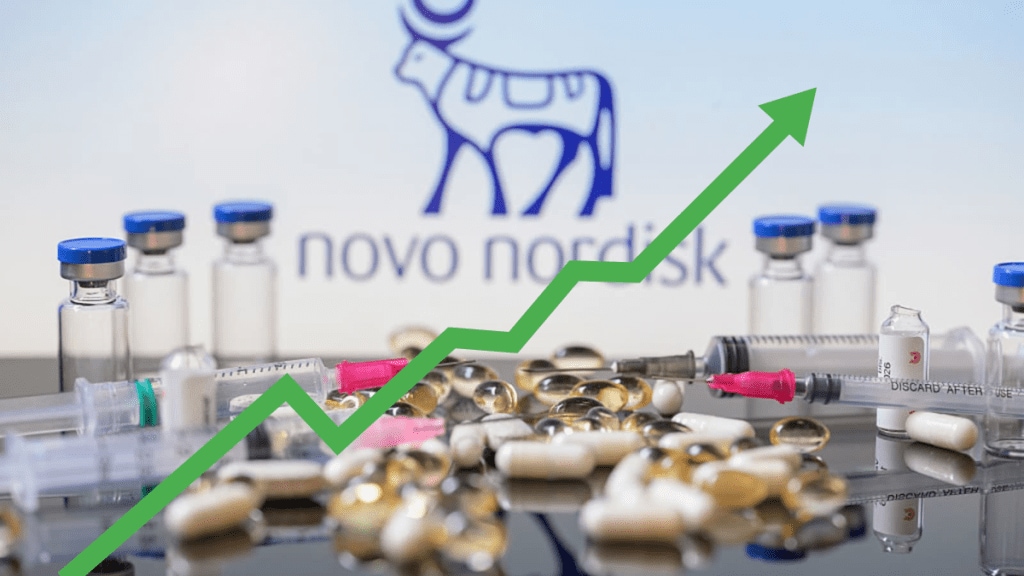
Now, Novo Nordisk just received FDA approval for something that could be even bigger: a weight-loss pill.
The Rise of GLP-1 Drugs
Let’s rewind to understand how we got here.
GLP-1 drugs work by mimicking a hormone that tells your brain you’re full. People taking these medications lose significant weight without feeling constantly hungry. It was revolutionary.
Novo Nordisk pioneered this market with injectable Wegovy and Ozempic. For a while, they owned the space entirely. Their drugs were so popular that supply couldn’t keep up with demand. People were desperate to get their hands on them.
But then Novo made a mistake. Supply chain issues meant they couldn’t produce enough. The FDA declared a shortage. Compounding pharmacies started making cheaper versions without patents. And rival Eli Lilly entered with Zepbound, a more effective injection that quickly grabbed market share.
By 2025, Novo’s stock had crashed nearly 50%. Investors worried the Danish giant had lost its edge in the very market it created.
Enter the Pill
This is where the story gets interesting.
Novo’s new Wegovy pill will hit the market in early January 2026. And the results from clinical trials are impressive: people lost an average 16.6% of their body weight in just 64 weeks.
Compare that to Eli Lilly’s experimental pill, Orforglipron, which showed only 12.4% weight loss over 72 weeks. Novo’s pill is significantly more effective.
But effectiveness aside, the real game-changer is convenience. Pills are simply less intimidating than syringes. Many people who refused injectable weight-loss drugs might now reconsider.
Here’s a startling statistic: less than 1% of people with obesity currently use branded anti-obesity medications. That’s not a saturated market, that’s an untapped ocean.
The fine print
Of course, no drug is perfect.
You must take the Wegovy pill first thing in the morning on an empty stomach with just a sip of water. Then wait 30 minutes before eating, drinking, or taking other medications. Lilly’s pill doesn’t have these restrictions and can be taken anytime.
There’s also a manufacturing challenge. The pill uses the same active ingredient, semaglutide, as Novo’s injections. Making enough for both formats could strain production, despite billions invested in new facilities.
Why this could reshape everything
But here’s why Novo CEO Mike Doustdar is so optimistic about “going all in.”
First, timing. Lilly’s pill won’t get FDA approval until March 2026 at earliest. That gives Novo a precious three-month head start to build market share and establish the pill as the category leader.
Second, accessibility. The starting dose costs just $149 monthly for cash payers, with insurance potentially dropping that to $25. These drugs used to cost over $1,000 monthly. Lower prices plus no needles could bring millions of new customers into the market.
Third, distribution. Novo plans to sell everywhere: their own website, Costco, WeightWatchers, telehealth platforms like Ro and LifeMD, and even through TrumpRx, a new government platform launching in January.
The investment angle
From a financial perspective, something fascinating is happening.
Despite its recent struggles, Novo Nordisk has delivered consistent cash flow growth and strong profit margins for two decades. Yet its price-to-earnings ratio has crashed to 14x, the lowest since the 2008 financial crisis. The historical average is nearly 25x.
Meanwhile, Eli Lilly trades at 53x earnings, more than three times higher, despite less consistent profitability.
If Novo’s valuation simply returned to its historical average without any earnings growth, the stock could jump 77%. Add in growth from the new pill, and the upside looks even bigger.
The bottom line
Novo Nordisk is betting that pills will unlock the obesity drug market’s true potential. With superior efficacy, a head start on competitors, and affordable pricing, they have all the ingredients for a comeback.
The question isn’t whether people want to lose weight. They do. The question was always about accessibility and convenience.
A pill removes the biggest barrier: needle phobia.
If Novo executes well, 2026 could mark their return to dominance in the obesity market they created. For millions of people struggling with weight, this pill might be exactly what they’ve been waiting for.
Sonia Boolchandani is a seasoned financial writer She has written for prominent firms like Vested Finance, and Finology, where she has crafted content that simplifies complex financial concepts for diverse audiences.
Disclosure: The writer and her dependents do not hold the stocks discussed in this article.
The website managers, its employee(s), and contributors/writers/authors of articles have or may have an outstanding buy or sell position or holding in the securities, options on securities or other related investments of issuers and/or companies discussed therein. The content of the articles and the interpretation of data are solely the personal views of the contributors/ writers/authors. Investors must make their own investment decisions based on their specific objectives, resources and only after consulting such independent advisors as may be necessary.