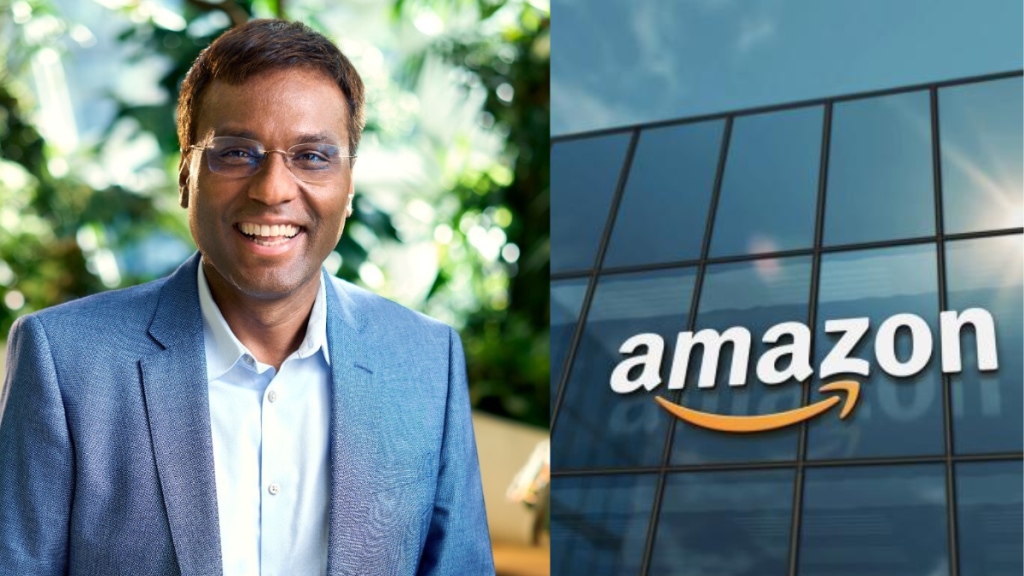
Building Alexa remains one of the most important milestones in Amazon’s history. It reshaped how consumers interact with technology and placed the company firmly in the AI conversation. Now, the executive who played a central role in that journey is all set to leave.
Rohit Prasad, one of Amazon’s most senior AI leaders and the executive overseeing its artificial general intelligence (AGI) efforts, will step down at the end of this year. Amazon confirmed his departure on Wednesday, alongside a reorganisation of its AI teams.
In a blog post to employees, Andy Jassy, CEO of Amazon announced that Amazon is restructuring its AGI unit and merging it into a broader, unified organisation. The new structure will bring advanced AI research, custom chip development and quantum computing under one umbrella.
Possible reason for Rohit Prasad’s exit
Reports over the past two years have indicated that Amazon’s Alexa reboot and AGI efforts faced serious challenges. According to Fortune, leaked internal documents revealed critical flaws in the delayed AI revamp of Alexa.
In June 2024, Fortune also reported that Amazon had missed its chance to dominate AI, explaining concerns from more than a dozen former employees.
The report said issues ranged from data limitations to execution problems, even as Prasad pushed teams to extract “some magic” out of large language models.
These reports, combined with ongoing layoffs, added to speculation that Amazon was struggling to match rivals in AI innovation and cloud-based AI services.
Who is Rohit Prasad?
Rohit Prasad is an Indian-origin AI executive who served as Senior Vice President and Head Scientist for Artificial General Intelligence (AGI) at Amazon until his announced departure by year-end 2025.
He joined Amazon in 2013 as Director of Machine Learning for Alexa and went on to become the head scientist behind the voice assistant from its earliest days. Under his leadership, Alexa’s core technologies, including speech recognition, natural language understanding and conversational AI were built and scaled.
Before Amazon, Prasad spent nearly 14 years at Raytheon BBN Technologies, where he worked on speech recognition and multimedia systems.
He served as deputy manager and senior director of the speech and multimedia business unit. He holds a master’s degree in electrical engineering from the Illinois Institute of Technology and later completed the Greater Boston Executive Program at MIT Sloan School of Management.
From Alexa to AGI after ChatGPT
After the launch of ChatGPT in late 2022, Amazon moved quickly to form a dedicated AGI group aimed at building competitive large language models and reviving Alexa’s relevance. Prasad was appointed to lead this effort, with the new team largely made up of former Alexa executives.
From 2023, he also oversaw Amazon’s Nova foundation models and broader AGI initiatives. The push was seen as Amazon’s attempt to counter the growing perception that it was falling behind in the AI race, especially as competitors captured attention with fast-evolving models and tools.
In his message to employees, Jassy praised Prasad’s contributions to the company, calling him “missionary, passionate, and selfless.” He thanked him for his leadership, technical direction and the teams he helped build.
Is Amazon really behind in AI?
Prasad’s exit surprised many, especially since he recently appeared at Amazon’s Re:Invent conference discussing the Nova models. It also came just days after Amazon announced layoffs, which created concerns about slowing growth and its position in the AI race.
In October, Bernstein analyst Mark Shmulik said AWS was in “last place” in the AI cloud race. However, recent reports from The Information and Bloomberg suggest Amazon is in talks to invest $10 billion in OpenAI.
OpenAI has reportedly agreed to use Amazon’s Trainium chips, potentially strengthening Amazon’s AI hardware strategy. Amazon has also invested $8 billion in Anthropic, whose Claude model is now being used to answer some queries in the new Alexa Plus.
New faces in Amazon’s AI research
As part of the reorganisation, Jassy also announced that Pieter Abbeel, an Amazon Distinguished Scientist and UC Berkeley professor, will lead the company’s frontier model research team.
“Pieter is one of the world’s leading AI researchers and cofounder of Covariant, which pioneered the first commercial foundation model for robotics,” Jassy wrote in the blog post. “His deep expertise in generative AI and reinforcement learning makes him well-suited to advance Amazon’s AI research as we push the boundaries of what’s possible for customers.”
Abbeel joined Amazon in 2024 as part of its deal with robotics startup Covariant. The changes come as Amazon faces growing scrutiny over whether it is keeping pace with rivals such as OpenAI, Google and Anthropic, which have rapidly rolled out consumer-facing AI products and large language models.
Peter DeSantis takes charge of the new AI push
The expanded AI organisation will be led by Peter DeSantis, a long-serving Amazon executive and senior vice president at Amazon Web Services. DeSantis, who has spent nearly three decades at the company, will now report directly to Jassy.
“With our Nova 2 models just launched at Re:Invent, our custom silicon growing rapidly, and the advantages of optimizing across models, chips, and cloud software and infrastructure, we wanted to free Peter up to focus his energy, invention cycles, and leadership on these new areas,” Jassy wrote.
DeSantis will oversee AI model development, Amazon’s custom chips, including Graviton, Trainium and Nitro, as well as its quantum computing efforts.