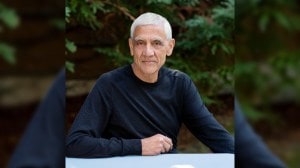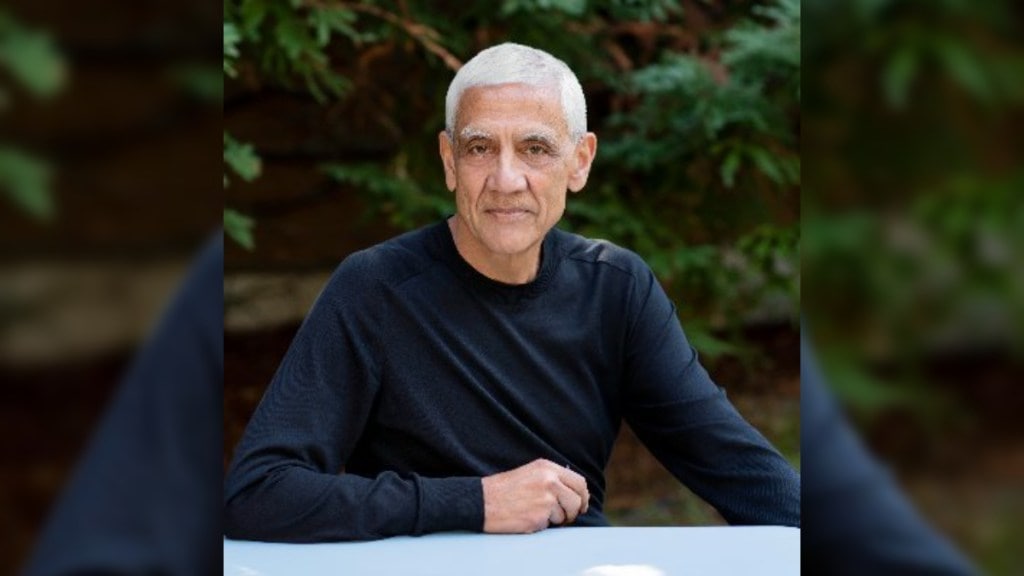
Venture capitalist, technology visionary, and co-founder of Sun Microsystems, Vinod Khosla has shared some of his bold predictions about the transformative power of technology, highlighting how recent developments are bringing those visions closer to reality. In a detailed thread posted on X (formerly Twitter), Khosla reviewed advancements in AI, sustainable energy, healthcare, education, and more, emphasising that society is still in the early stages of this technological revolution.
“For years I’ve shared predictions about how technology would reshape our world. We’re still early in that journey, but we’re getting closer every year,” Khosla wrote in his opening post. “Here’s a look back at some of my predictions and the recent progress moving toward them.”
AI’s role in entertainment, society, and coding
Khosla highlighted several AI-related predictions that are materialising. Recalling a 2019 forecast, he noted, “In 2019, I predicted AI will play a big role in entertainment and design – music and entertainment will be plentiful and personalised for you and your mood.”
He pointed to current progress: “Today: Xania Monet, an entirely AI-generated R&B artist, just became the first AI act ever to reach a Billboard radio chart with ‘How Was I Supposed to Know?’”
On the broader societal impact, Khosla referenced his 2018 investment in OpenAI, “In 2018, I predicted AI will, inevitably, change the structure of our society and we became the first VC investor in @OpenAI.”
He added, “Today: ChatGPT has hundreds of millions of weekly active users. Few technologies – even the mobile phone, the web, or social networks – have scaled to this level of global usage as fast as OpenAI. Restructuring the nature of work and society is clearly visible.”
Khosla also touched on the democratisation of programming. “Almost two years ago, I predicted there will be a billion+ programmers, ‘coding’ in natural language – dramatically expanding what software can do.” Updating on this, he stated, “Today: While we aren’t there yet, @Replit now has 40M+ users and is projecting $1B in revenue next year, as natural-language coding becomes mainstream.”
Transformations in healthcare
Khosla’s predictions extend to healthcare, where he has long argued for technology’s superiority in certain roles. “In 2012, I predicted machines will replace ~80% of what doctors do, leaving humans to do the human element of care,” he wrote.
Supporting this with evidence, “Today: Studies show AI outperforming doctors in both diagnostic accuracy and empathy across several specialties… When machines exceed human performance on skill and bedside manner, the future will arrive faster than expected.”
He further elaborated on medical innovation: “In 2013, I predicted data science & software will do more for medicine in the next decade than all biological sciences combined.”
Listing examples, he said that companies like Curai Health, Sword, Abridge, Synchron Inc, and others are proving this out across diagnostics, care delivery, mental health, radiology, and organ engineering.”
In education, Khosla predicted that “In 2018, I predicted every child will have access to a personalised AI tutor.” He followed it up with, “Today: CK-12 AI Tutor Flexi is available to students in over 300 languages and dialects serving millions of monthly users worldwide with a free, non-profit AI tutor.”
“In 2012, I predicted AI and software will replace much of what teachers do, freeing them to focus on mentorship, creativity, and emotional development. Today: Two Texas schools are now powered by AI teachers, shifting human educators toward coaching and connection.”