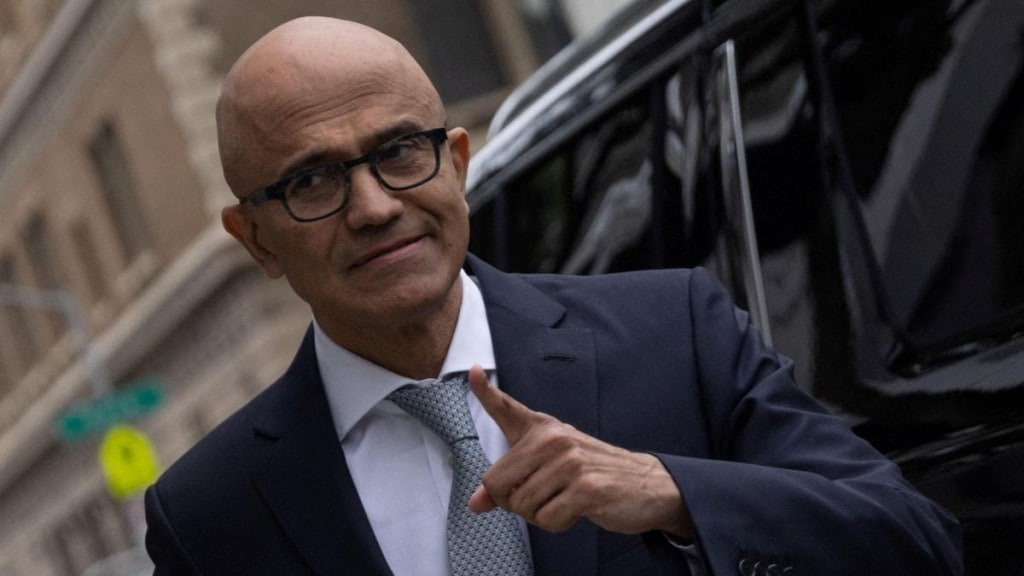
Microsoft Chairman and CEO Satya Nadella has declared 2026 a pivotal year for artificial intelligence. On his personal blog, titled ‘sn scratchpad’, Nadella says that AI will mark a transition from the initial hype-driven discovery phase to widespread practical adoption and societal impact. In a reflective year-end post, Nadella highlighted the need to distinguish “spectacle from substance” in AI development, warning that capabilities currently outpace real-world applications in what he termed “model overhang.”
Nadella stressed that the industry must address key challenges to unlock AI’s full potential, framing it as the early stages of a marathon. He highlighted the importance of viewing AI not as a replacement for human effort but as an amplifier of human potential.
Nadella sees AI as a tool for human empowerment
A central theme in Nadella’s outlook is redefining AI’s role in society. “What matters is not the power of any given model, but how people choose to apply it to achieve their goals,” Nadella wrote. He called for evolving the classic “bicycles for the mind” concept, originally coined by Former Apple CEO Steve Jobs, to position AI as scaffolding for human potential.
“We need to get beyond the arguments of slop vs sophistication and develop a new equilibrium in terms of our “theory of the mind” that accounts for humans being equipped with these new cognitive amplifier tools as we relate to each other,” said Nadella. This is the product design question we need to debate and answer. Nadella argued that product design decisions will be crucial in shaping how these cognitive tools integrate into daily life and work, ensuring they enhance rather than substitute human capabilities.
Building systems and societal consensus
Nadella predicted a shift from isolated AI models to comprehensive systems capable of real-world deployment. “We will evolve from models to systems when it comes to deploying AI for real-world impact. We have learned a lot in terms of how to both keep riding the exponentials of model capabilities, while also accounting for their “jagged” edges,” says Nadella. These systems would orchestrate multiple models and agents, incorporate memory and security entitlements, and enable safe tool usage while navigating the limitations of current capabilities.
Looking broader, he urged deliberate choices in diffusing AI to tackle global challenges affecting people and the planet. For AI to gain societal permission, it must demonstrate measurable real-world impact, with careful allocation of scarce resources like energy, compute power, and talent. “The choices we make about where we apply our scarce energy, compute, and talent resources will matter. This is the socio-technical issue we need to build consensus around,” he added.
“Ultimately, the most meaningful measure of progress is the outcomes for each of us,” Nadella concluded. “It will be a messy process of discovery… If we do that, [AI] can become one of the most profound waves of computing yet.” His vision aligns computing history’s empowering legacy with AI’s future, positioning 2026 as a defining moment for responsible innovation.