At a time when AI is rapidly being adopted into various professions, AI firms are eagerly looking for talent that is capable of training the models. AI models and bots are reaching a stage where they need to be trained in more complex activities, and who better to do the job than humans! Hence, for 34-year-old Utkarsh Amitabh, this was good enough as a side job that would keep him busy and bring him decent additional earnings.
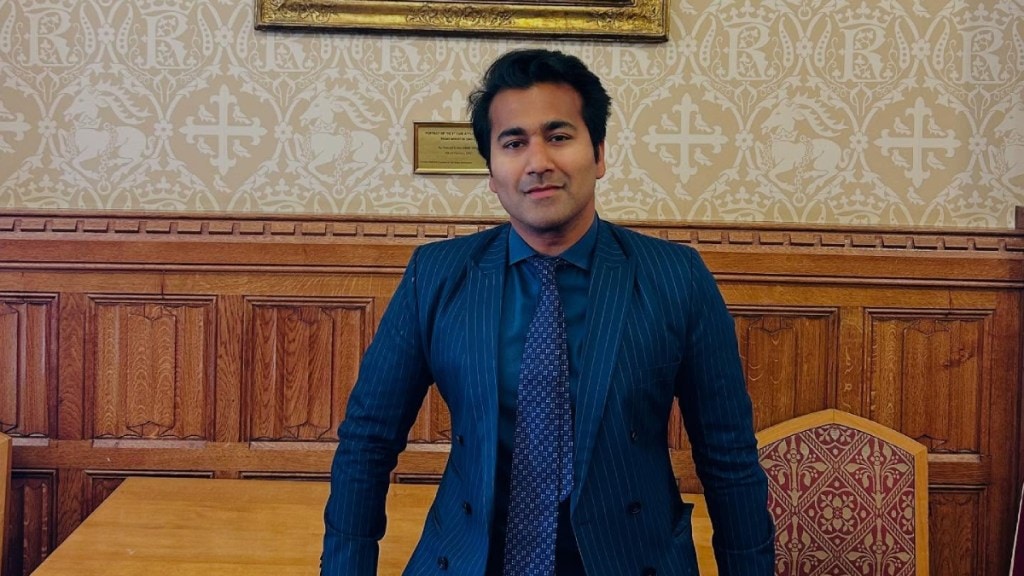
The Indian-origin professional, who lives in the UK, is the CEO of Network Capital (a global mentorship platform). He is also a lecturer at a university, an author, and a PhD student at the University of Oxford. However, Amitabh hit the headlines for earning an impressive $200 (approximately Rs 18,000) per hour through a side job training artificial intelligence (AI) models. For those who can do the math, his side gig earns him handsomely, amassing him Rs 2.5 crore so far.
How Utkarsh Amitabh got his high paying side-gig
According to an interaction with CNBC, Amitabh wasn’t looking for extra work when he was approached in January 2025 by a startup called micro1. At the time, he was already leading his own mentorship platform, Network Capital, writing books, and adjusting to life with a newborn baby.
Despite his packed schedule, Amitabh says he was drawn in by “intellectual curiosity.” He found the work—which involves data labelling and fine-tuning AI responses—to be a perfect match for his background in mechanical engineering, moral philosophy, and six years of experience at Microsoft.
Amitabh works on the AI project for an average of 3.5 hours every night, usually starting after his one-year-old daughter goes to sleep. Since beginning in January, he has earned nearly $300,000 (around Rs 2.5 crore), including bonuses.
“This didn’t seem like an add-on, but something that I could use to further my interests in a limited number of hours a week,” Amitabh told CNBC Make It.
Money not the only motivation
While the earnings are substantial, Amitabh insists that the paycheck was not his main goal. “Money was never my primary motivation,” he stated, though he added that he values fair pay as a core principle. He described the compensation as “respectable” for work that requires a high level of expertise in business strategy and tech.
Amid global fears that AI will replace human workers, Amitabh remains an optimist. He points to data from the World Economic Forum suggesting that while some jobs will disappear, millions of new roles will be created by 2030.
“I’m not concerned about the idea of ‘AI Doom’ entirely, because I think it does far more good than bad,” he said. He believes the rise of AI will force humans to upskill and think differently. “It’s also possible that this AI fear collectively empowers us to learn better, upskill ourselves and frame questions differently about ourselves.”